After nearly a decade of accompanying audiences around the world, Stranger Things has officially come to an end. But amid the countless debates surrounding the finale, the biggest question still centers on one name above all others: Eleven.
Does a girl who was born in a laboratory, raised amid violence, loss, and choices that were never fair… truly deserve such a lonely ending?
In a lengthy interview with Variety, the Duffer Brothers spoke candidly for the first time about Eleven’s fate — and why they never once considered giving the central character an “easy” ending.
Eleven — the embodiment of childhood magic
:max_bytes(150000):strip_icc()/eleven-stranger-things-2000-bcd2174c120c4997b392ce6a6fcf6a70.jpg)
According to the Duffers, Eleven is not just the main character. She represents the very magic of childhood — a special force that made Hawkins different from the rest of the world. And precisely because of that, the price of growing up in Stranger Things is the disappearance of that magic.
They explained that children can only truly grow up once that sense of wonder is gone. And through her very existence, Eleven was the reason Hawkins remained suspended in childhood for far too long.
“There was never a version where Eleven returns to the basement”
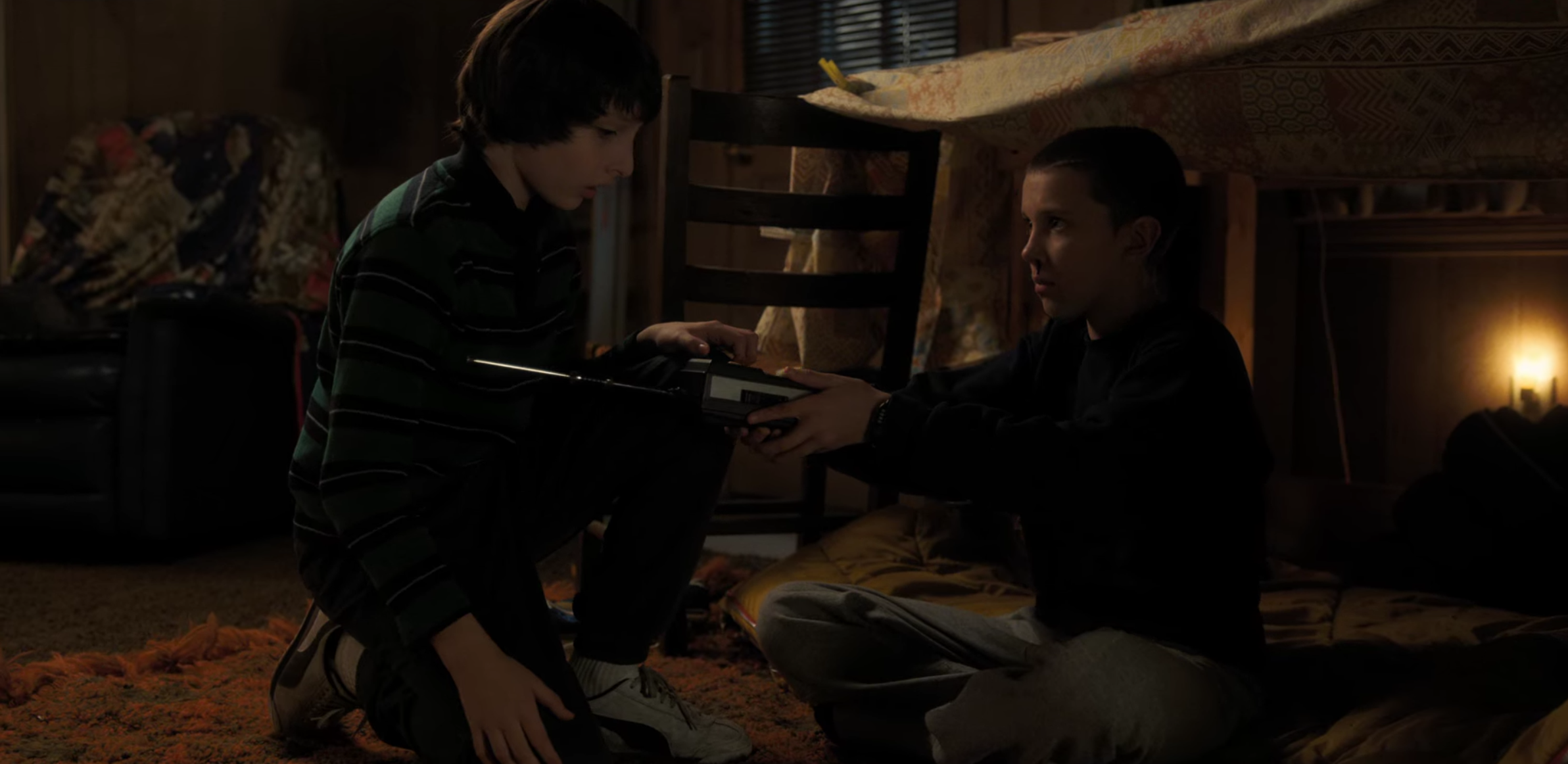
What hurt many viewers the most — Eleven’s absence alongside her friends in the final moments — was never an option that was later discarded. According to the creators, there was no version of the script in which Eleven returned to Hawkins to sit in the basement and play Dungeons & Dragons with the group as before.
“Nothing was ever meant to be simple or easy,” the Duffer Brothers emphasized. From the very beginning, they knew the ending had to contain sadness, joy, and hope — not a perfectly neat resolution.
Even if she’s alive, Eleven still can’t come back

One detail makes the ending even more heartbreaking: even in Mike’s most optimistic assumption — that Eleven is still alive — she still cannot reconnect with her friends or family.
According to the Duffers, any form of contact could drag Eleven back into the terrifying cycle she escaped from: being hunted, exploited, turned into a weapon once again. Her silence, therefore, is not abandonment — it’s a conscious choice to end the nightmare forever.
Notably, even in the story Mike tells at the end, the creators admit they never imagined him seeing a future where the group reunites. It isn’t a prophecy — it’s the belief he must cling to in order to keep going.
An unfair ending — but an honest one
Eleven is not given a “deserved” ending in the fairytale sense. But according to the Duffers, that is the core truth of Stranger Things: childhood doesn’t end with rewards — it ends with separation.
Eleven may have vanished from Hawkins, but she lives on in memory, in belief, and in the hearts of those she saved.
And perhaps that is the only ending Stranger Things would ever allow:
imperfect, unfair — but devastatingly honest to the very end.