Wuthering Heights is the Blueprint for Toxic Romance

Few love stories are as infamously dysfunctional as Wuthering Heights, and the 2026 film adaptation embraces that chaos completely. I went into the film adaptation without reading Emily Brontë’s novel, which felt a bit wrong as someone who tries to read the book first, but I actually felt that the distance from the story allowed me to experience the film as its own piece of media. The movie is unsettling, emotional, intense and visually stunning and I was left trying to sort out exactly how I felt about it. However, a question immediately took root in my mind after watching the film: Why does a romance this destructive feel so compelling? I plan to pick up the book to get the full story, but in watching the movie alone, I was captivated by this twisted and unforgettable romance and what it revealed about the stories we tell ourselves about love.
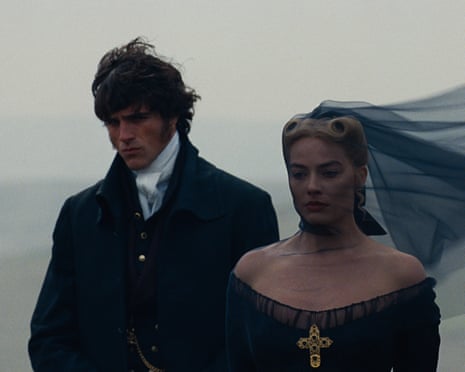
This Wuthering Heights adaptation follows the relationship between Catherine and Heathcliff from children into adulthood. Heathcliff is brought into the home at a young age by Catherine’s alcoholic father, who claims to have saved him from living on the streets. As the two are raised together, they torment and tease each other mercilessly and bond over the isolation and trauma of their childhood. As they grow up, Catherine is faced with the decision of marrying rich to get away from the not-so-idyllic life she was raised in, but with the cost of leaving Heathcliff, her true love, behind.
What immediately struck me was how visually immersive and cohesive the film felt. The misty atmosphere and rocky cliffs overlooking churning waves were eye-catching and felt very synonymous with the inner turmoil the characters faced. The scale of everything, the wind, the cliffs, and the openness of the landscape brought the relationship to life, making it seem bigger, louder and more important than anything else in the world. The dramatic landscape personified the intensity of the romance and added so much to that epic whirlwind feeling. The visual elements seemed to be asking the same question that the characters couldn’t answer: how do you separate yourself from something that feels this enormous?
The visuals didn’t stop with landscapes. The intentional color themes used in the movie added so much depth to the plot. Catherine is often dressed in deep reds, in a girlish way when she was young and in a more regal, dangerous way as she gets older. It’s striking on screen, but also foreshadows the gruesome ending of the movie so well. The dreariness of Wuthering Heights is shown in rich contrast with the vibrancy of Thrushcross Grange. The manor is fascinating, with its endless number of themed rooms, some beautiful and others disturbing, (like the skin walls of Cathy’s bedroom). All of these visual choices don’t just look stunning, they amplify the story and the romance, and highlight the seductive grey area between beauty and darkness.
The allure of the film works as a counter-balance to the toxicity of the romance, and it is that tension that makes Wuthering Heights feel so significant. Catherine and Heathcliff’s connection is obsessive, cruel and volatile, however when framed with the landscapes, the dramatics feel momentous rather than annoyingly destructive. From the very beginning of the film, Heathcliff is deemed Catherine’s pet, and he proclaims that she means more to him than his own life: “my soul is her soul, my heart her heart”. This is where Wuthering Heights becomes the blueprint for toxic romance. It presents intensity as proof of depth, chaos as proof of passion, and suffering as proof of love. All of which are standards seen today in the romance genre.
Common tropes in romance include villain love interests who would burn down the world for the main character, along with obsessive devotion to an unrealistic and unhealthy level. One could argue that these tropes, and more, are echoed themes from Wuthering Heights. In romance today, intensity is often equated with deeper meaning. In media, we romanticize the “I can’t live without you” concept and a partner who will stop at nothing to have you. This level of desire is seen in even the tamest, most down-to-earth romances on any shelf, at least to some degree. The question here is whether that level of obsession is something Wuthering Heights invented, or if it was just a step along the way to these tropes becoming what they are now.
Of course, these intense romantic stories were around long before Wuthering Heights, think Romeo and Juliet and other classic romance epics. However, the tension, desire, and violence that Emily Brontë captured in this story was entirely unique and extremely controversial when the book came out in 1847, to the point of being called savage and immoral. The novel was thought of as dark and scandalous, but it is now a literary classic that has shaped the romance genre into what it is today.
While I’ll need to read the book to fully understand the controversy of the original story, the movie definitely captures that dark, barbaric romance that the novel was originally criticized for, for better and for worse. I personally enjoyed the movie, however, I can see why others may not have. The pacing felt rushed at the beginning and end of the film and the sexual nature of the movie can definitely be unsettling and even gruesome at times. Overall, it is a movie I will be thinking about for a long time and it will cross my mind every time I come across one of its tropes mirrored in modern romance.