HOT UPDATE: Season 4 of BRIDGERTON has just revealed a shocking truth about Francesca’s situation, a key plot point that has the potential to completely upend the entire Bridgerton family timeline.
In Season 4 of Bridgerton, Francesca Bridgerton endures one of the most heartbreaking storylines the series has ever portrayed. What begins as a season of quiet growth and marital understanding turns into a devastating exploration of grief, false hope, and emotional collapse. Francesca, played by Hannah Dodd, experiences profound loss when her husband, John Stirling, dies suddenly and without warning. The tragedy is compounded by her belief that she is carrying his child—only to later discover that she is not pregnant at all.
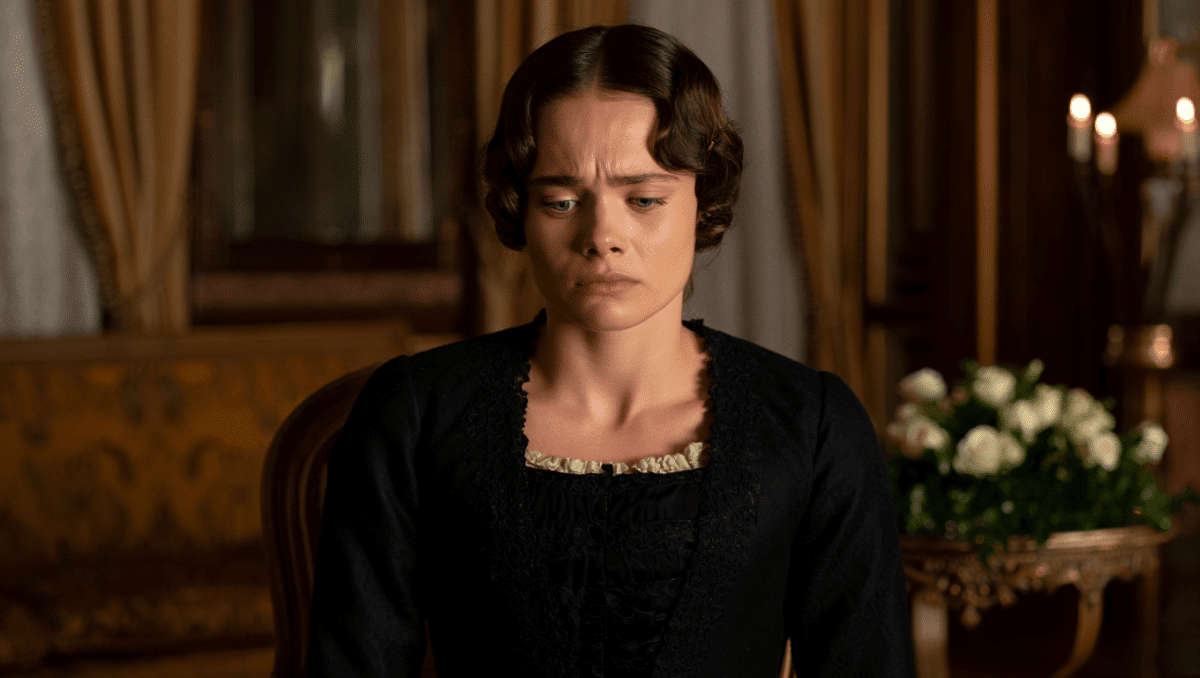
John Stirling, portrayed by Victor Alli, dies unexpectedly in Episode 6. Complaining of a headache, he retires for a brief nap before dinner. When Francesca later attempts to wake him, she finds him unresponsive. John, the Earl of Kilmartin, has suffered a fatal cerebral aneurysm in his sleep. His sudden death shocks not only Mayfair society but also viewers, marking one of the most devastating character losses in the entire Netflix series. The cruelty of the moment is intensified by the fact that John and Francesca had finally reached a place of harmony in their marriage. After navigating early struggles with intimacy and connection, they had grown deeply in love. Shortly before his death, John tenderly tells Francesca she is his “perfect wife,” expressing unwavering devotion. She responds with “always,” unaware that their time together is about to end forever.
In the immediate aftermath of John’s death, Francesca searches desperately for something to hold onto. Grief threatens to overwhelm her, yet she clings to a hopeful belief that sustains her through the early days of mourning. She becomes convinced that she is pregnant with John’s child after missing her monthly courses. To her family, she announces this possibility with solemn conviction, describing the child as a final gift from her late husband—a living piece of him that would carry on his legacy. This belief gives her purpose amid funeral arrangements and societal expectations. It becomes her anchor, allowing her to maintain composure while her heart quietly fractures.
Francesca models her resilience after her mother, Violet Bridgerton, who was pregnant with Hyacinth when her own husband, Edmund Bridgerton, died suddenly. Francesca believes that if her mother survived widowhood while carrying a child, she too can endure the pain if she has something of John to love and raise. The pregnancy becomes her emotional lifeline, transforming unbearable loss into something she can survive.
However, this fragile hope is shattered in Episode 7. Government officials demand a medical examination to clarify the line of succession for the Kilmartin estate. Because inheritance depends on whether Francesca carries an heir, she must submit to an invasive and humiliating examination by a doctor. Already vulnerable, she endures the procedure with Violet and Eloise holding her hands. Tears stream down her face as she faces both physical discomfort and emotional dread.
The results confirm the devastating truth: Francesca is not pregnant. There will be no child of John to inherit the Kilmartin name. This revelation breaks her completely. The belief that had sustained her collapses in an instant, and with it, her carefully maintained composure. In a raw and explosive moment of grief, Francesca breaks down before her mother. She accuses herself of failing John in her duties as a wife and laments that she now has nothing of him left in the world. Comparing herself to Violet, who has eight children to remember Edmund by, Francesca feels doubly robbed—first of her husband, and then of the hope of his child. The compounded loss proves unbearable.
Hannah Dodd’s performance in this scene has been widely praised for its emotional authenticity. She portrays Francesca’s internal struggle with remarkable subtlety, capturing the way grief can manifest in denial, hope, and ultimately collapse. For days, Francesca had compartmentalized her sorrow, adhering to expectations of propriety and strength. The false pregnancy allowed her to function. When that hope is taken away, everything she had suppressed erupts in overwhelming despair.
This storyline differs notably from Julia Quinn’s original novels, in which Francesca suffers a miscarriage rather than a false pregnancy. The adaptation’s choice to depict mistaken hope instead of lost pregnancy creates a distinct emotional impact. Rather than mourning a child she briefly carried, Francesca must confront the painful reality that her hope was never real to begin with. The emptiness she feels is intensified by the knowledge that she built her survival on something that did not exist.
Showrunner Jess Brownell has emphasized that Francesca’s grief journey will not conclude quickly. Grief, she notes, is neither linear nor finite. The emotional consequences of John’s death will continue shaping Francesca’s arc in future seasons. The show also introduces a significant change from the novels by gender-swapping Michael Stirling into Michaela Stirling, potentially paving the way for a groundbreaking queer romance. As Francesca and Michaela navigate their shared grief over John, their bond may deepen into something transformative. However, healing will take time, and Francesca’s path toward love again will unfold gradually and thoughtfully.

Season 4 ultimately presents Francesca’s story as one of profound sorrow and shattered illusion. The loss of her husband is devastating enough, but the loss of the child she believed would keep him alive in her world proves equally crushing. Through heartbreak and emotional unraveling, the series delivers one of its most powerful portrayals of grief—reminding viewers that sometimes hope itself can be both salvation and the deepest source of pain.