Cinderella Doesn’t Wait for Magic in Bridgerton: Rewriting Her Fate Through Strength Instead of Sympathy
There are many highlights surrounding the female lead in the new season of Bridgerton.
Bridgerton has never rejected any romantic trope. Each season leaves its mark with steamy 18+ scenes and familiar narrative beats: the fake relationship turned real between Daphne and Simon in Season 1, the enemies-to-lovers dynamic of Anthony and Kate in Season 2, and the years-long friends-to-lovers journey of Penelope and Colin in Season 3.
Moving into Season 4, Bridgerton returns to the oldest and most classic story of all: Cinderella. But instead of refreshing the tale through plot twists, the series reinvents it through character. This time, Cinderella is not defined by endurance or magic, but by self-awareness and the ability to choose her own happiness. That is why, even though the Cinderella motif has been retold countless times, it still manages to captivate audiences once again in Season 4.
A Story Inspired by Cinderella
In Season 4, Bridgerton shifts its focus to Benedict Bridgerton (Luke Thompson) — the second son of the family, long known for his free-spirited lifestyle, devotion to art, and avoidance of responsibility. Benedict is pushed into the marriage market when Lady Violet urges him to take settling down seriously. Soon, he becomes a highly sought-after bachelor, even catching the attention of Queen Charlotte.

The female lead of this season is Sophie Baek (Yerin Ha), a maid in the household of the widowed Lady Araminta Penwood. Sophie lives at the bottom rung of London’s upper-class society, where she must labor to survive while being constrained by her birth and social status. Having one half of the central couple come from the servant class brings a fresh perspective to Bridgerton. The story no longer revolves solely around lavish ballrooms but also opens up the “behind-the-scenes” spaces — where servants quietly sustain the parties, balls, and reputations of the aristocracy.
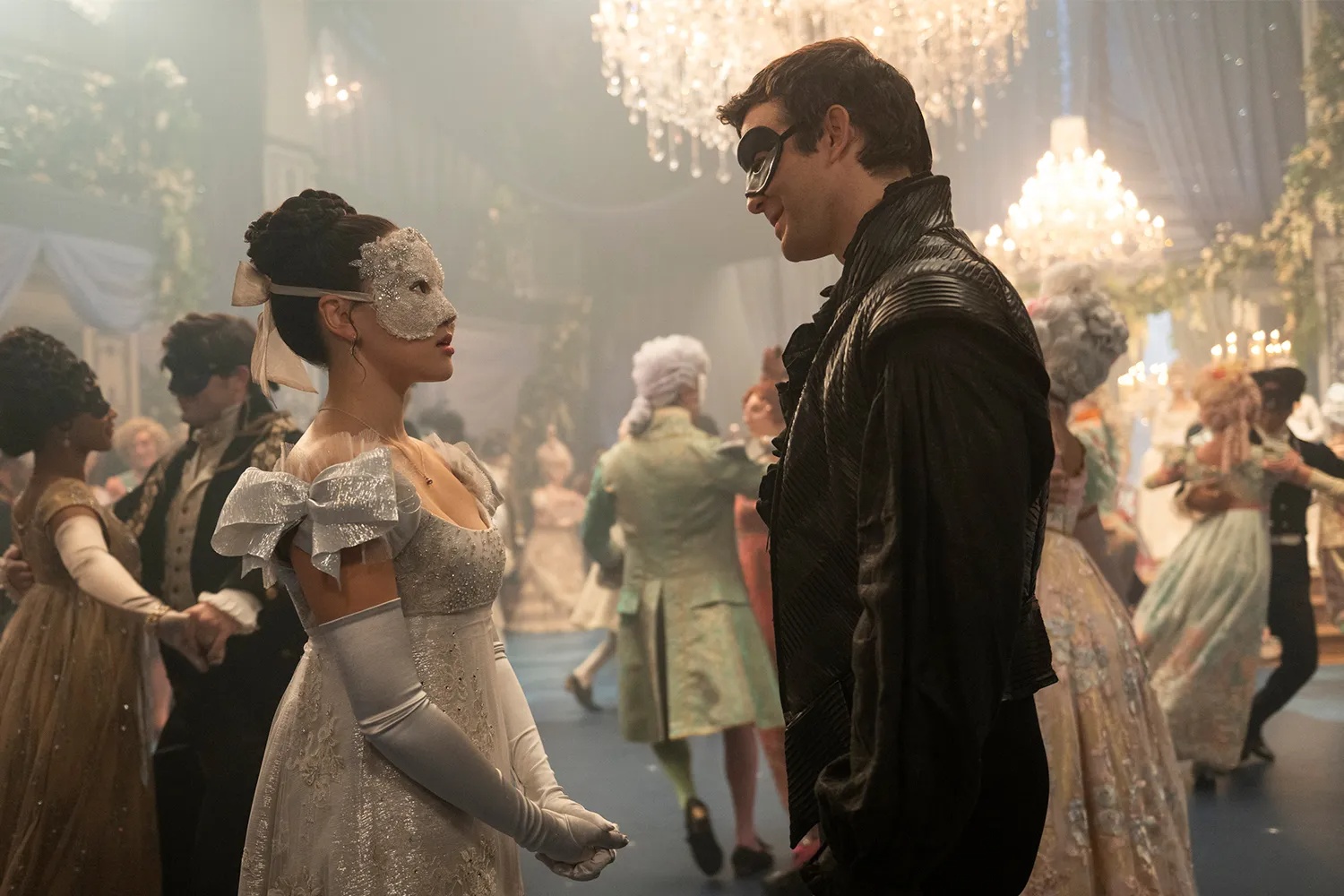
The connection between Benedict and Sophie begins at a masquerade ball, where Sophie appears as a mysterious lady in a silver gown and immediately captures Benedict’s attention. Their brief encounter becomes an obsession, driving Benedict to search for the woman whose name and true status he does not know.
In the second half of Season 4, the story moves beyond the search for the Lady in Silver and shifts to a direct conflict between love and society. As Sophie’s true identity gradually comes to light, her relationship with Benedict faces the risk of collapse. Not only must she confront class prejudice, but she is also pushed toward imprisonment by the Araminta family. In the finale, Benedict is forced to make a decisive choice: continue enjoying the privileges of a high-society gentleman or sacrifice his status to protect the woman he loves. The ending shows them leaving the glittering stage behind to build a private life, separated from the rigid conventions of London’s upper class.

A Cinderella Who Doesn’t Need Magic
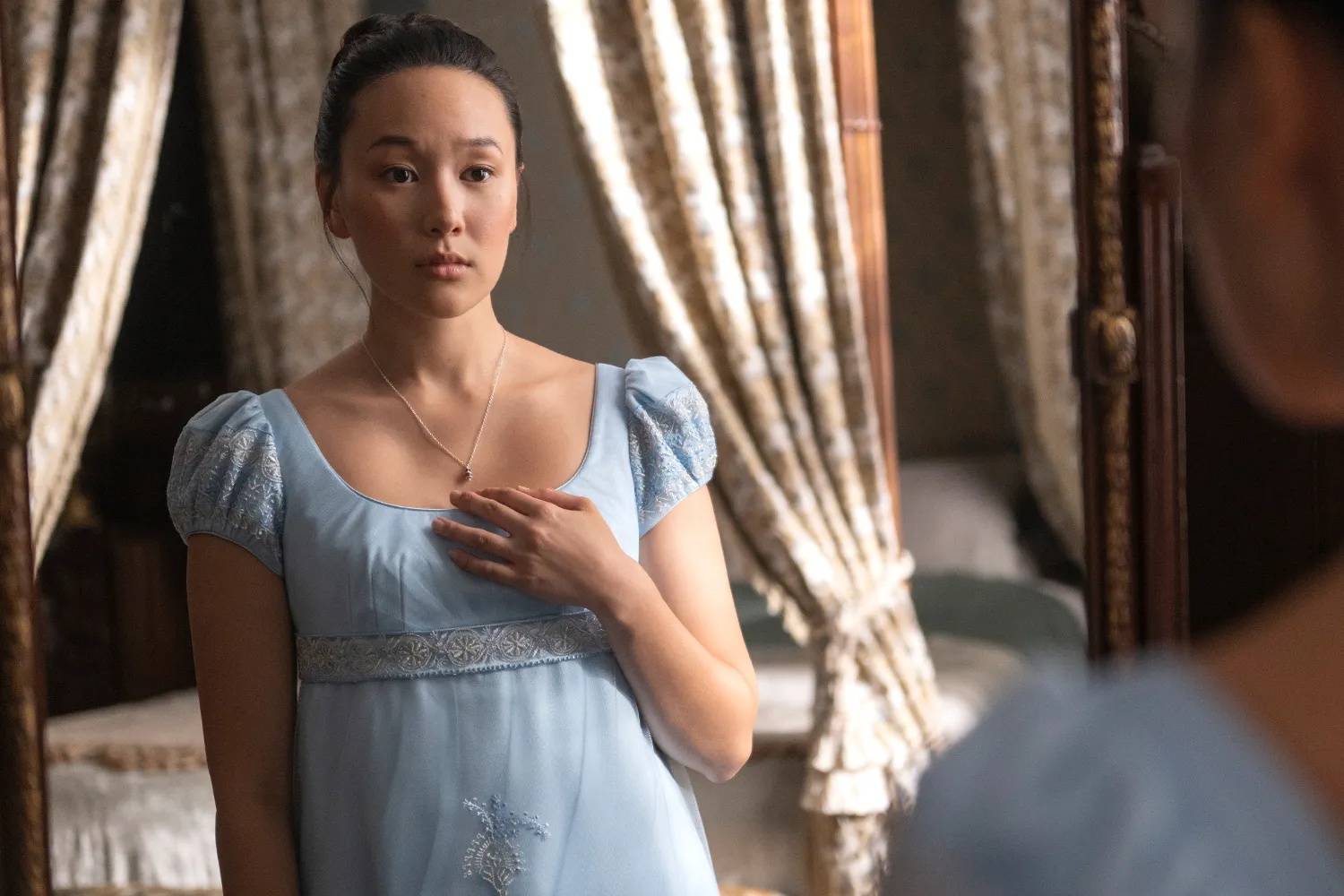
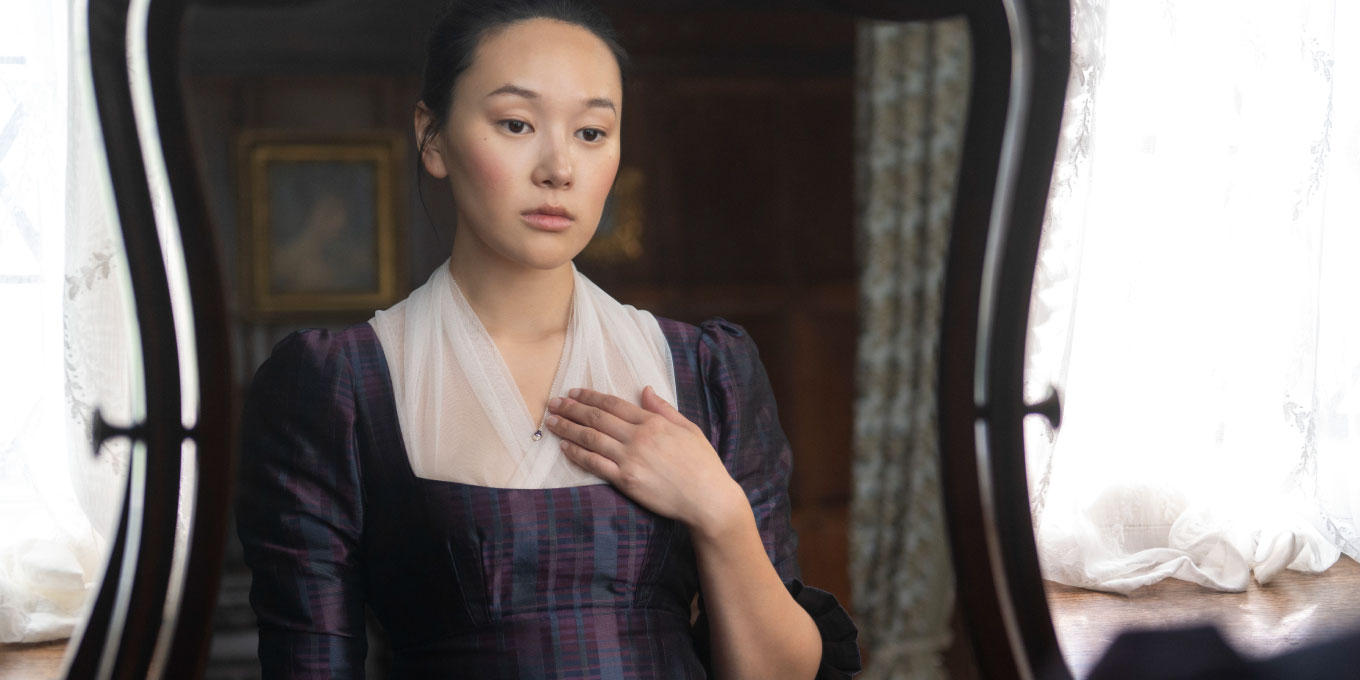
If Sophie Baek is the Cinderella of Bridgerton Season 4, she is one stripped of nearly all familiar fairy-tale elements. Sophie is not portrayed as a girl waiting for magic or a dramatic rescue. From the beginning, her identity is rooted in the working class: the illegitimate daughter of the Earl of Penwood, living in her father’s house but existing only as a servant under Lady Araminta — the archetypal cruel stepmother.
The masquerade ball — the classic intersection point in every Cinderella version — still appears, but only as a starting point. When Sophie wears the silver gown, dons her mask, and steps into the ball, she creates a fleeting fairy-tale illusion that enchants Benedict. But once she leaves, the magic ends. There is no fairy godmother, no carriage to whisk her away before midnight. Sophie returns to her place, facing labor, control, and a class system that does not allow her to dream for long.
Unlike the fairy tale, Sophie’s turning point does not come from love but from hidden truth. When she is arrested on charges of theft and impersonating nobility, she faces the threat of imprisonment without any miraculous rescue. What changes everything is her father’s will — a document Araminta had deliberately concealed for years.
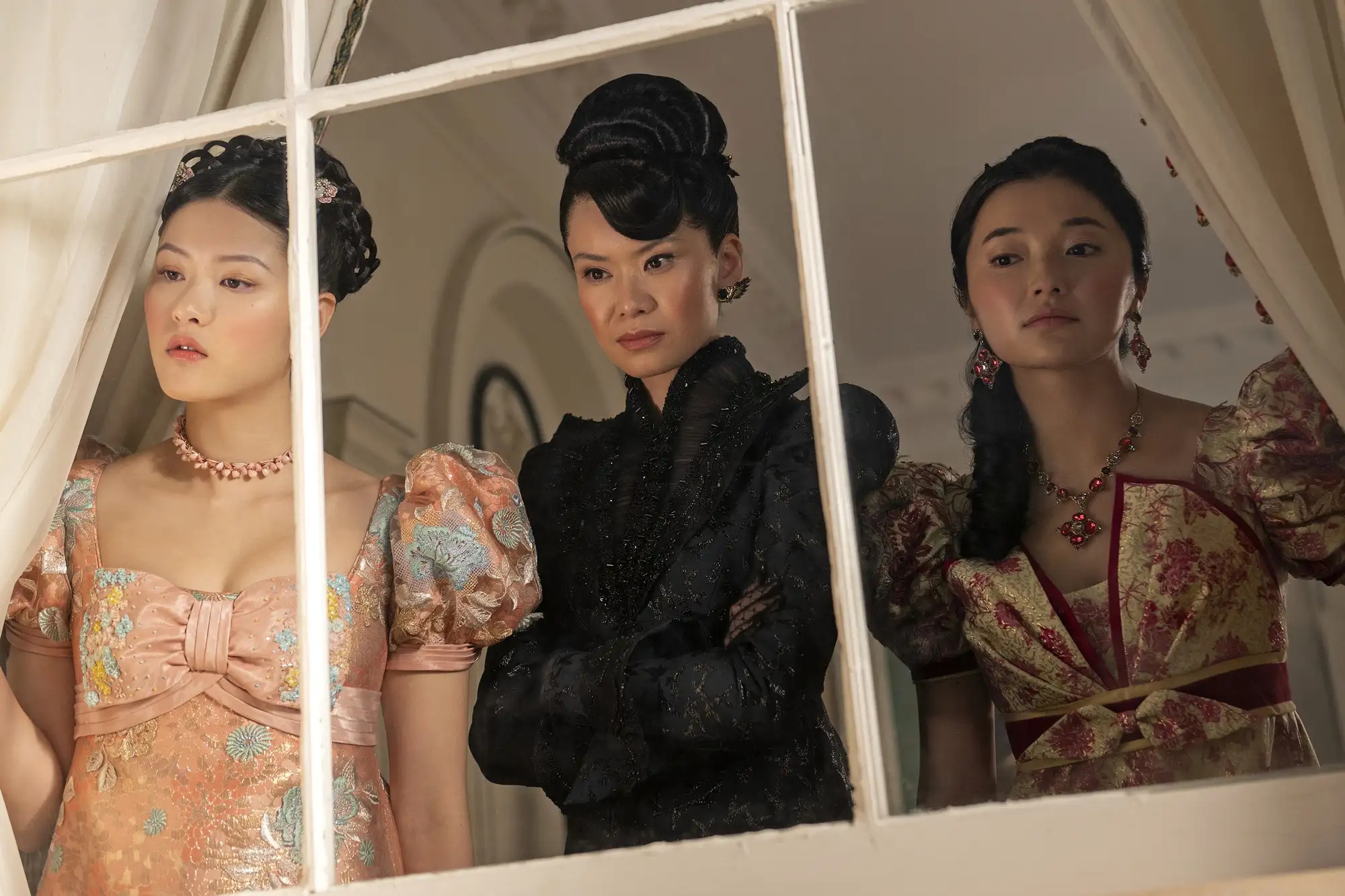
Sophie is not only legally named in the will but also granted a dowry equal to that of her stepsisters. The true offender is Araminta, who exploited Sophie under the guise of guardianship. Sophie does not “win” because she is loved — she wins because her rightful inheritance is restored. This Cinderella rises not through magic, but through delayed justice.
Sophie’s strength is further demonstrated in her encounter with Queen Charlotte. She does not beg or justify herself with tears. Instead, she remains composed, dignified, and aware of her worth. The Queen senses that there is more to the story but ultimately chooses to acknowledge her. The line, “You must have been quite a diamond,” becomes a form of recognition.
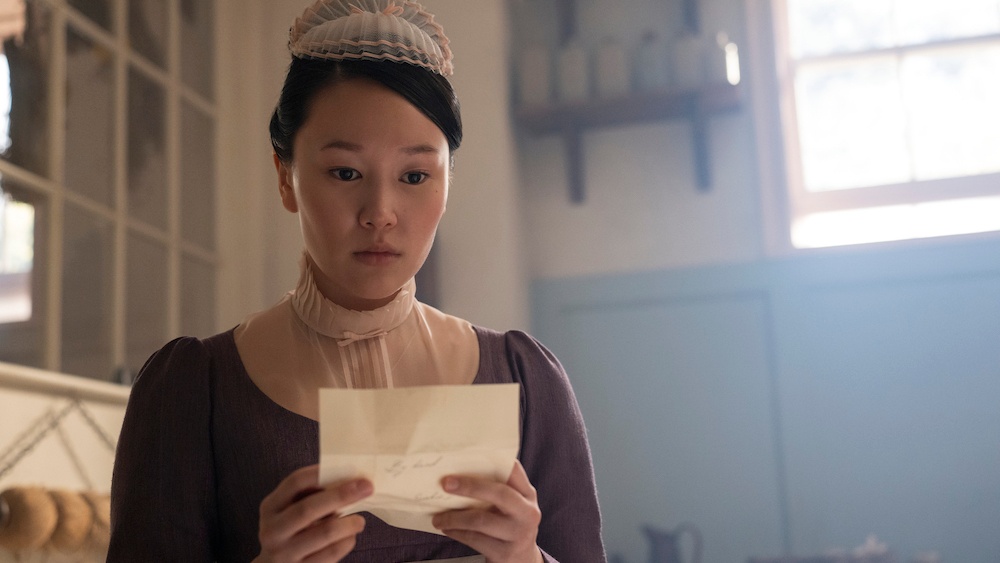
Producer Brownell previously shared with Collider in early 2025: “Sophie is built on the Cinderella archetype, but she’s not a weak princess in need of rescue. She plays strategic moves and thinks two or three steps ahead. She will definitely leave Benedict confused.”
Even the character’s styling supports this interpretation. Sophie in Bridgerton is not depicted as a dazzling, ethereal beauty. Yerin Ha’s look is portrayed as natural, understated, and soft — a beauty that does not flaunt itself yet remains striking. It is distinctly Asian (Yerin Ha is Korean) but harmonizes perfectly with the regal, classical atmosphere of the series. Even in her most glamorous disguise scenes, Sophie carries a sense of caution, as though she knows the moment will not belong to her forever. “Yerin brings incredible strength, humor, and vulnerability to the role,” Brownell praised.
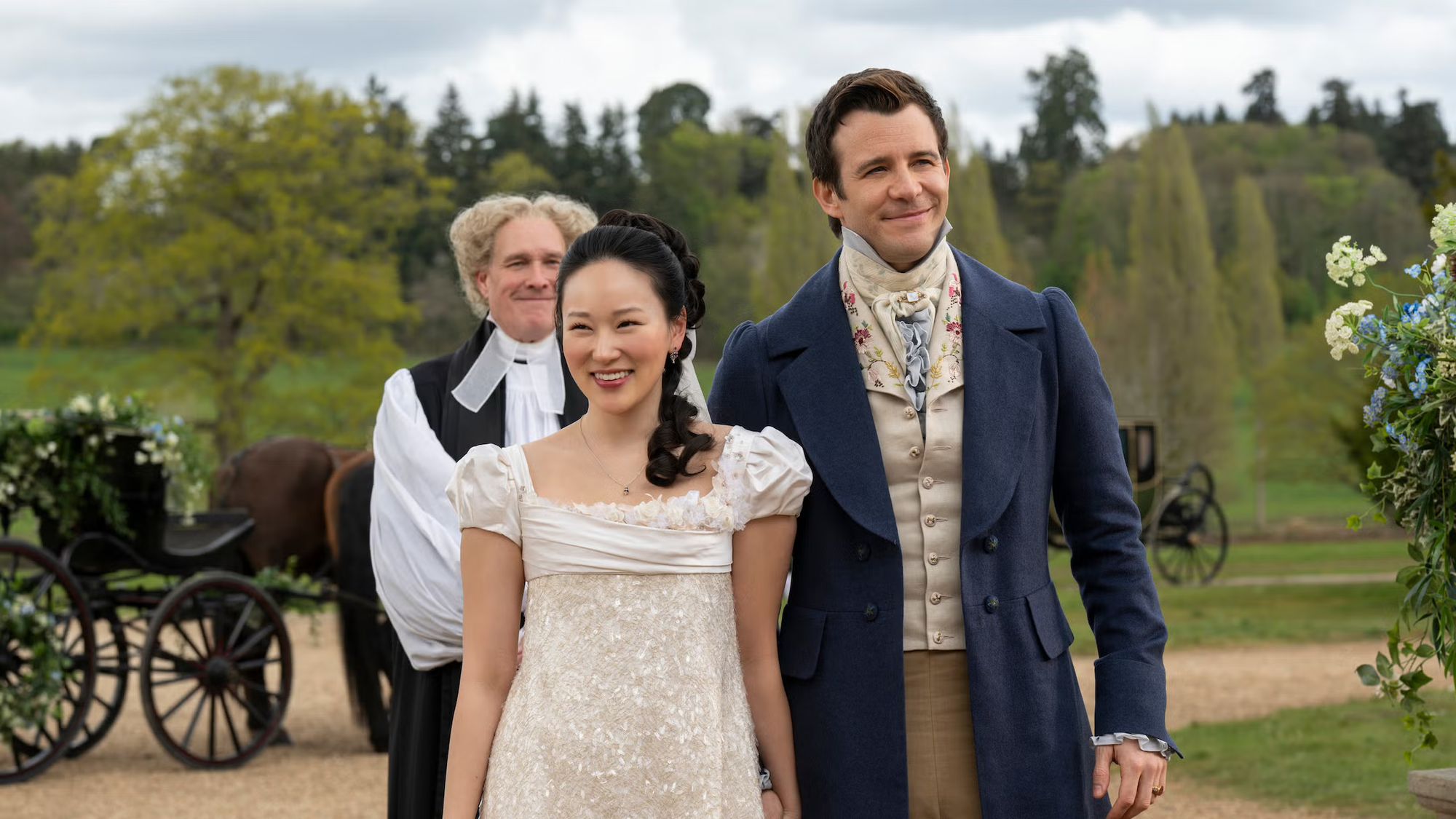
The love story’s conclusion also defies fairy-tale expectations. Benedict and Sophie marry but do not remain in glamorous London. They choose a cottage in the countryside, leaving behind the “stage of class” ruled by scrutiny, rules, and judgment. Benedict gives up part of his social privilege, while Sophie does not ascend to any throne. This is not Cinderella becoming a princess, but two individuals choosing where they belong.
The final camera shot of the season — Sophie in the silver dress, mask in hand, no longer hidden — completes her journey. The woman in silver is no longer a fleeting illusion but someone seen, accepted, and loved.
The difference in this version of Cinderella also lies in how the show explores hierarchical relationships. Benedict is not merely searching for a mysterious woman; he must confront the class divide he once ignored. Sophie, meanwhile, never dreams of entering high society. She remains acutely aware of the boundaries she is not permitted to cross.

Thus, Bridgerton Season 4 does not retell Cinderella to lull audiences into fantasy, but to pose a more realistic question: Can a cross-class romance exist outside of dreams? And if so, what price must be paid?