Editor’s note: The following contains spoilers for ‘Frankenstein.’When considering how many films about misunderstood monsters Guillermo del Toro has made over the course of his career, it makes sense that an adaptation of Frankenstein was his long-standing passion project. Even though the characters from Mary Shelley’s source material have been brought to the big screen countless times, they are often used for shock value within spooky horror films. For del Toro, it was important to remember that the story is a tragedy, as he has always shown an affinity for his creatures. Despite the fealty paid to the novel, del Toro’s Frankenstein changes a key aspect of the ending, which allows the film to conclude on a more hopeful note.
Del Toro saw Frankenstein as a paternal story about the relationship between Victor (Oscar Isaac) and his creature (Jacob Elordi), and Elordi said that the intention was to show “all the terrible and beautiful things that happen between a father and son.” Del Toro, who said that he viewed the film “as a biography of these characters,” wasn’t deterred by Isaac’s suggestion that the new framing devices be removed because of how critical it was to his vision. While these alterations may be controversial among literary scholars, del Toro brought his empathetic perspective to Frankenstein and made the brave choice to leave viewers with a fleeting moment of hope.
Guillermo del Toro Changed One Aspect of Mary Shelly’s Novel
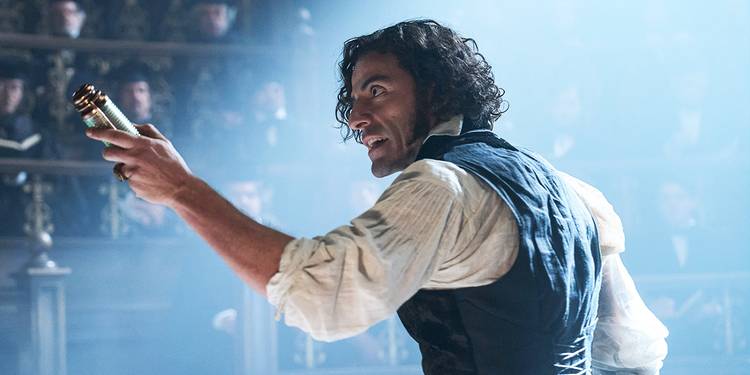
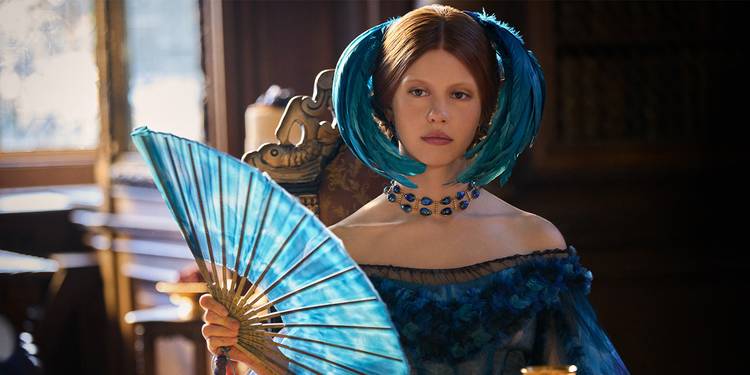
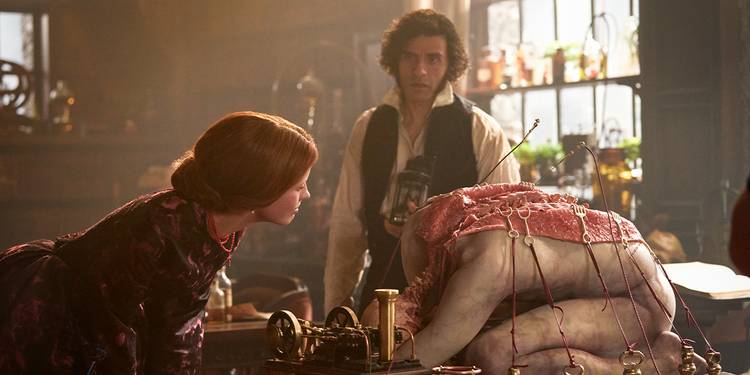
“Frankenstein’s monster” may have become a horror villain over the course of horror film history, but Shelley’s novel depicts him as a sad, misunderstood creature who doesn’t understand why he has been rejected by his creator. In del Toro’s version, the film is divided into two segments, which tell the story from the perspective of Victor and the creature, respectively. The two stories are tied together by a culminating segment, teased in the film’s opening scene, in which Victor is confronted by the creature after a ship led by Captain Anderson (Lars Mikkelsen) becomes trapped in the North Pole. Del Toro’s film allows Victor to apologize to the creature for his abusive behavior, which earns him forgiveness in the moments before he succumbs to his wounds.
Even if giving Isaac the chance to give Victor a redemptive arc is more of an extension of Shelley’s novel than it is an alteration, del Toro’s film plays out significantly differently when it comes to the fate of the creature. In the original novel, the creature reveals that he plans to burn himself to death, even if his fate is ultimately ambiguous. Del Toro’s Frankenstein leaves the creature with a more hopeful future, as it shows that he has learned to embrace the sunlight in the same way that Victor taught him as a child. Even though his true love, Lady Elizabeth Lavenza (Mia Goth), was killed during a fire at her wedding, the creature shows his more heroic tendencies when he helps to pull Anderson’s ship out of the ice so that his crew will be saved. Elordi said that this was meant to reflect how people can “live in spite of who we are and who raised us,” which is a description that applies to both the creature and Victor. After all, it was Victor who was confronted earlier in the film with the revelation that he was “the monster” all along.
Del Toro has a personal connection to Frankenstein relating to his own father, Federico del Toro, who was kidnapped in a 1998 crisis that was mediated by James Cameron. Del Toro felt that it was important to understand his father’s trauma, as he saw the major themes of Frankenstein to be pain, regret, and forgiveness. “Forgiving someone and forgiving yourself into being” was an important idea, as del Toro depicted a version of the creature who had to let go of the pain that his creator had gone through. Although Frankenstein had been a dream project that del Toro had aspired to make since the beginning of his career, he found the paternal nature of the story to be more potent in light of his father’s experiences, because “when somebody’s taken, the family is taken,” which means that “both sides are paralyzed. ” According to Isaac, this personal touch is what makes del Toro’s version of the story unique when compared to various other adaptations.
‘Frankenstein’ Is a Powerful Story About Generational Trauma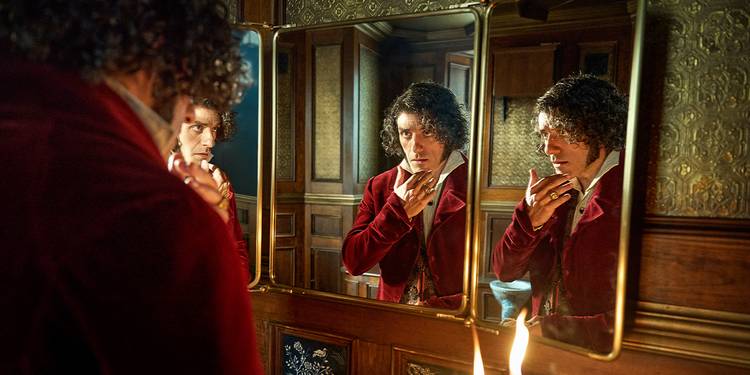

One of the key reasons that del Toro’s film finally earned its funding at Netflix is that he was allowed to make a grandiose epic that didn’t cut corners when examining the period details. Frankenstein goes into depth showing Victor’s upbringing, where as a young man (portrayed by Christian Convery), he is subjected to physical and emotional abuse at the hands of his father, Baron Leopold Frankenstein (Charles Dance). Although Leopold was a renowned physician who taught Victor much of what he needed to learn about human anatomy, he also showed favoritism towards his younger son, William (Felix Kammerer), after the death of his wife, Claire. Victor’s aspirations to earn his father’s love go unnoticed, but they fuel his desire to find a way to extend human life through scientific methods. In a cruel twist of irony, Victor ends up dismissing the creature’s humanity in the same way that his father dejected him, as he reveals to Elizabeth that he does not view his creation as being human.
Frankenstein continues to draw parallels between Victor and his father in its depiction of how the creature was raised. The flashbacks show Leopold physically abusing his son when he gets scientific facts wrong, and Victor similarly attacks the creature when he isn’t able to fully communicate. In both cases, the fractured paternal relationship leads the characters to let loose with their violent tendencies; Victor becomes an aggressive, paranoid loner, and the creature is forced to break through from his confinement. According to Elordi, del Toro felt that it was important to change the ending to indicate that the cycle of abuse can be stopped. In his survival, the creature is able to both put his traumatic upbringing behind him and live the life of serenity that his creator never got to experience. Given that Anderson’s men also reveal that they will no longer attempt to track down the creature, there’s reason to believe that he might be able to find peace.
Frankenstein isn’t just an emotional, thought-provoking new spin on a classic work of literature, but the culmination of themes that del Toro has been developing throughout his career. Del Toro has often explored the humanity within people that society views as “monsters.” Both Hellboy films showed how an unlikely demon could become a superhero, Pan’s Labyrinth featured fantastical creatures aiding a young girl as she grew up under the thumb of fascism, and Pinocchio incorporated several direct allusions to Shelley’s themes. It takes courage to take an optimistic approach within such a dark story, but with Frankenstein, del Toro has proven once more why he is one of the most signature, uncompromising filmmakers of today.
Frankenstein is now playing in limited theatrical release and comes to Netflix on November 7.