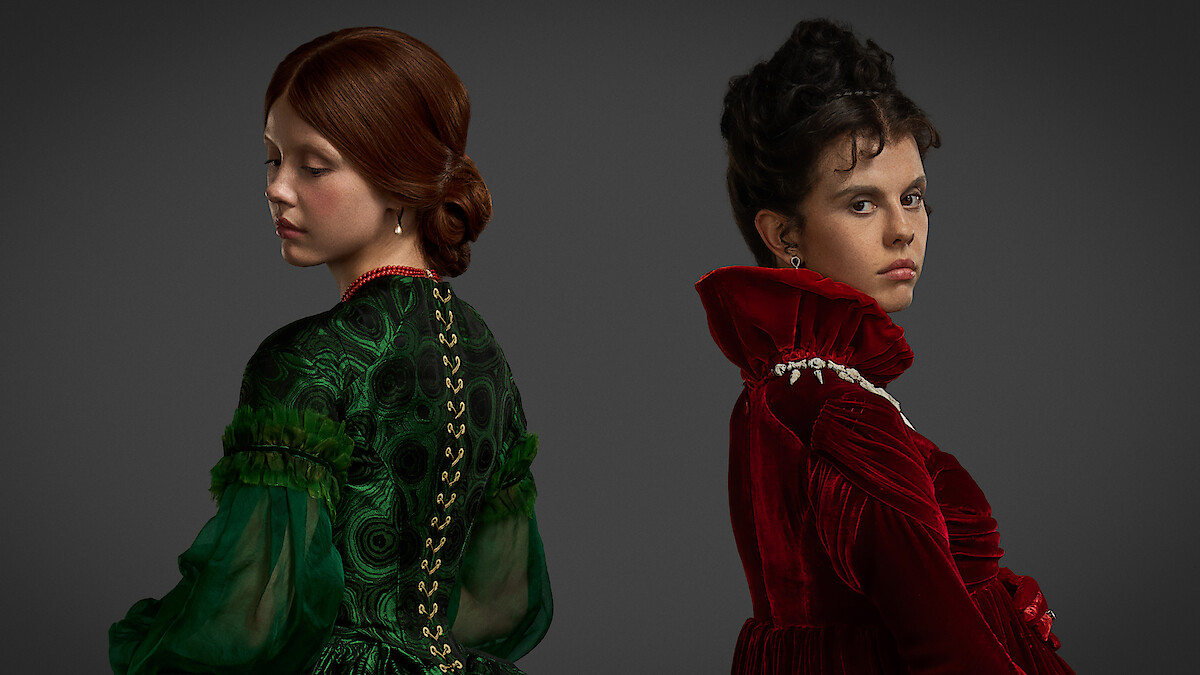
Mia Goth didn’t fully understand the soul of her Frankenstein character — the luminous, instinctively gentle Elizabeth — until the moment she slipped into her first costume. “I tried on a dress for the first time, and it clicked,” she tells Tudum. Somewhere between the cloth, the silhouette, and the quiet of that fitting room, she realized she had been carrying a part of Elizabeth inside her all along.
“She was always far closer to me than I knew,” Goth reflects. “It took a lot of work — in a roundabout way — to finally realize she exists in my most quiet moments, when I can be my most authentic self.”
But Elizabeth was only half of what Guillermo del Toro had in mind.
Because in Frankenstein, Goth doesn’t just play Victor Frankenstein’s future sister-in-law — she also portrays Claire, Victor’s late mother. A dual role hidden in plain sight.
And that decision is no accident.
Del Toro’s Secret Intent: One Actress, Two Souls, One Freudian Thread
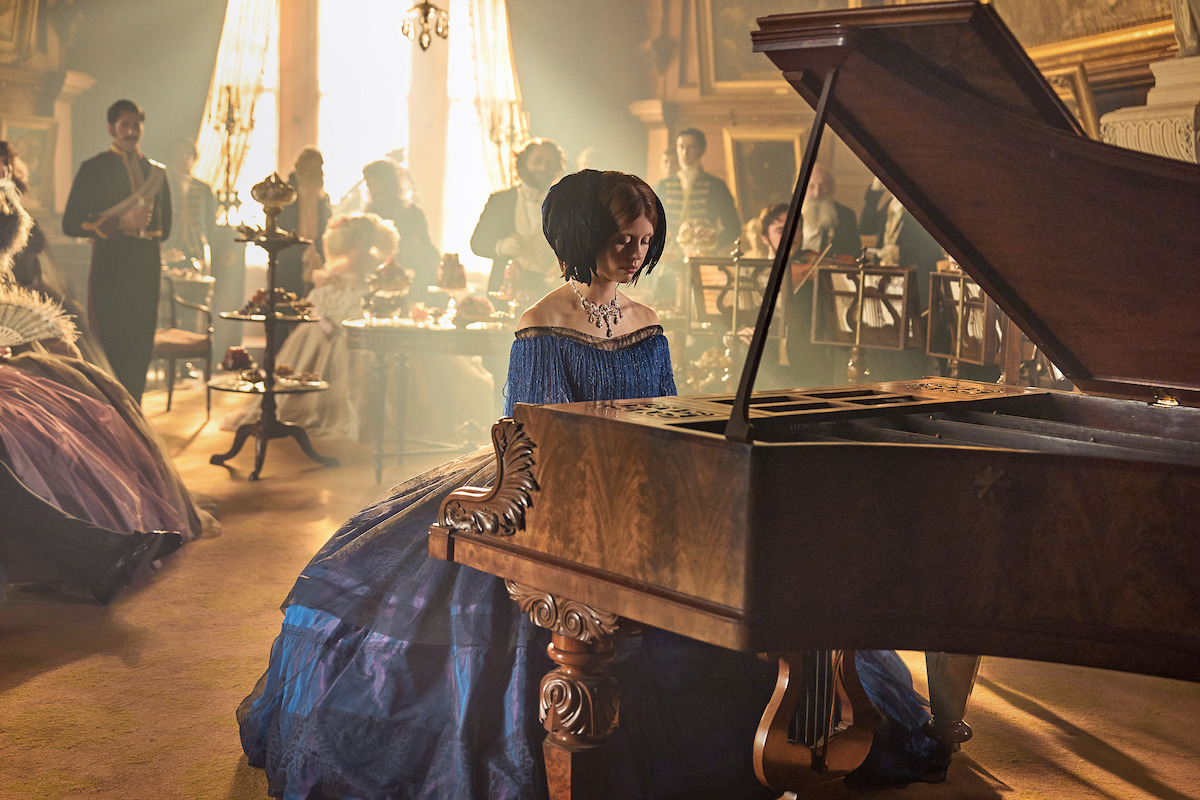
When Goth first joined the project, she believed she was only playing Elizabeth. But during early conversations, she casually mentioned to del Toro that she’d recently become a mother.
“I saw Guillermo’s eyes light up,” she recalls. “He hadn’t fully figured out who Elizabeth would be yet. I wonder if, in that moment, he started to put Elizabeth and Claire together.”
Del Toro later confirmed the instinct behind this choice:
he wanted to create a subconscious bridge — emotional, symbolic, Freudian — between Victor’s mother and the woman he desperately desires.
As he explained privately:
“Many men love their mothers without realizing it — in an incredibly primal, Freudian way.”
Through this lens, the dual casting becomes more than artistic flourish — it becomes the spine of Victor’s psychology. Claire represents lost innocence, unconditional love, and the original source of warmth in Victor’s life. Elizabeth embodies that same capacity for empathy and maternal instinct, but in a living, breathing form.
Even the wardrobe deepens this thematic echo:
Claire always appears in red, a visual memory burned into Victor’s mind — the color of her blood on his hands when she died. From that moment on, red becomes a haunting presence, following him like a curse throughout the film.
Elizabeth: The First Person Who Truly “Sees” the Creature

While Victor recoils from his creation — punishing him simply for existing — Elizabeth does the opposite. She recognizes him instantly, without judgment, fear, or disgust.
“When she sees the Creature for the first time, there’s an immediate connection,” Goth explains. “She understands him. ‘I see you. I may not look like you, but I feel like you.’”
She is the only character in the entire film who refuses to see the Creature as a monster.
This maternal tenderness is exactly what del Toro wanted when pairing Elizabeth with Claire. He needed an actress who could embody both the nurturing gentleness of a mother and the emotional intelligence of a young woman capable of loving something the world fears.
Goth describes Elizabeth beautifully:
“She’s like a butterfly or a moth — fluttering and trying to find her place in this world.”
Even her costumes, sculpted by designer Kate Hawley, reflect this: iridescent fabrics, insect-wing motifs, and divine visual symbolism. A halo-like bonnet. Colored veils that transform her into something ethereal. A figure of both earthly warmth and spiritual grace.
Two Roles, One Performance — And a Character Who Ends Up Mothering Goth Herself
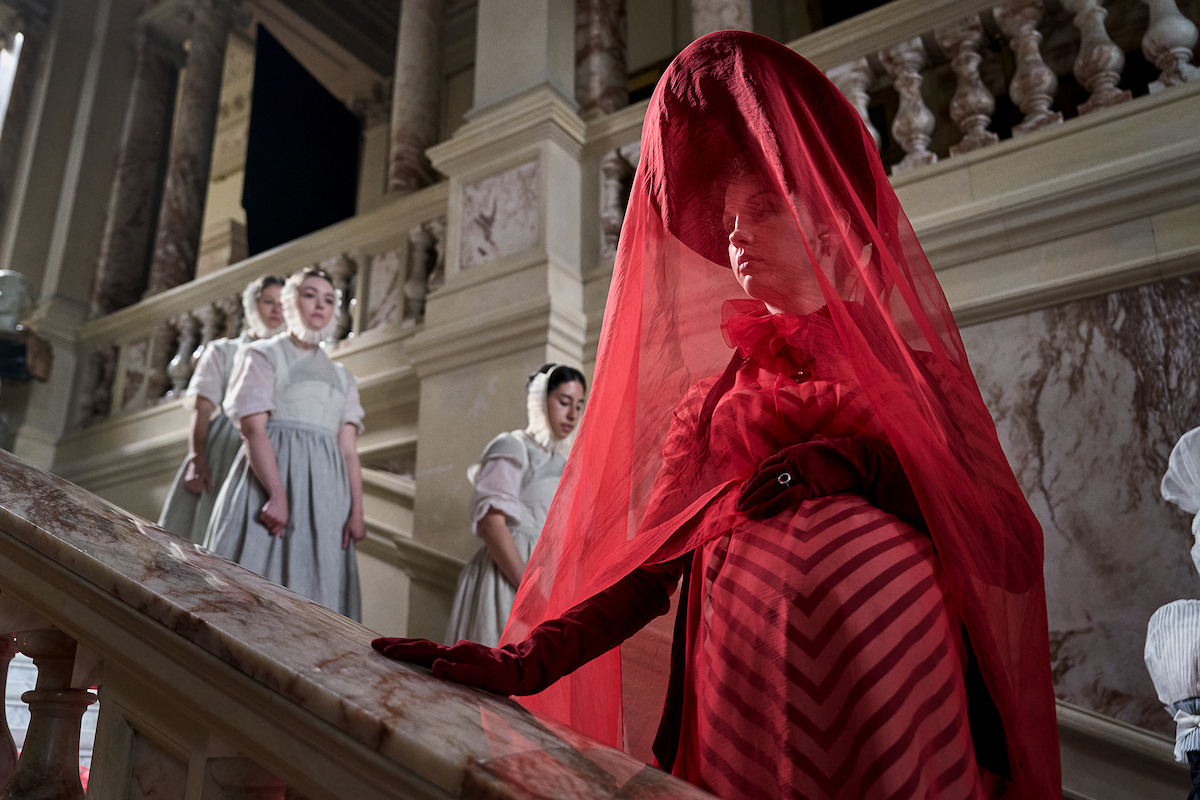
By the end of filming, Goth found that embodying both Elizabeth and Claire wasn’t just a creative challenge — it was a profoundly emotional experience.
“The entire experience was just magical. I hope people feel seen when they watch Frankenstein. I hope they feel a little less alone,” she says.
And in one of her most tender admissions:
“In many ways, I feel like Elizabeth was mothering me throughout this whole process.”
A dual performance — but a single emotional truth.
In del Toro’s Frankenstein, Elizabeth and Claire are not just two characters played by the same actress.
They are the two halves of the same heartbeat — the love Victor lost, and the love he tries so desperately to claim.
A haunting choice. A brilliant one.
And, once you notice it, impossible to unsee.