Behind the painted smile lies a secret of birth, energy, and a horror that carries the shape of creation itself.
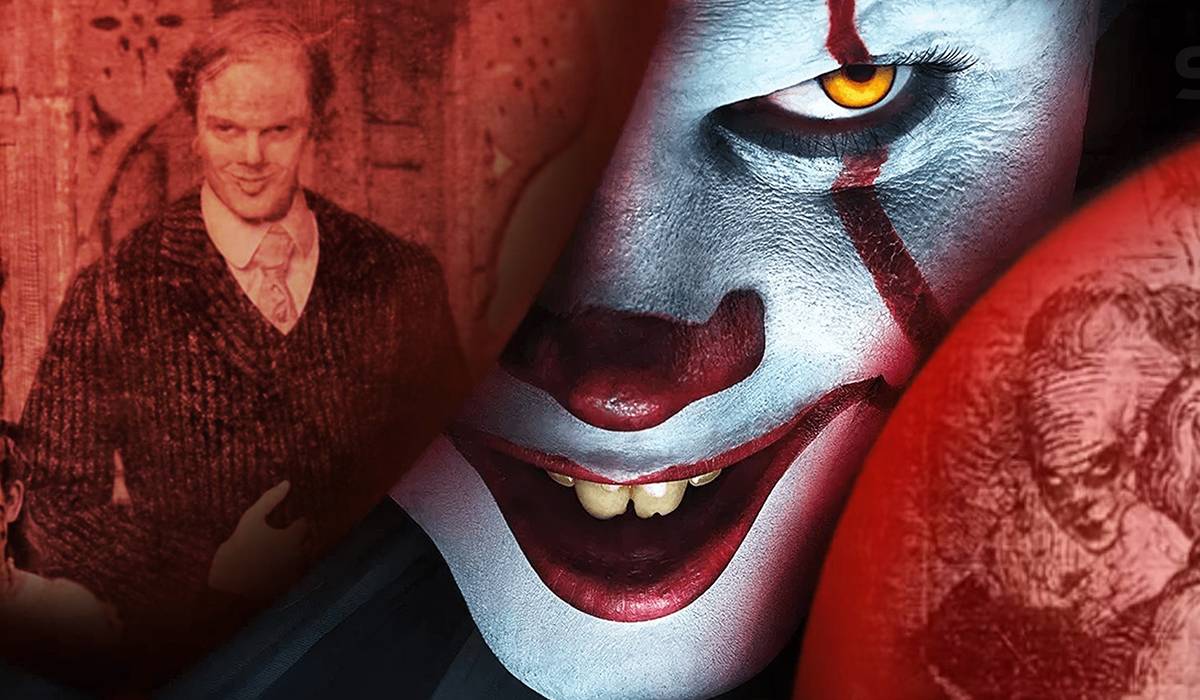
When Fear Has a Gender
In Stephen King’s original novel IT, there is one detail that even long-time fans and movie viewers may have overlooked — a detail so strange and unsettling that it changes everything we think we know about the monster:
Pennywise isn’t a “he.” Pennywise is an “it” — and in its truest form… a “she.”
Stephen King has never written simple monsters. With It, he didn’t just invent a creature that feeds on fear — he created a being that embodies both life and death, creation and destruction. And that makes Pennywise’s “gender” one of the most complex and symbolic elements in the entire Kingverse.
The Deadlights – Its True Form and the “Reproductive Energy” of the Universe
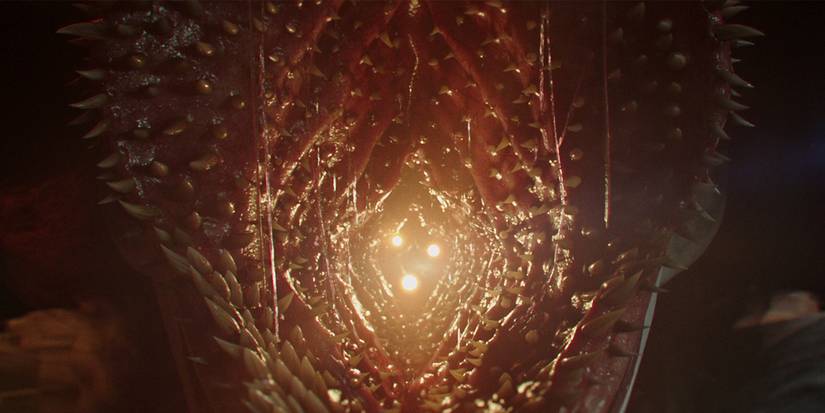
Behind the red nose and smeared makeup, Pennywise’s true nature is an ancient cosmic entity known as The Deadlights — a formless being of pure energy existing outside the human universe.
The Deadlights have no gender, no fixed shape; they appear as whirling, hypnotic beams of blinding light that drive anyone who sees them insane.
But Stephen King slips in a peculiar, almost poetic detail:
When Beverly Marsh, the only girl in the Losers Club, witnesses the Deadlights, she describes them as “radiant, swirling, and alive — like the act of creation itself.”
In Beverly’s eyes, beauty and terror merge into one. The light of birth carries the breath of death.
Literary analysts later noted that this description was no coincidence. King has hinted in interviews that The Deadlights represent “the reproductive energy of the universe” — a primordial, feminine force that both gives and destroys life.
When “It” Chose the Form of a Female Spider

In the physical world, deep beneath the cursed town of Derry, Pennywise takes the form of a gigantic female spider — a monstrous being nesting in the darkness and laying eggs.
It’s one of the most disturbing moments in the novel: as the Losers Club prepare for their final confrontation, they discover that Pennywise isn’t just hunting — It’s reproducing.
This revelation transforms the creature from a mere killer into a symbol of the eternal cycle of birth and death: creating life only to consume it again.
Thus, even though the outward image of Pennywise — the clown — reflects a grotesque parody of masculine energy, its core essence is female, tied to the raw, reproductive power of the cosmos.
Stephen King and the Tragedy of Creation
In Stephen King’s vast mythological universe, beings like It and Maturin the Turtle were both born from Gan, the supreme creative force that governs all existence.
If Maturin represents balance, wisdom, and light — then It is the opposite: instinct, chaos, and primal creation.
That duality makes It not merely a child-eating demon, but a dark goddess, a twisted embodiment of the same energy that gives birth to worlds.
In King’s cosmology, there is no clean line between “mother” and “monster.” Creation and destruction are simply two faces of the same survival instinct.
“It” – The Goddess of Fear
When Beverly gazes into the Deadlights, she doesn’t just see evil — she sees the source of all life, raw and terrifying.
In that instant, It is no longer just a killer. It becomes the prototype of a dark, cosmic mother, a divine force before which both gods and mortals must tremble.
Perhaps that’s why Stephen King never truly calls Pennywise a “he.”
Because behind the clown costume, behind the high-pitched laughter and painted grin, lies a “she” —
a being that both gives birth to the universe and holds the power to devour it.
If all life begins in light, then “The Deadlights” are the light that has died — the glow of both creation and extinction, the supreme mother hidden within the insane smile of a clown.