Spoiler Alert! Netflix’s Blockbuster Frankenstein Has Officially Premiered — Here’s What Makes Guillermo del Toro’s Version Different from Mary Shelley’s Classic

Oscar-winning director Guillermo del Toro’s latest film, Frankenstein (2025), officially premiered on Netflix last Friday (November 7). Adapted from the 1818 novel of the same name by Mary Shelley — the “mother of science fiction” — the film reimagines the legendary tale with del Toro’s signature emotional depth and breathtaking visuals. Although a lifelong admirer of Shelley’s work, del Toro admitted that this was not intended to be a faithful adaptation.
Hollywood star Oscar Isaac plays the brilliant but tormented scientist Victor Frankenstein, while Jacob Elordi (of Euphoria fame) embodies The Creature. Mia Goth stars as Elizabeth, a reimagined version of Victor’s beloved.
Del Toro reshaped both the characters and the setting, removing figures like Henry Clerval and Justine Moritz to focus instead on themes of humanity, compassion, and forgiveness. In a previous interview, del Toro said:
“This is not a story about science out of control; it’s about the human spirit — about forgiveness, empathy, and the act of listening.”
According to Variety, Julie Carlson, professor of English at the University of California, Santa Barbara (UCSB), praised del Toro’s Frankenstein as “closer to the soul of Mary Shelley than any other adaptation.” She noted that the film preserves the novel’s dual narrative structure, allowing both Victor and the Creature to tell their own stories.
Carlson highlighted that in del Toro’s version, Victor’s father is portrayed as an abusive physician, transforming the novel’s central theme “from pride to shame.”
“It’s no longer just about the pursuit of knowledge, but a struggle against failure, shame, and patriarchal pressure,” she explained.

Meanwhile, Mia Goth’s Elizabeth is reimagined from a passive fiancée into an independent entomologist. Carlson observed that this creative choice reflects Elizabeth’s “insect-like quickness” from the original text, making the metaphor literal. The film even establishes an emotional connection between Elizabeth and the Creature — something never present in Shelley’s novel.
“Both are misunderstood by society,” Carlson noted. “Her first words to him are, ‘Are you hurt?’ It’s not romance — it’s empathy between the vulnerable.”
Compared to the novel’s implicit critique of women’s oppression, del Toro’s version focuses more on the structures of war and power.
“The film softens society’s obsession with physical beauty and gender, but emphasizes reflection on power and the responsibility of creators,” Carlson said.
She also praised del Toro for retaining the “naturalist” sequences involving the blind old man, De Lacey, and his family — scenes often cut from previous adaptations.
Carlson argued that the film brings Frankenstein “back to friendship and understanding,” classifying it more as Gothic tragedy than horror.
“It captures the Romantic spirit of Shelley, Byron, and their circle — the emotional complexity, the longing, and the tragedy of creation itself.”
Differences Between the Novel and the Film: Plot and Characterization
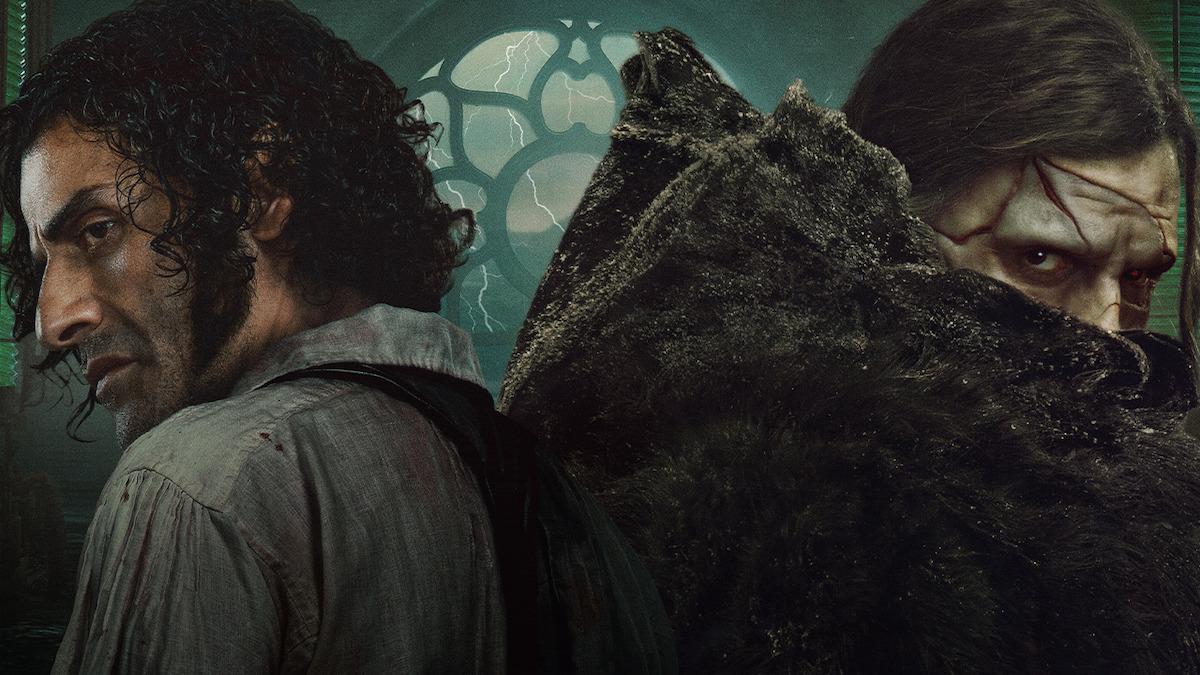
Oscar Isaac’s Victor is portrayed not as the traditional “mad scientist,” but as a brilliant, flamboyant tech entrepreneur — sharp, arrogant, and haunted. The relationship between Victor and Christoph Waltz’s character reframes the monster’s creation through a modern lens of technology and financial ambition.
In the novel, Elizabeth is Victor’s cousin and fiancée — emotionally dependent and ultimately a victim of his obsession. The Creature, meanwhile, possesses extraordinary intellect and language, recounting his experience of rejection and despair. After committing several murders, including that of William and Elizabeth, he disappears into the Arctic, consumed by remorse.
In del Toro’s adaptation, the emotional climax occurs aboard an icebound ship in the Arctic, echoing the novel’s conclusion. After the deaths of Elizabeth and Victor’s loved ones, Victor vows revenge and chases the Creature north across the frozen wastelands. He is eventually rescued by explorer Robert Walton, weakened but resolute in his warning against defying nature.
After Victor’s death, the Creature quietly enters his cabin, gazing at his creator’s body. He confesses to Walton that he was not born evil — but became monstrous through isolation and hatred.
“I destroyed my creator — and in doing so, destroyed myself.”
This ending reinforces the novel’s symbolic punishment for defying natural order — representing humanity’s self-destruction through arrogance — while portraying the Creature not as evil, but as tragically human.
Film critic Travis M. Andrews (The Washington Post) noted that while del Toro’s version boasts stunning visuals and emotional ambition, its focus shifts from “scientific morality and the dangers of playing God” to “the humanity, emotion, and redemption of the Creature.” This, he argued, “diminishes the sharp confrontation between creation and destruction” present in Shelley’s original.
Mary Shelley and the Question of Gender
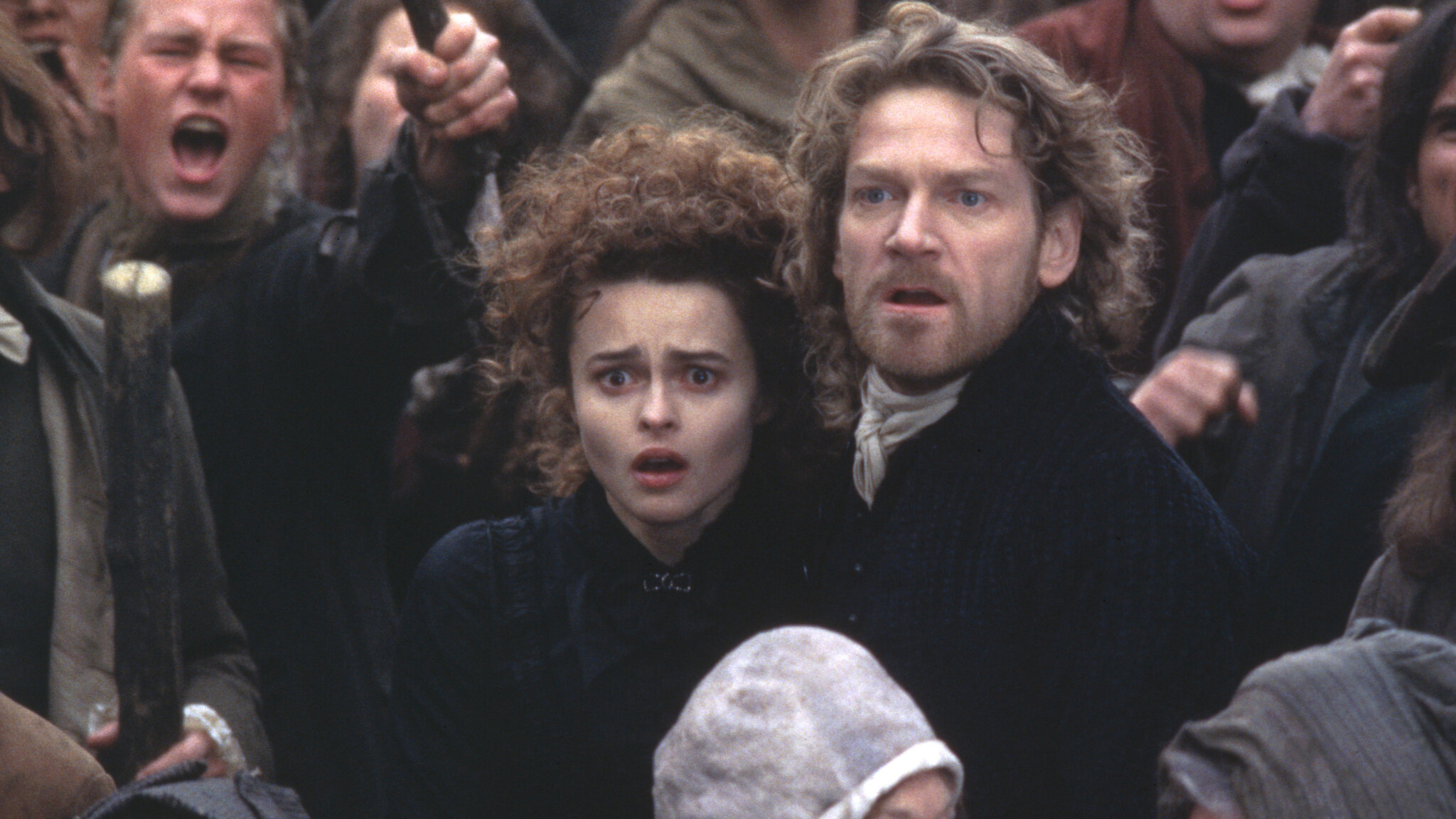
In Shelley’s novel, male characters dominate the acts of exploration and creation, while female figures are largely passive, victims of male ambition. Scholars have long argued that Shelley wrote from a woman’s perspective but, constrained by her time, gave voice to men — reflecting the silencing of women in early 19th-century society.
When Frankenstein was first published in January 1818, it bore no author’s name. The preface, written by her husband Percy Bysshe Shelley, led many to assume he was the author, reducing Mary to “the poet’s wife and muse.”
In The Madwoman in the Attic (1979), literary critics Sandra Gilbert and Susan Gubar described this erasure as symbolic of women’s “invisibility” in patriarchal literary history.
Furthermore, male “acts of creation” in the novel have been interpreted as a metaphorical usurpation of childbirth — a male attempt to seize and control the creative power of women. When Victor destroys his half-finished female companion for the Creature, scholars view it as a reflection of male fear and suppression of female creativity and autonomy.
Although Justine — falsely accused of murder and executed — does not appear in del Toro’s adaptation, her fate in the novel symbolizes the institutional sacrifice of women. Literary scholar Anne K. Mellor described Justine as “the scapegoat sacrificed in a patriarchal society,” paralleling Elizabeth as a double victim. Her coerced confession and execution serve as Shelley’s critique of religious and judicial authority — systems that force women into submission.
While many scholars see Frankenstein as proto-feminist, others argue it still fails to offer true female empowerment. Nic Helms, associate professor at Plymouth State University, notes that despite depicting oppression, the novel leaves little room for women’s active resistance or transformation.
Similarly, critics have pointed out that del Toro’s adaptation, while emotionally profound, also sidelines its female characters. Peter Bradshaw (The Guardian) praised the film’s visual mastery but lamented that “Mia Goth’s character deserved far more room to grow.”
Meanwhile, Amy Nicholson (Los Angeles Times) argued that while Shelley’s original drew its strength from its feminist structure, the film centers too heavily on Victor and the Creature, weakening the female perspective and turning women into emotional catalysts rather than agents of their own fate.
Ultimately, while del Toro’s Frankenstein dazzles as a visual and emotional triumph, it may not fully restore the radical, gender-conscious energy that Shelley infused into her timeless masterpiece.