Why There Isn’t a Single Line of Dialogue in Budweiser’s Super Bowl Ad — And Why the Eagle and the Horse Are Never Allowed to “Speak” for America
At first glance, the silence feels almost quaint.
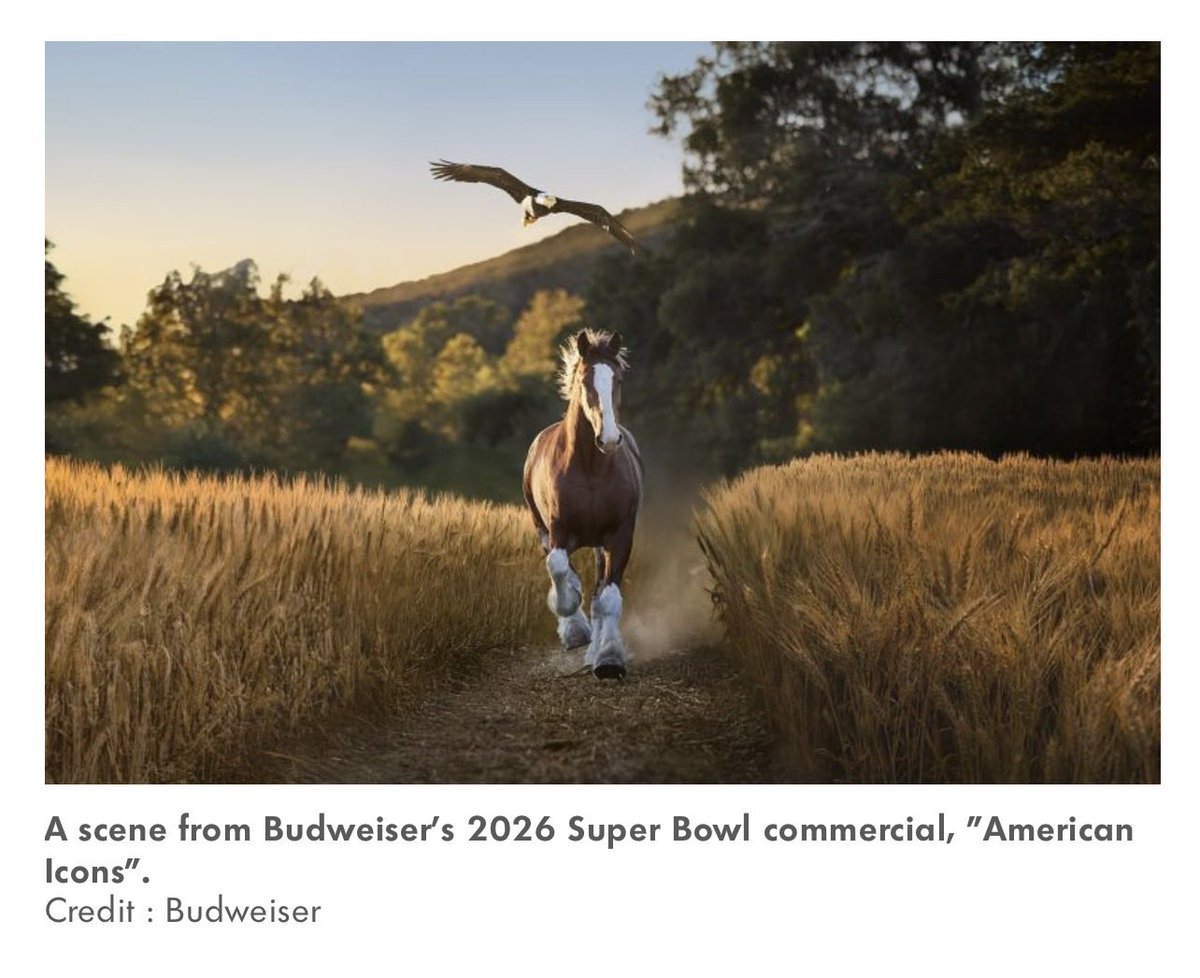
In a Super Bowl era defined by punchlines, celebrity cameos, and ads that explain themselves before the viewer can even settle in, Budweiser’s 2026 commercial does the opposite. No voiceover. No dialogue. No character spelling out what the moment means. Just a Clydesdale foal, a fallen bald eagle chick, a patient farmer, and a story that unfolds without a single spoken word.
For some viewers, the quiet simply feels emotional. For others, it feels deliberate — even careful.
And that’s where the conversation begins.
Because the absence of dialogue in American Icons doesn’t feel like an aesthetic flourish. It feels like a boundary.
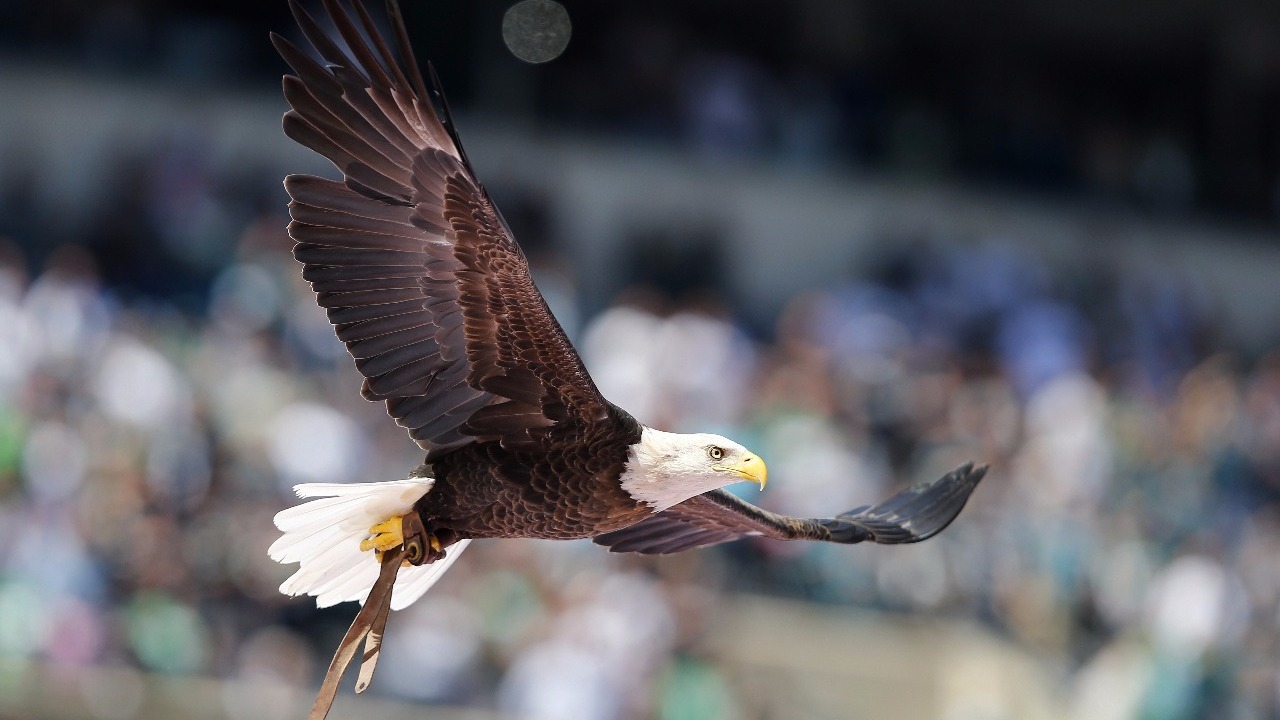
From the opening frames, the ad invites viewers into something familiar yet fragile: two of the most recognizable symbols in American culture meeting in a moment of vulnerability. The Clydesdale, long associated with steadiness and labor. The bald eagle, a national emblem loaded with meaning, history, and expectation. Together, they form an image that could easily tip into spectacle or statement.
But it never does.
Instead, the story stays wordless as seasons pass, trust builds, and growth happens quietly. No one tells the eagle what it represents. No one tells the horse what it stands for. And crucially, no one tells the audience what America is supposed to feel like in this moment.
Some viewers have noted how unusual that restraint feels — especially now.
In a cultural climate where symbols are constantly claimed, reinterpreted, and debated, the choice to let the eagle and the horse exist without explanation feels intentional. Words, after all, don’t just clarify. They divide. They narrow meaning. They invite disagreement the moment they appear.
Silence, on the other hand, allows projection.
Without dialogue, the eagle can represent freedom, recovery, resilience, or simply a creature learning to fly again. The horse can be strength, patience, companionship, or the quiet act of staying when leaving would be easier. The farmer’s emotion at the end doesn’t arrive with justification — it just happens, and viewers are left to decide why it hits.
That openness may be the point.

Several advertising analysts have suggested that once words enter a story built on national symbols, interpretation hardens. A line of dialogue turns metaphor into message. A voiceover turns feeling into instruction. And once that happens, the story no longer belongs to the viewer.
Budweiser appears to avoid that moment entirely.
By never letting the eagle or the horse “speak,” the ad sidesteps something many brands struggle with: saying too much. Instead of defining America, it shows fragments of it — care, patience, growth, restraint — and steps back.
The result is an ad people keep talking about not because of what it said, but because of what it refused to say.
Some viewers have described feeling unexpectedly emotional without being able to pinpoint why. Others say the silence made the final flight feel earned rather than triumphant. A few have even admitted they rewatched the commercial looking for a message they thought they missed — only to realize the absence itself was the message.
Or maybe it wasn’t.
Because the ad never confirms any of this. It doesn’t reward interpretation with validation. It doesn’t correct assumptions. It simply ends, leaving viewers with an image and a feeling — and the uneasy sense that if words had been added, something might have broken.
So is the silence a creative risk? A protective move? A way of preserving symbols that still resonate as long as no one claims ownership of them?
Budweiser never says.
And perhaps that’s the quietest, most deliberate choice of all.