When Pedro Pascal walked onto the stage of Saturday Night Live during Bad Bunny’s hosting debut, the crowd reaction was instant — loud, emotional, and filled with surprise. What began as a standard opening monologue quickly turned into one of the night’s most memorable moments, as Pascal appeared beside the global music star to “help” translate his Spanish remarks, only to deliver intentionally imperfect interpretations that turned the exchange into playful comedy.
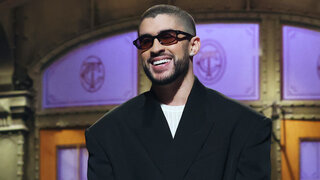
The scene captured something larger than a simple cameo. Bad Bunny, switching naturally between Spanish and English during the monologue, used the moment to acknowledge his roots, his family watching from Puerto Rico, and his gratitude toward the audience — while Pascal played the role of supportive friend who clearly did not understand everything being said but confidently pretended he did. The contrast between sincerity and humor made the segment feel spontaneous and warm rather than scripted.
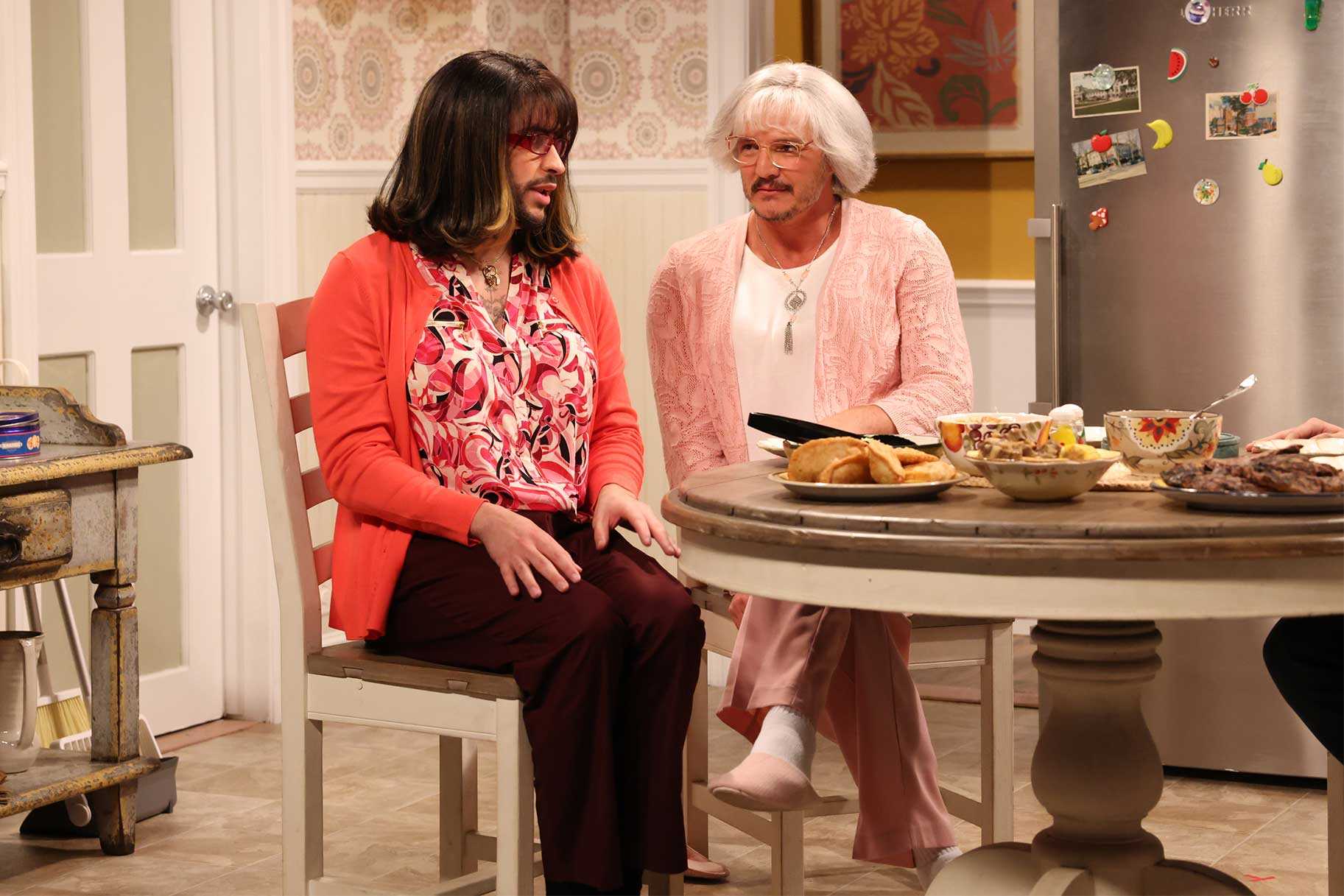
Later in the episode, Pascal returned again — this time reviving his now-beloved “protective mom” character, a role originally introduced when he hosted the show earlier that year. In the sketch sequel, Bad Bunny joined him in drag as “Tía Rosa,” forming a hilariously overprotective family pair who subjected their nephew’s new girlfriend to passive-aggressive comments delivered in sharp Spanglish humor. The sketch blended cultural inside jokes with family dynamics, which many viewers found both relatable and unexpectedly sweet beneath the comedy.

Behind the laughs, the sketch also carried a deeper creative backstory. Cast member Marcello Hernández — who co-wrote the original version — later revealed that the character was partly inspired by his own mother, helping explain why the humor felt so specific and authentic. That personal influence gave the recurring characters a sense of emotional grounding, turning what could have been exaggerated satire into something fans genuinely connected with.

The episode itself became a major talking point, not only because Bad Bunny served as both host and musical guest, but also because it featured a string of high-profile cameos and widely shared sketches. The return of Pascal’s character in particular helped elevate the show into one of the season’s most viewed comedic moments online, proving that audiences were just as invested in the chemistry between the two performers as they were in the music or celebrity surprises.
What made the night resonate, however, was the effortless balance between chaos and comfort: a superstar singer navigating his first hosting role, a trusted actor stepping in like an older sibling, and a comedy sketch that felt strangely heartfelt underneath the jokes. In the fast pace of live television, it was a reminder that sometimes the best moments come from performers clearly enjoying each other’s company — and letting audiences in on that energy for just a few minutes.
And while fans remember the laughter most, those who watched closely noticed something else: the way the two performers seemed to slip naturally into a protective, almost familial rhythm on stage — a small detail that made many wonder whether the funniest part of the night was actually built on a very real friendship behind the scenes.