When news broke that James Van Der Beek had died at age 48 after battling colorectal cancer, tributes flooded social media from co-stars, friends, and fans. But among the many messages, one stood out for its quiet emotional weight: a deeply personal tribute from his former wife, Heather McComb — a woman whose chapter in his life many believed had long since closed.

Instead of controversy or nostalgia-driven headlines, her words painted a different picture — one of enduring respect, emotional maturity, and a connection that seemed to outlive the marriage itself. And in the days following his death, that message has become one of the most widely discussed reflections on who Van Der Beek really was beyond the fame.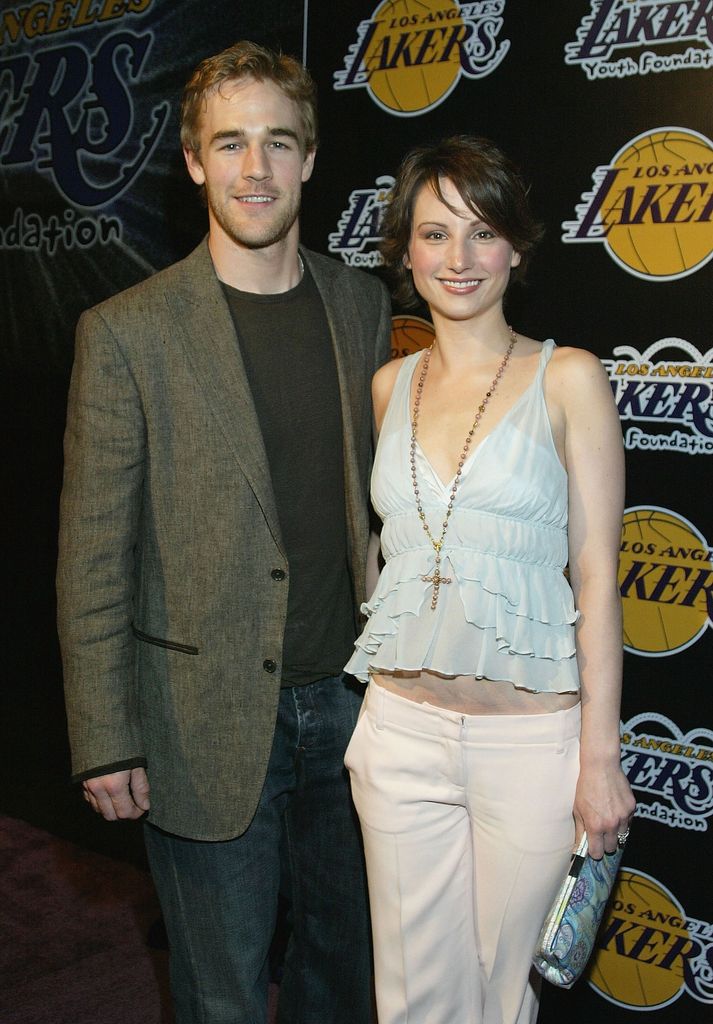
A Relationship Formed Before the Spotlight Shifted
Long before Van Der Beek became permanently linked with the cultural phenomenon Dawson’s Creek, he and McComb were building a life together away from the constant noise of celebrity culture. Their relationship began during the early stage of his career rise, and they married in 2003, a time when he was transitioning from teen idol status into more mature roles.
Friends and industry observers often described them as low-profile compared with other Hollywood couples. Unlike many celebrity marriages built in front of cameras, theirs was largely private — a detail that now seems important in understanding why their story resurfaced with such emotional resonance.
The Split That Never Became a Scandal
After nearly seven years together, the couple separated and finalized their divorce in 2009. What makes their breakup unusual by Hollywood standards is what didn’t happen: no public accusations, no dramatic interviews, and no tabloid warfare.
Instead, they quietly moved in different directions. Van Der Beek later remarried and built a large family with Kimberly Van Der Beek, while McComb continued working as an actress, largely outside the media spotlight. For years, their shared past seemed like a closed chapter — until his death unexpectedly brought it back into focus.
The Tribute That Changed the Conversation
In her emotional statement, McComb described Van Der Beek as “innocent, kind and pure of heart,” reflecting on a “special connection, friendship and love” that she said endured through decades. She revealed that they had shared “last loving words,” suggesting that their bond remained warm even long after their marriage ended.
The tribute included a throwback photo from her 21st birthday — a moment she emphasized occurred before his biggest fame arrived. The image and message together reframed the public narrative, shifting attention away from celebrity headlines toward something more intimate: memory, gratitude, and mutual respect.
What resonated most wasn’t drama — it was sincerity. She praised not only him but also his wife Kimberly and their six children, acknowledging the life he built after their marriage ended.
A Different Portrait of the Man Behind the Fame
McComb’s words aligned with many other tributes that followed, each describing Van Der Beek as deeply compassionate, spiritual, and family-focused. Friends and collaborators described him as supportive, philosophical, and surprisingly grounded for someone who became famous at a young age.
Her message described him as a “beautiful soul” full of light, humor, sensitivity, and depth — not just an actor remembered for one iconic role, but a person who continued to grow emotionally throughout his life.
That framing matters. For many fans, Van Der Beek exists as a permanent symbol of late-90s television. McComb’s tribute challenged that image, presenting him instead as someone shaped by relationships, faith, and personal evolution.
Why Her Words Hit So Hard
Public reactions across online communities show how strongly people connected with the emotional honesty of the moment. Fans described his death as deeply personal, especially for viewers who grew up watching his work, while discussions reflected shock at how quickly illness reshaped his life.
In that context, McComb’s calm, heartfelt message felt almost grounding — a reminder that behind every public figure is a private history filled with people who knew them before the fame, the illness, and the headlines.
An Ending That Feels More Like a Continuation
Perhaps the most striking aspect of this story is how it resists the typical Hollywood narrative. Instead of an ex-wife speaking from distance or conflict, McComb’s tribute suggested something gentler: a relationship that evolved rather than disappeared.
Her reflection didn’t expose secrets or reopen old wounds. Instead, it offered a new lens on Van Der Beek’s legacy — one where kindness and enduring connection mattered more than public image.
And that may be why her words continue to resonate now. In a moment defined by grief and remembrance, she quietly reminded the world that some relationships don’t end when the marriage does — they simply change shape, waiting for the right moment to be understood.