From his very first hours of life, Punch’s story unfolded under difficult circumstances. The newborn Japanese macaque was rejected by his mother shortly after birth, denied the instinctive bond that, in the primate world, can mean the difference between security and distress. Within the troop at Ichikawa City Zoo, maternal contact is more than affection — it is survival, warmth, and emotional regulation, delivered through the simple act of clinging to a mother’s fur.
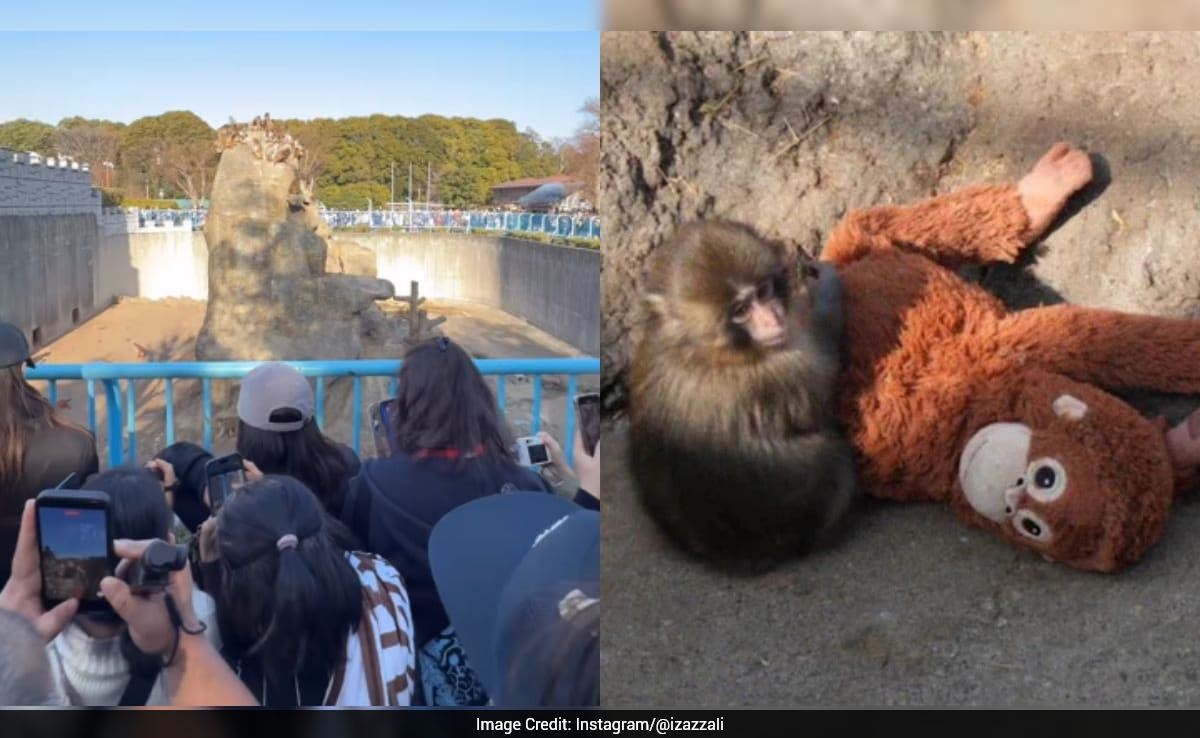
Punch had none of it.
Without maternal grooming, without the steady reassurance of physical contact, the infant was left vulnerable in an environment governed by hierarchy and social cues he was too young to navigate alone. Caregivers intervened quickly, hand-raising him to ensure his physical health. But meeting nutritional needs was only part of the challenge. The deeper concern was emotional security.
To replicate — however imperfectly — the sensation of holding onto a mother, zoo staff introduced a large stuffed orangutan. Soft, oversized, and textured enough to mimic the comfort of fur, the plush toy became Punch’s surrogate anchor. He gripped it tightly as he moved through his enclosure, pressed against it when unsettled, and slept curled into its fabric as though it were a living presence.
What might appear to casual observers as a charming detail was, in truth, a carefully considered intervention rooted in understanding primate development. For a young macaque deprived of maternal contact, tactile reassurance can shape behavioral outcomes in profound ways.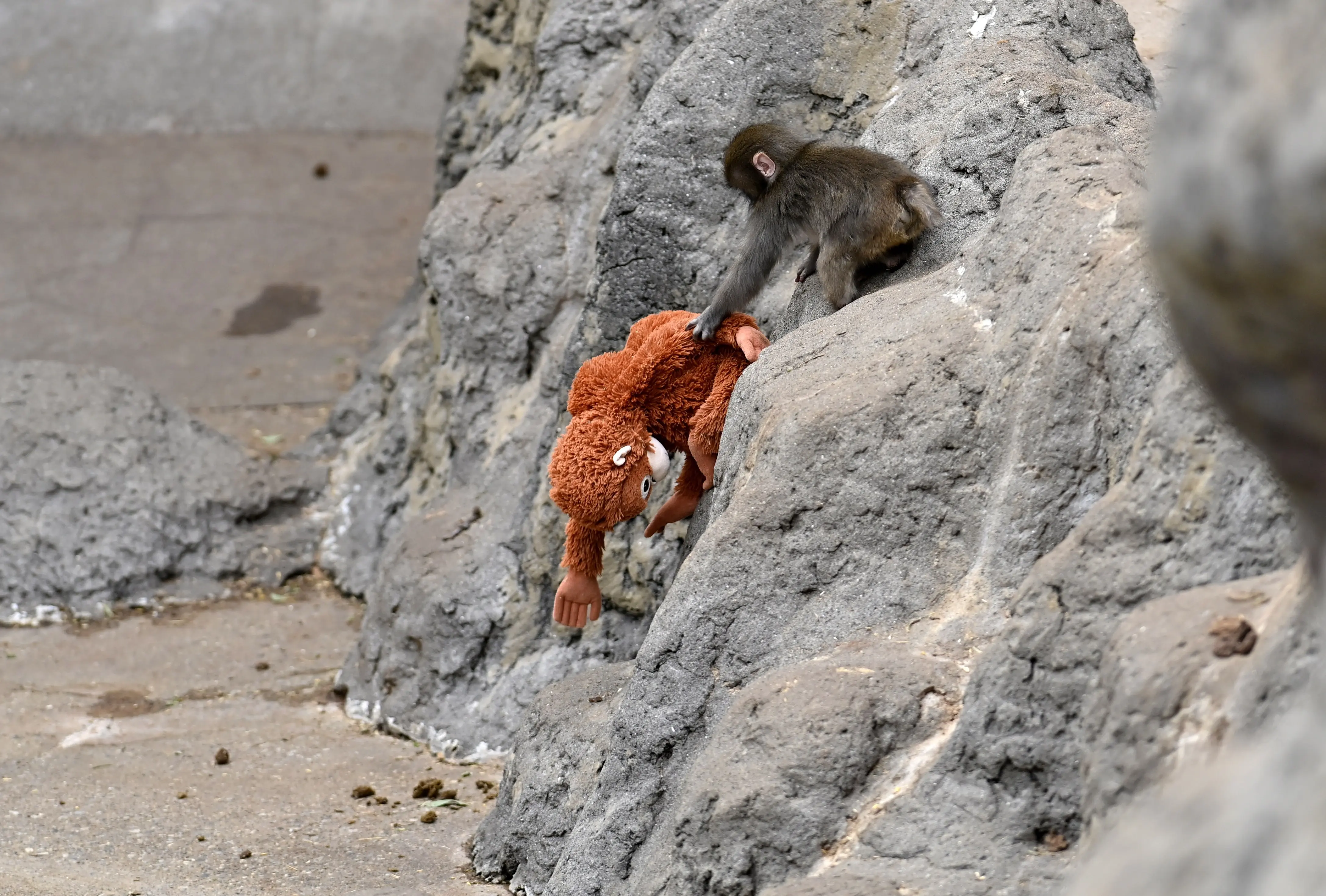
And so, before the viral videos and global attention, before the debates about attachment and belonging, Punch’s story began with something far simpler — a newborn without a mother, and a zoo staff determined that he would not grow up without something, or someone, to hold onto.