At first glance, it looks like an image designed to melt the internet: a baby Japanese macaque no bigger than a housecat, clutching an oversized stuffed orangutan with unwavering devotion. But inside Ichikawa City Zoo, that embrace is far more than a viral moment — it is a portrait of attachment in its rawest form.
Punch was rejected by his mother shortly after birth and raised by zoo staff who introduced the plush toy as a source of comfort. What followed was not casual play. Caregivers observed that he treated the stuffed orangutan as a surrogate mother, gripping it tightly whenever he moved through the enclosure, dragging it beside him during exploration, wrapping himself around it during moments of uncertainty. When he rested, he pressed his small body against the toy. When he slept, he held it close.

The consistency of the behavior struck observers. This was not novelty. It was dependence — a visible thread of emotional security woven into synthetic fur. In primate development, physical closeness is inseparable from psychological stability. For Punch, the plush became both shield and anchor, a stand-in for warmth he instinctively sought but did not receive from his biological mother.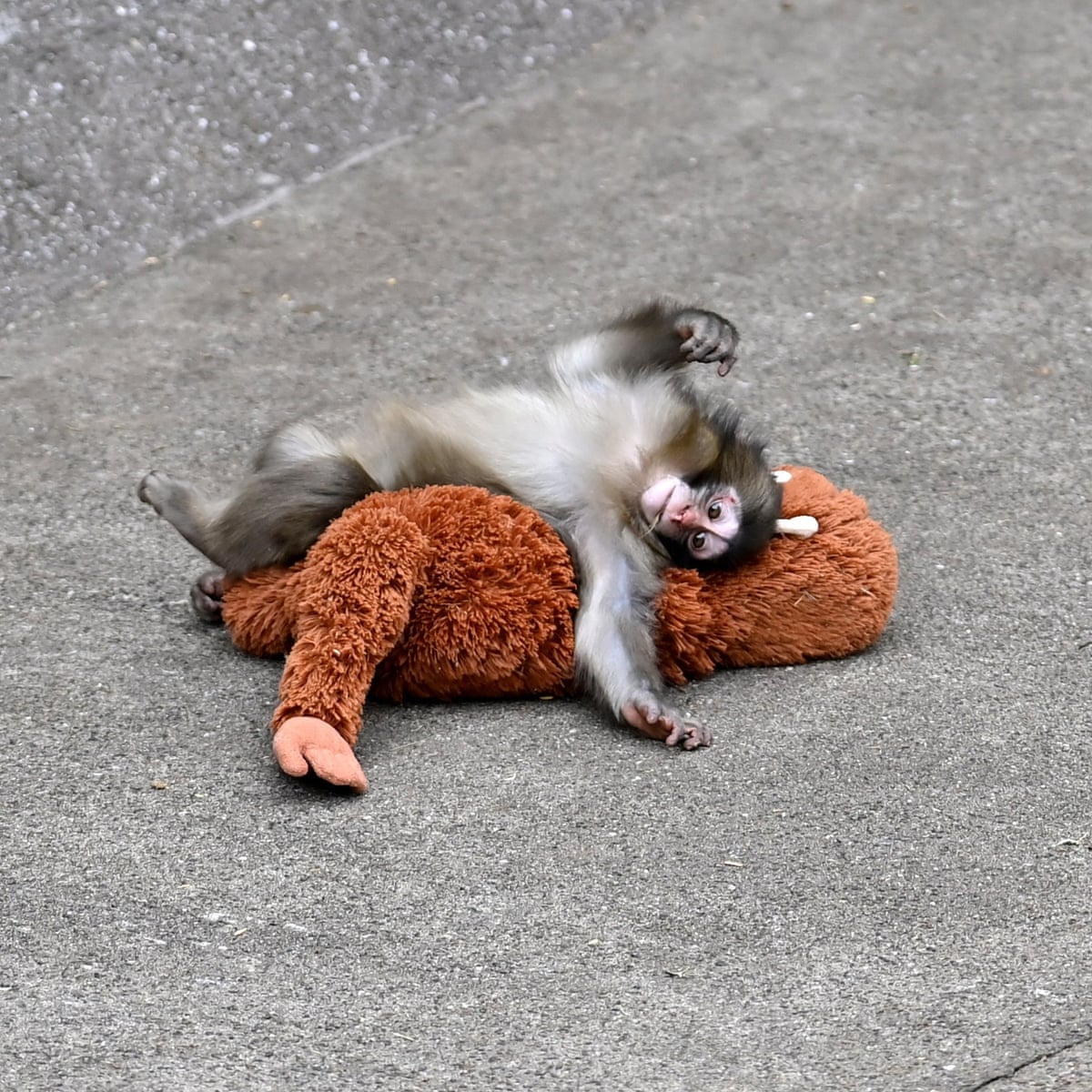
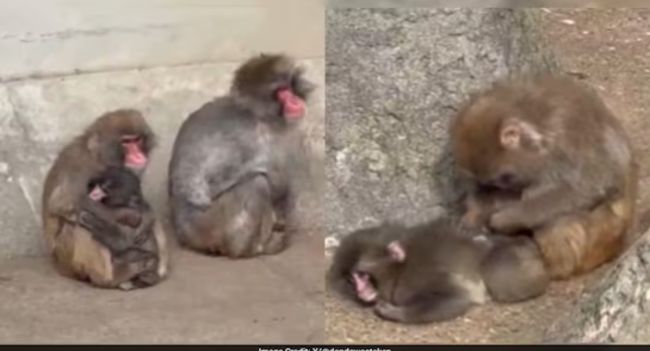
Visitors have described the sight as both beautiful and quietly devastating: a young animal navigating the complex hierarchy of troop life while carrying his “mother” everywhere he goes. And while recent reports suggest he may be slowly forming bonds with other macaques, the image that lingers is still the same — tiny fingers curled tightly into orange fabric, refusing to let go.
Because sometimes, the smallest embrace tells the largest story about what it means to need someone — even if that someone is stitched together with thread.