For weeks, Jeopardy! viewers watched Jamie Ding build what seemed like an unstoppable legacy—31 consecutive wins, more than $882,000 in earnings, and a place among the top-tier champions in the show’s history. But as his streak came to an end, the conversation surrounding him began to shift in a direction few expected.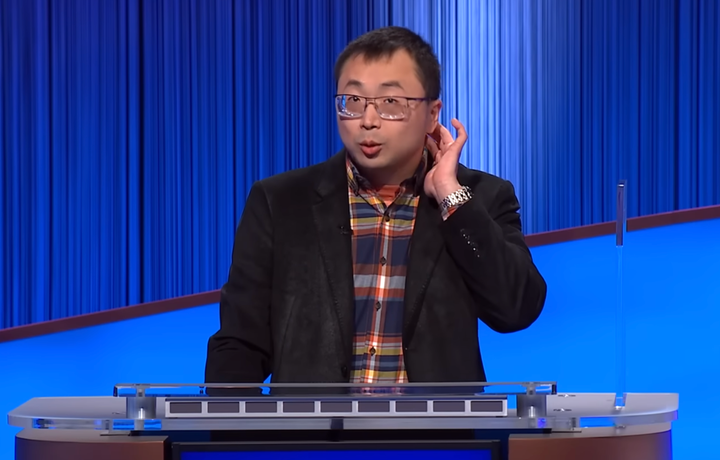
What initially appeared to be a standard post-game reflection quickly evolved into something far more complex. In interviews following his defeat, Ding described his final match as “unusual,” noting that he lost in a runaway game rather than a dramatic final moment—a rare outcome for a player of his caliber. That alone raised eyebrows among fans. But it was what came next that drew even more attention.
Ding, a naturalized U.S. citizen born to immigrant parents, used the moment to speak more broadly about identity and representation, dedicating his run to immigrants and expressing concern about how they are treated in the current political climate. His remarks—subtle but pointed—quickly ignited debate online, with some viewers praising his perspective while others questioned the intersection of entertainment and politics.
The timing added another layer of intensity. His comments came immediately after a highly visible defeat—one that, according to analysts, unfolded not through a single mistake but through a gradual loss of control as challenger Greg Shahade dominated key moments, including all three Daily Doubles. The contrast between Ding’s composed on-screen persona and the broader themes he addressed off-screen only deepened public interest.
Observers note that this dual narrative—game show champion and emerging public voice—has complicated how his exit is being interpreted. Was this simply the end of a remarkable streak, or the beginning of a larger conversation about visibility, identity, and platform?
What remains clear is that Ding’s impact now extends beyond trivia. His run is no longer being discussed solely in terms of numbers or rankings, but as part of a wider cultural moment—one that continues to unfold even after the final buzzer.
And as reactions continue to build, one question lingers: was this shift intentional… or did something about that final game change not just the outcome—but what he chose to say next?