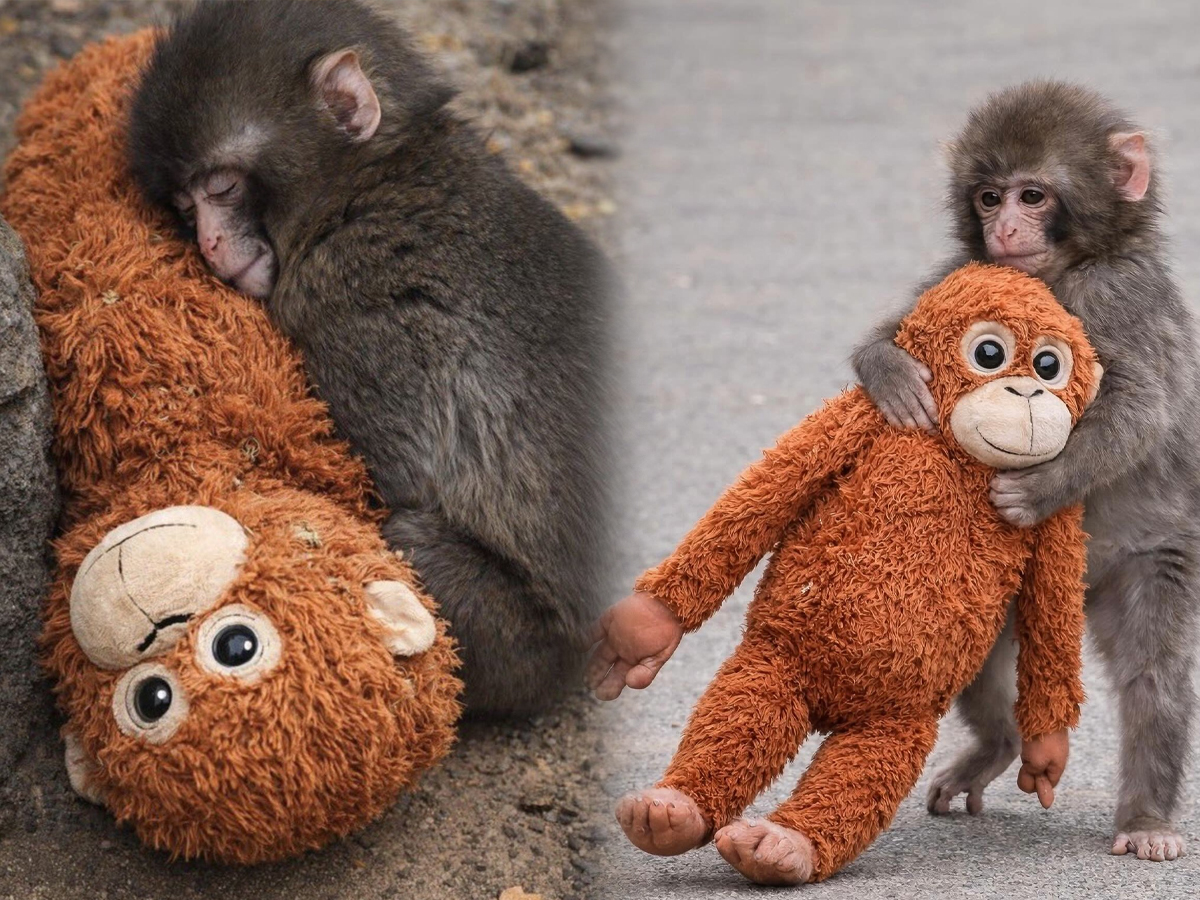
For months, the world watched Punch as the fragile infant Japanese macaque who sought comfort in a stuffed orangutan after being rejected at birth. Inside Ichikawa City Zoo, his story seemed defined by separation — tentative approaches to older monkeys, abrupt rebuffs, and quiet retreats back into the safety of synthetic fur.
But according to the zoo’s latest update, something has changed.
Caregivers report that Punch has grown more confident in recent weeks, navigating the complex social hierarchy of his troop with less hesitation. The most recent video shared by the zoo captures a scene few expected to witness so soon: Punch approaching fellow macaques and, instead of being driven away, remaining among them — tolerated, then groomed, then subtly acknowledged as part of the group.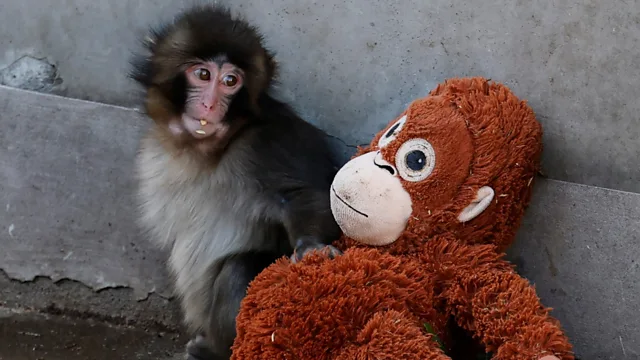
For primates, acceptance is rarely dramatic. It unfolds in gestures — a shared space on a branch, a brief grooming session, the absence of aggression. Yet to those who had watched Punch’s earlier struggles, this quiet recognition carried extraordinary weight. Zoo staff described the atmosphere that day as unexpectedly emotional, with some visitors visibly moved as the young macaque stayed among his peers without retreating.

Social integration in macaque troops is a delicate, hierarchical process shaped by age, temperament and timing. Experts caution that progress can be uneven. Still, this moment — small but unmistakable — suggests Punch may be stepping into a new chapter, one defined less by plush comfort and more by living connection.
For a monkey once known worldwide as the loneliest in Japan, the image of him being calmly welcomed into the fold has become something else entirely: a testament to resilience, and to the possibility that even in the most structured social systems, belonging can eventually be earned.