What began as a routine day of prayer at the Islamic Center of San Diego ended in chaos, gunfire, and irreversible loss — but amid the tragedy, investigators now say one man’s actions may have changed the outcome of the attack in its final, most critical moments.
 Amin Abdullah, a longtime security guard at the mosque and father of eight, has been identified as one of the victims killed when two teenage gunmen opened fire during midday prayers, killing three people before dying by apparent suicide nearby. Authorities are now describing Abdullah’s response during the attack as “heroic,” saying he helped slow the gunmen’s advance and likely prevented further casualties.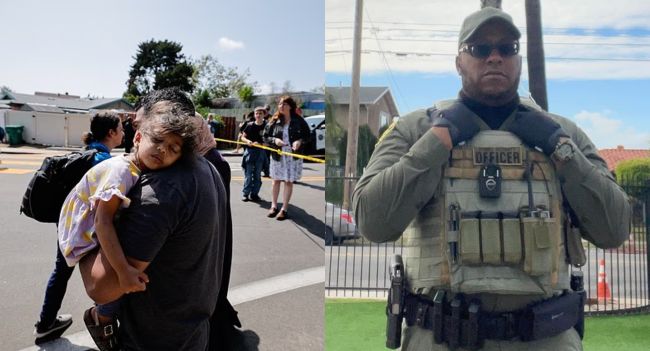
The shooting erupted on May 18 at the Islamic Center of San Diego, the largest mosque in the county, during a time when worshippers and families — including children — were present on site. Within minutes, the peaceful gathering was transformed into a fast-moving active shooter situation as police rushed toward the scene amid multiple emergency calls.
According to law enforcement, Abdullah confronted or engaged the attackers as the situation escalated inside the complex. Officers later credited his actions with containing the violence to the front area of the mosque, limiting the gunmen’s movement and reducing what could have become a far deadlier rampage.
But the timeline of events remains under intense scrutiny.
Police say officers were already searching for one of the teenage suspects before the attack began, after the suspect’s mother reported him missing, suicidal, and in possession of stolen firearms and a vehicle. That search overlapped directly with the unfolding shooting, creating a rapidly evolving crisis where officers were responding in real time while trying to locate potential threats.
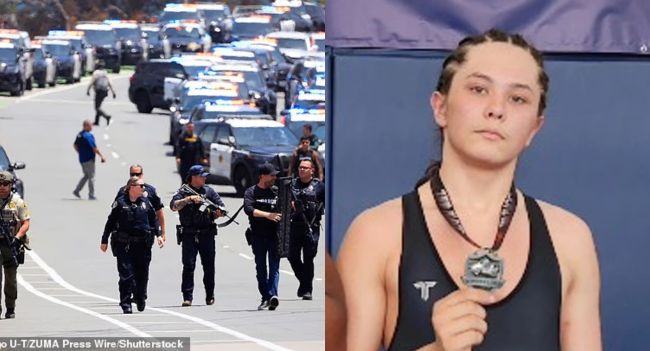
When officers arrived at the mosque, they encountered a scene of immediate devastation: multiple victims down, panicked civilians fleeing, and conflicting reports of gunfire from nearby streets. Within minutes, the suspects fled and were later found dead in a vehicle a short distance away from the mosque.
Investigators have since confirmed that evidence recovered from the suspects includes “generalized hate rhetoric” and anti-Islamic writings, prompting authorities to treat the case as a hate crime while also examining the attackers’ planning and digital footprint.
It is within this broader investigation that Abdullah’s final moments are now being re-examined.
Community members describe him as a calm but vigilant presence at the mosque, someone deeply trusted by worshippers and staff alike. On the day of the attack, officials believe he was among the first to confront danger as it emerged — placing himself directly between the gunmen and the congregation.
While police have not released a full sequence of Abdullah’s final actions, multiple officials have said his intervention “saved lives” and significantly limited the scale of the attack.
Across San Diego’s Muslim community, tributes have poured in for Abdullah, with many describing him as a protector who never hesitated to act when it mattered most. His death has become a central symbol of the tragedy — not only for the lives lost, but for the lives potentially spared in those final, chaotic minutes.
Yet even as the investigation continues, one question remains unanswered: how much worse could the attack have become if Amin Abdullah had not stood in the gunmen’s path when he did — and what exactly did he see in those final seconds that no one else at the mosque fully understood until it was too late?