For years, Stranger Things has trained its audience to see Vecna as the ultimate evil — the face of the Upside Down, the architect of pain, and the monster behind Hawkins’ collapse. But as Season 5 moves toward Volume 2, a growing number of clues suggest a far more unsettling possibility: Vecna may not be the true final boss at all.
Vecna was not born a monster. He was once Henry Creel — a human shaped by trauma, isolation, and an unnatural sensitivity to darkness. Unlike ancient cosmic entities, Vecna had a beginning. And beginnings imply influence. Manipulation. Control. Long before he claimed dominion over the Upside Down, Vecna himself appeared to be shaped by something else.

That “something” may be the Mind Flayer.
While Vecna is often portrayed as the master, the series has repeatedly hinted that the Mind Flayer operates on a different level entirely — less personal, more abstract, and disturbingly collective. It does not speak through rage or ego, but through instinct, memory, and assimilation. In that hierarchy, Vecna may not be the origin of evil, but its executor — the intelligence given form.
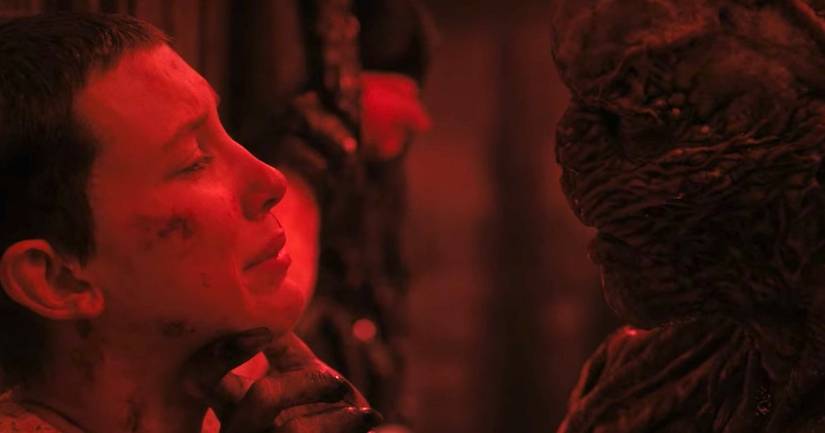
This raises a crucial question: if Vecna is merely the one carrying out the will of the Upside Down, who — or what — is truly in control?
As Volume 2 approaches, signs point toward Vecna losing his grip on the very world he helped shape. The Upside Down has begun to behave unpredictably. Boundaries are weakening. Structures are collapsing. If Vecna were the absolute ruler, such instability would not exist. Instead, it suggests resistance — or a system rejecting its own architect.
The most disturbing implication is this: Vecna may have outlived his usefulness.
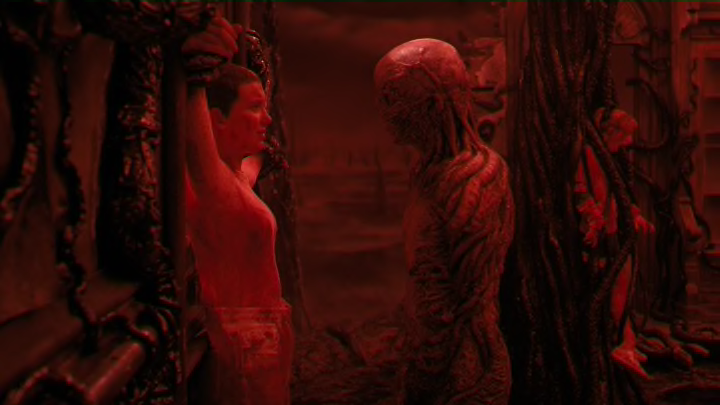
In many mythologies and genre narratives, intermediaries are discarded once they have served their purpose. If the Upside Down functions as a collective consciousness — an ecosystem that absorbs minds rather than obeys them — then Vecna’s individuality could become a liability. His human origin, once a source of power, may now be his greatest weakness.
Volume 2 could reveal a brutal truth: Vecna is not evolving into something greater — he is being phased out.
If that happens, the final threat of Stranger Things would no longer be a single villain with a face, but an idea made flesh. A world that no longer needs a mouthpiece. A force that does not negotiate, rage, or hesitate.
And in that scenario, defeating Vecna would not mean winning.
It would simply mean that something worse is ready to take his place.