For months, Punch — the young Japanese macaque whose image wrapped around a stuffed orangutan circled the globe — seemed inseparable from his plush companion at Ichikawa City Zoo. The toy was his refuge after rejection, his anchor in moments of uncertainty, his substitute for the maternal bond he never fully received.
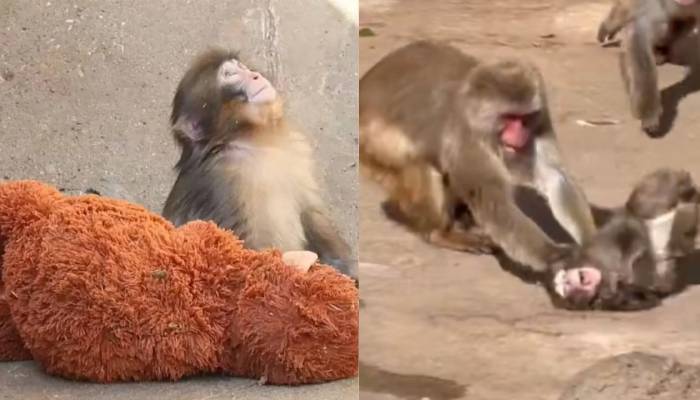
But something is changing.
According to the zoo’s latest updates, Punch is now spending increasing amounts of time engaged in play with other juvenile macaques. He chases. He tumbles. He lingers in shared space. The plush toy — once almost permanently tucked beneath his arm — is no longer a constant presence in every interaction.
He still returns to it. He still curls against it at times. But the intensity of his dependence appears to be easing.
In primate development, social play is more than recreation; it is rehearsal for belonging. Wrestling, grooming, and proximity help establish trust and hierarchy within the troop. For Punch, choosing peers over plush — even temporarily — marks a subtle yet meaningful evolution. It suggests that the emotional scaffolding once provided by fabric and stuffing may gradually be replaced by living connection.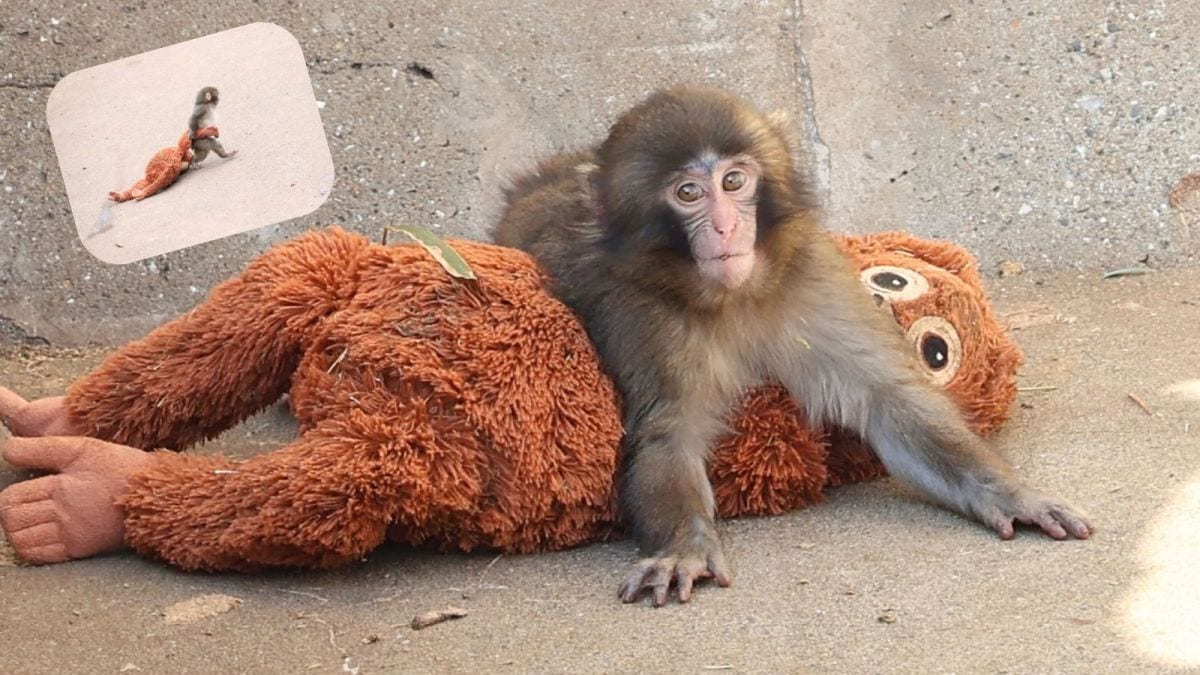
Caregivers describe the shift not as dramatic, but as steady — a series of small decisions unfolding over days. And while the stuffed “mother” remains part of his world, it no longer defines it.
For a monkey once known primarily for what he held onto, the real story may now be about what he is beginning, gently, to release.