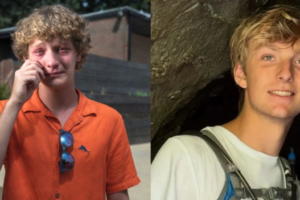
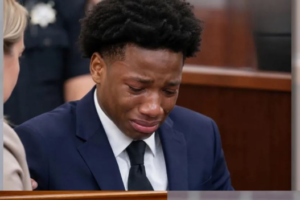
What began as a devastating car crash on a quiet Ohio road has once again exploded into national controversy after Netflix released The Crash, a disturbing new documentary revisiting the case of Mackenzie Shirilla — the teenage driver convicted of murdering her boyfriend and his friend in a crash prosecutors described as deliberate, calculated, and impossible to ignore.
The documentary, which premiered this month, dives back into the fatal July 2022 collision that killed 20-year-old Dominic Russo and 19-year-old Davion Flanagan after Shirilla’s Toyota Camry slammed into a brick building at nearly 100 miles per hour in Strongsville, Ohio. Shirilla, then just 17 years old, was the only survivor.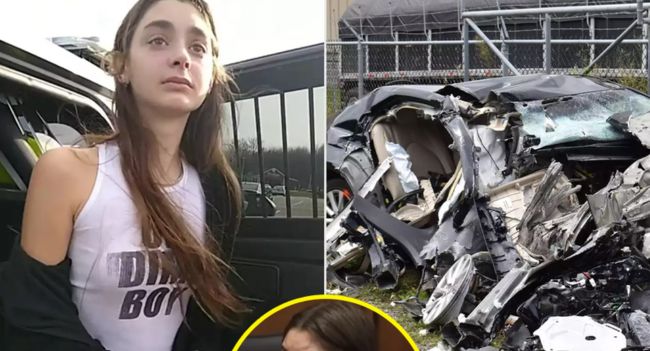
But nearly four years later, the case remains as emotionally explosive as ever.
At the center of the controversy is one terrifying question: was this a tragic accident caused by recklessness and emotional instability — or was it murder?
Investigators say the evidence pointed toward intent almost immediately after reviewing surveillance footage and vehicle black-box data. According to prosecutors, the car accelerated aggressively in the final seconds before impact, the accelerator remained fully depressed, and there were no signs of braking or evasive action before the crash.
Judge Nancy Russo later described Shirilla as “literal hell on wheels” while convicting her on multiple murder and vehicular homicide charges in 2023. She was sentenced to concurrent terms of 15 years to life in prison.
Yet Netflix’s documentary has reopened fierce debate by presenting a more emotionally layered portrait of Shirilla, including her first prison interview since sentencing. In the film, Shirilla insists she does not remember the crash and suggests she may have suffered a medical emergency linked to POTS, a disorder affecting blood circulation and heart rate. Her parents continue to stand by her innocence, claiming crucial evidence was overlooked during trial proceedings.
Critics, however, say the documentary leaves out disturbing details that helped shape public opinion during the original investigation.
Online discussions exploded after viewers began comparing Netflix’s version of events with evidence discussed in earlier documentaries, court filings, and police reports. Several Reddit users pointed to claims that Shirilla had allegedly driven the same road multiple times before the crash, fueling speculation prosecutors believed the route may have been rehearsed. Others highlighted testimony about the volatile relationship between Shirilla and Russo, including alleged threats and emotional confrontations before the fatal night.
The internet’s reaction has been brutally divided.
Some viewers argue the case against Shirilla was overwhelming, pointing to the speed, the lack of braking, and the controlled steering moments before impact as evidence no distracted driver could replicate accidentally.
Others believe the public has become too emotionally convinced of guilt, arguing that recklessness, intoxication, panic, or even dissociation could still explain the crash without proving intentional murder beyond reasonable doubt.
What makes the documentary especially unsettling is how deeply it blurs the line between true crime and psychological mystery.
Former classmates interviewed in previous programs described Shirilla as intensely image-conscious and emotionally volatile, while prosecutors argued she wanted to escape what they called a toxic relationship. Meanwhile, supporters insist she became the target of a media narrative built more on personality than proof.
The crash itself remains horrifying.
Surveillance footage reportedly showed the Camry traveling normally before suddenly accelerating down an industrial road moments before impact. Investigators say the car briefly shifted into neutral before returning to drive seconds before the collision — a detail prosecutors used to argue the driver remained conscious and in control until the very end.
Now incarcerated at the Ohio Reformatory for Women, Shirilla is not eligible for parole until 2037 after appeals challenging her conviction were denied.
But despite the verdict, The Crash has done something few true-crime documentaries manage to accomplish: it has revived uncertainty.
Because buried beneath the courtroom arguments, emotional interviews, and forensic evidence is an even darker possibility haunting viewers online — that somewhere inside the investigation may still be details the public never fully saw, including one claim circulating after the documentary’s release that investigators became fixated on a specific piece of digital evidence that was “too disturbing” to ignore… but was never fully explained on camera.