Golf legend Tiger Woods was arrested on suspicion of driving under the influence following a dramatic traffic accident in Jupiter Island, Florida, an incident that has quickly escalated into a complex case involving alleged impairment, refused testing, and unresolved questions about possible substance use.
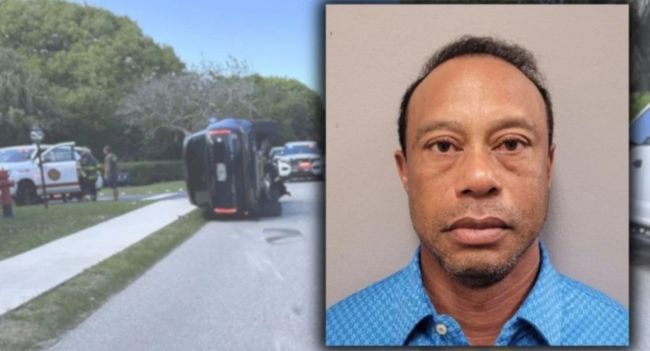
According to the Martin County Sheriff’s Office, the crash occurred in the early afternoon when Woods, driving a Land Rover, attempted to overtake a truck on a narrow roadway at high speed. During the maneuver, his vehicle struck equipment attached to the truck, causing the SUV to overturn and slide before coming to a stop.
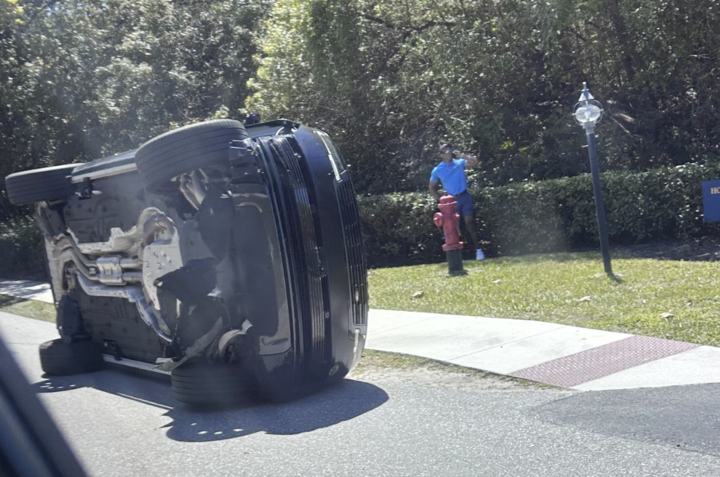
Despite the severity of the crash, Woods was able to exit the vehicle through the passenger side without assistance and did not sustain visible injuries. However, responding officers reported that he appeared “lethargic” at the scene and displayed signs consistent with impaired driving ability, prompting further investigation.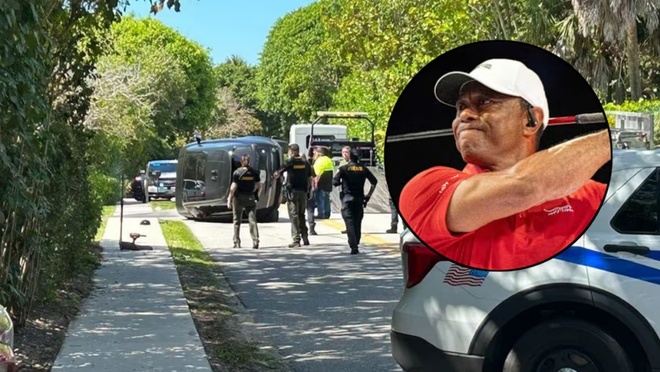
Woods cooperated with a breathalyzer test, which reportedly showed no presence of alcohol. Attention then shifted toward the possibility of drug or medication-related impairment. Authorities indicated that while there were signs suggesting substance influence, the exact cause may never be determined after Woods refused to submit to a urine test, a decision that led to an additional charge.
He was subsequently taken into custody on multiple misdemeanor charges, including driving under the influence, refusal to comply with lawful testing, and property damage. Legal analysts noted that while each charge individually may be considered minor, their combination could significantly increase the seriousness of the case.
The incident has also reignited attention on Woods’ past, including a similar 2017 arrest in which he attributed his condition to an adverse reaction to prescription medication. Combined with his history of serious injuries and multiple surgeries, the latest case has raised renewed concerns about his physical condition and potential reliance on medical treatment.
As investigations continue and no definitive substance has been identified, the case remains marked by a critical gap between observable behavior and confirmed evidence—leaving both authorities and the public grappling with a central question that has yet to be answered: what, exactly, impaired one of golf’s most iconic figures at the moment it mattered most.