At Ichikawa City Zoological and Botanical Garden, visitors who have followed the emotional journey of the orphaned macaque Punch are beginning to notice a striking change in the tiny primate’s behavior—one that is both touching and slightly mysterious. 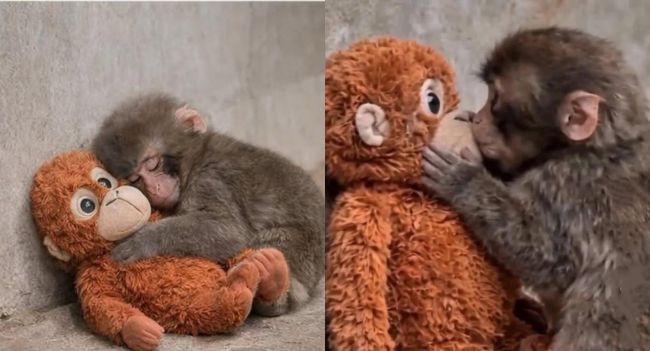
Not long ago, Punch became known around the world for the fragile image of a baby monkey clinging desperately to a stuffed toy, a substitute comfort given to him after he was abandoned by his mother shortly after birth. Whenever other monkeys ignored him or pushed him away, the small macaque would run back to that plush companion, hugging it tightly as if it were the only safe place left.
But the latest observations from caretakers suggest something unexpected is happening.
Punch is no longer constantly searching for comfort.
Zoo staff say the young monkey now spends long stretches moving quietly around the enclosure on his own, sometimes walking upright on two legs as he explores, sometimes sitting alone while playing with small objects or toys scattered around his space. Instead of rushing toward keepers or retreating to his stuffed companion whenever something unsettles him, Punch appears to have settled into a calmer rhythm—one where he simply occupies his own small world.
To some observers, the change feels bittersweet.
The little monkey who once reached out constantly for contact now seems less dependent on anyone at all. He wanders, pauses, examines things, and entertains himself in a quiet independence that many primate experts say can appear in orphaned animals as they adapt to life without a maternal bond.
Caretakers emphasize that Punch continues to be closely monitored by veterinary staff and behavioral specialists. They say his solitary moments are not necessarily a sign of distress, but part of the slow process of developing confidence and adjusting to the complex social dynamics of a macaque troop.
Still, for the visitors who once watched the tiny orphan clutch his stuffed companion for comfort, the sight of Punch now walking quietly on his own carries a powerful emotional weight.
It is the image of a small creature learning—perhaps sooner than expected—how to exist without depending on anyone else