For all the myths surrounding Pennywise the Dancing Clown, one truth has remained consistently misunderstood: Pennywise is not unstoppable. In fact, there is a specific kind of pressure he cannot endure — an invisible force that does not wound the body, does not shout, and does not announce itself. And yet, it defines his limits more than any weapon ever could.

Pennywise thrives on fear, but fear alone is not his greatest strength. It is structure. He operates within a self-imposed boundary — a psychological perimeter that he never fully crosses, no matter how desperate or enraged he becomes. This boundary is not physical. It is perceptual.
The pressure Pennywise cannot tolerate is clarity.

Whenever fear becomes focused rather than chaotic, Pennywise weakens. When victims stop reacting and start understanding, the entity begins to lose control. This is why he hides behind forms, rituals, rules, and cycles. The clown, the monster, the shape-shifting horror — these are not just disguises. They are buffers. They keep him from being seen too clearly.
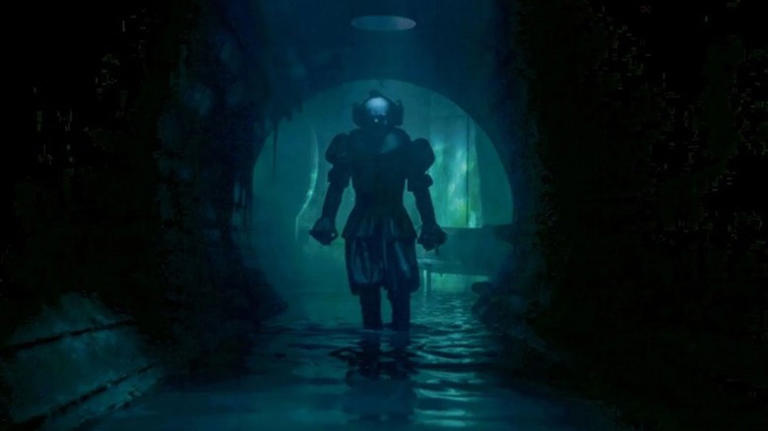
Throughout the IT narrative, Pennywise repeatedly retreats the moment fear turns into recognition. When characters name him, define him, mock him, or reduce him to something comprehensible, the illusion fractures. He grows smaller. Louder. Less precise. This is not coincidence — it is survival instinct.
That invisible boundary is awareness.
Pennywise can manipulate terror, but he cannot withstand sustained psychological resistance. He allows himself space. He waits 27 years. He stalks from shadows. He never overwhelms an entire population at once. These are not limitations imposed by others — they are limits he imposes on himself, because crossing them would expose him.
Total domination would require visibility. And visibility is fatal.

This is why Pennywise prefers children. Not because they are weaker, but because they are more malleable. Their fear is unstructured. Their understanding incomplete. Adults who remember but cannot fully articulate what they fear are just as useful. What Pennywise cannot afford is a mind that sees the pattern and refuses to play along.
The true boundary, then, is not courage.
It is comprehension.
The moment fear stops being instinctive and becomes deliberate, Pennywise loses his grip. He can feed on panic. He can weaponize imagination. But he cannot survive being stripped of mystery.
And that is the invisible pressure Pennywise will always avoid.
Because once he is fully understood, he is no longer infinite.
He is only exposed.