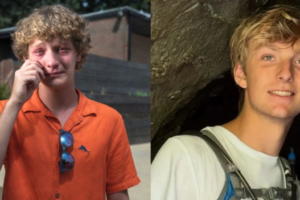
THE FINAL DESCENT: Five Italian Divers Entered The Crystal Waters Of The Maldives For A Scientific Scuba Excursion… But Hours Later, Rescue Teams Were Searching A Deep Underwater Cave Known As A “Death Labyrinth,” And What They Eventually Discovered Has Left Investigators Facing A Growing List Of Terrifying Questions
What was supposed to be a routine marine research dive in one of the most beautiful destinations on Earth has now turned into an international tragedy surrounded by mystery, fear, and growing speculation over what really happened beneath the waters of the Maldives.
On May 14, a group of experienced Italian divers disappeared during a scuba excursion near Vaavu Atoll, a tropical region famous for luxury tourism, shark dives, and hidden underwater cave systems. By the end of the week, all five divers had been confirmed dead after becoming trapped deep inside a submerged cave network far below the ocean surface.
The victims were identified as marine ecologist Monica Montefalcone, her daughter Giorgia Sommacal, diving instructor Gianluca Benedetti, marine researcher Muriel Oddenino, and biology graduate Federico Gualtieri. All were connected to the University of Genoa and were reportedly participating in a scientific diving expedition focused on coral reef studies. (
But according to investigators, the dive may have become far more dangerous than authorities originally understood.
Officials later revealed the group descended nearly 50 meters underwater — well beyond the Maldives’ recreational diving limit of 30 meters. More alarming still, authorities claim the permits submitted for the trip mentioned marine research but did not clearly disclose plans for technical cave diving, one of the most hazardous forms of scuba exploration in the world.
That revelation immediately intensified scrutiny surrounding the expedition.
Because inside underwater caves, everything changes.
Visibility can disappear within seconds. Divers can lose orientation in total darkness. Air supply becomes critical. Strong currents can drag even experienced professionals deeper into narrow passages with no direct path back to the surface.
And according to rescue divers, the cave system involved in this tragedy was notoriously dangerous.
The area, known locally among divers as the “Shark Cave,” contains multiple submerged chambers connected through tight underwater tunnels stretching deep into the reef structure. Recovery specialists later described the environment as a “death labyrinth” due to the powerful currents and complex internal pathways. When the group failed to resurface, emergency crews launched an intensive search operation involving the Maldives National Defence Force, local divers, and international cave-diving specialists.
The first body recovered was diving instructor Gianluca Benedetti, who was found near the cave entrance shortly after the disappearance. But the remaining four divers had vanished much deeper inside the underwater system. Then the recovery mission itself became deadly.
During efforts to retrieve the bodies, Maldivian rescue diver Staff Sergeant Mohamed Mahudhee died after suffering severe decompression sickness, also known as “the bends.” His death shocked officials and temporarily halted operations, highlighting just how extreme the conditions inside the cave had become.
Authorities later brought in elite Finnish cave-diving experts equipped with advanced rebreather systems designed specifically for prolonged deep-cave recovery operations. After descending into the submerged labyrinth, the team located the remaining four victims grouped together inside the deepest section of the cave system.
That discovery raised even more questions.
Investigators are now examining whether the divers exceeded planned depth limits, whether specialized equipment was properly used, and whether sudden underwater currents or oxygen toxicity may have triggered a catastrophic chain reaction inside the cave.
Online speculation has only intensified the mystery.
Some experienced divers believe the group may have underestimated the cave’s conditions and become disoriented after visibility collapsed. Others suspect a technical malfunction or breathing gas issue may have incapacitated multiple divers simultaneously in the confined underwater chambers.
Meanwhile, officials are also reportedly reviewing anomalies found in GPS tracking and dive-monitoring systems connected to the expedition after data allegedly showed irregular movement patterns shortly before all signals disappeared.
Back in Italy, grief has spread across the scientific and diving communities.
Friends and colleagues described the victims as highly experienced professionals who had spent years studying marine ecosystems around the world. Montefalcone, in particular, was widely respected for her work in marine conservation and had reportedly survived dangerous dives in the past, including during the aftermath of the 2004 Indian Ocean tsunami.
Yet despite the growing investigation, one haunting mystery remains unresolved.
Because according to several rescue specialists following the case, the most disturbing detail is not simply how deep the divers went — but why all five experienced professionals ultimately ended up together inside the furthest chamber of the cave.
And investigators now reportedly believe there may have been one sudden underwater event that changed the entire dive within moments… before anyone on the surface realized the group was never coming back.