DENIAL, “HORSEPLAY,” AND A NIGHT THAT WON’T GO AWAY — INSIDE THE CONFLICTING ACCOUNTS SURROUNDING PUKA NACUA AND THE INCIDENT NOW HEADING TOWARD A COURTROOM SHOWDOWN
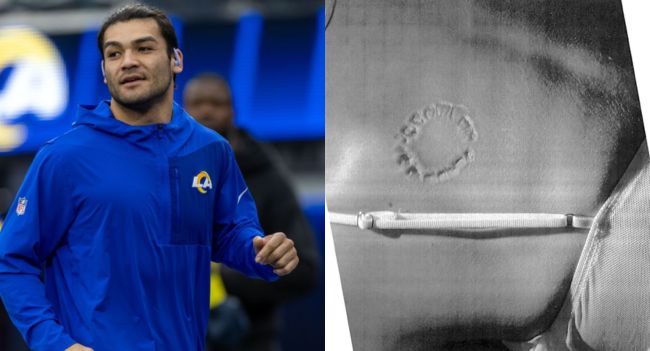
Puka Nacua has forcefully denied allegations that he made an antisemitic remark during a New Year’s Eve gathering in Los Angeles, as a civil case tied to the same night continues to unfold with sharply conflicting versions of what occurred.

The accusations stem from a legal filing submitted by Madison Atiabi, who sought a temporary restraining order against the Los Angeles Rams receiver. In her account, Nacua made an offensive statement about Jewish people during a group dinner — a comment she says was audible to others present and caused immediate emotional distress.
Atiabi further alleged that the situation escalated later in the evening, claiming that while inside a vehicle with others, Nacua bit her on the shoulder with enough force to leave visible marks, and also bit the thumb of another woman, causing pain.
Nacua’s legal team has rejected those claims in their entirety.
His attorney, Levi McCathern, stated that multiple witnesses present at the gathering did not hear any antisemitic remark, directly challenging a central element of the accusation. He also characterized the alleged physical interaction not as assault, but as “horseplay,” disputing the interpretation presented in the filing.
“Puka denies these allegations in the strongest possible terms,” McCathern said, adding that the defense intends to pursue legal remedies in response to what it describes as false and damaging claims.
The legal process is already underway. A request for a temporary restraining order was denied by a Los Angeles Superior Court judicial officer, though a formal hearing has been scheduled, ensuring that the case will continue to develop in the coming weeks.
The situation is further complicated by timing and context.
Nacua, one of the NFL’s most productive young receivers and a recent All-Pro selection, is at a pivotal point in his career, with increasing visibility both on and off the field. The emergence of legal allegations — particularly those involving claims of discriminatory language and physical conduct — introduces potential implications not only for civil liability, but also for league review under the NFL’s personal conduct policy.
This is not the first time Nacua has faced scrutiny related to antisemitism. In December, he issued a public apology after participating in a livestream in which he performed a gesture later identified as offensive, stating at the time that he had not understood its meaning.
Now, the current case presents two opposing narratives: one describing a night that escalated into harmful behavior, the other framing the allegations as inaccurate and mischaracterized.
With a court hearing scheduled and both sides preparing for further legal action, the outcome will likely depend on witness testimony, physical evidence, and how the events of that night are ultimately interpreted — a process that could carry significant consequences for both the case itself and Nacua’s standing within the league.