The Manila Metamorphosis: Alex Eala and the Historic Dawn of the Philippine Women’s Open
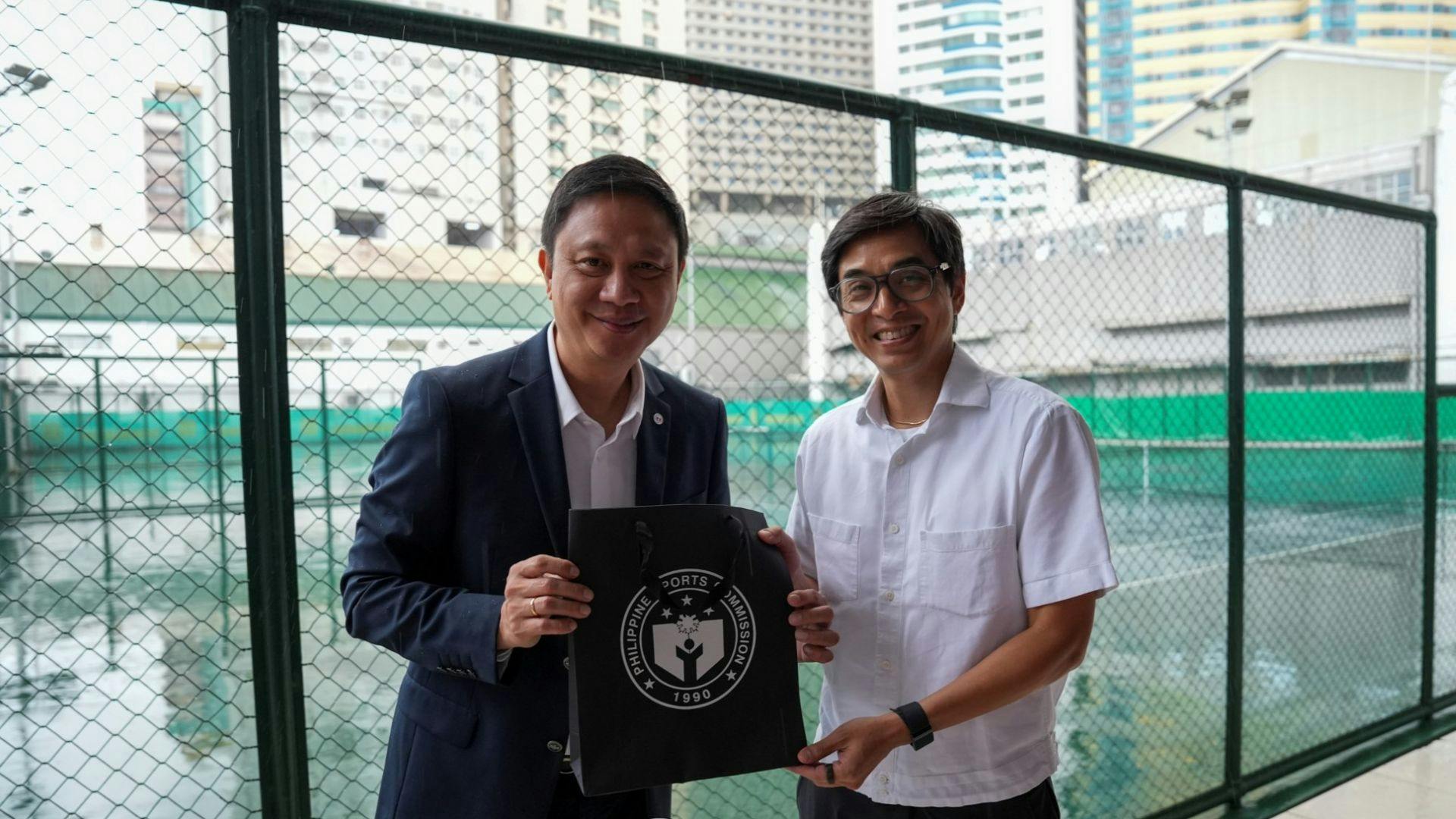
By the morning of January 26, 2026, the air at the Rizal Memorial Tennis Center in Manila will carry a different kind of electricity. For decades, this venue has stood as a silent witness to the ebb and flow of Philippine sports history. But today, the hum of the crowd isn’t for basketball or boxing; it is for a rhythmic, high-velocity exchange of yellow felt.
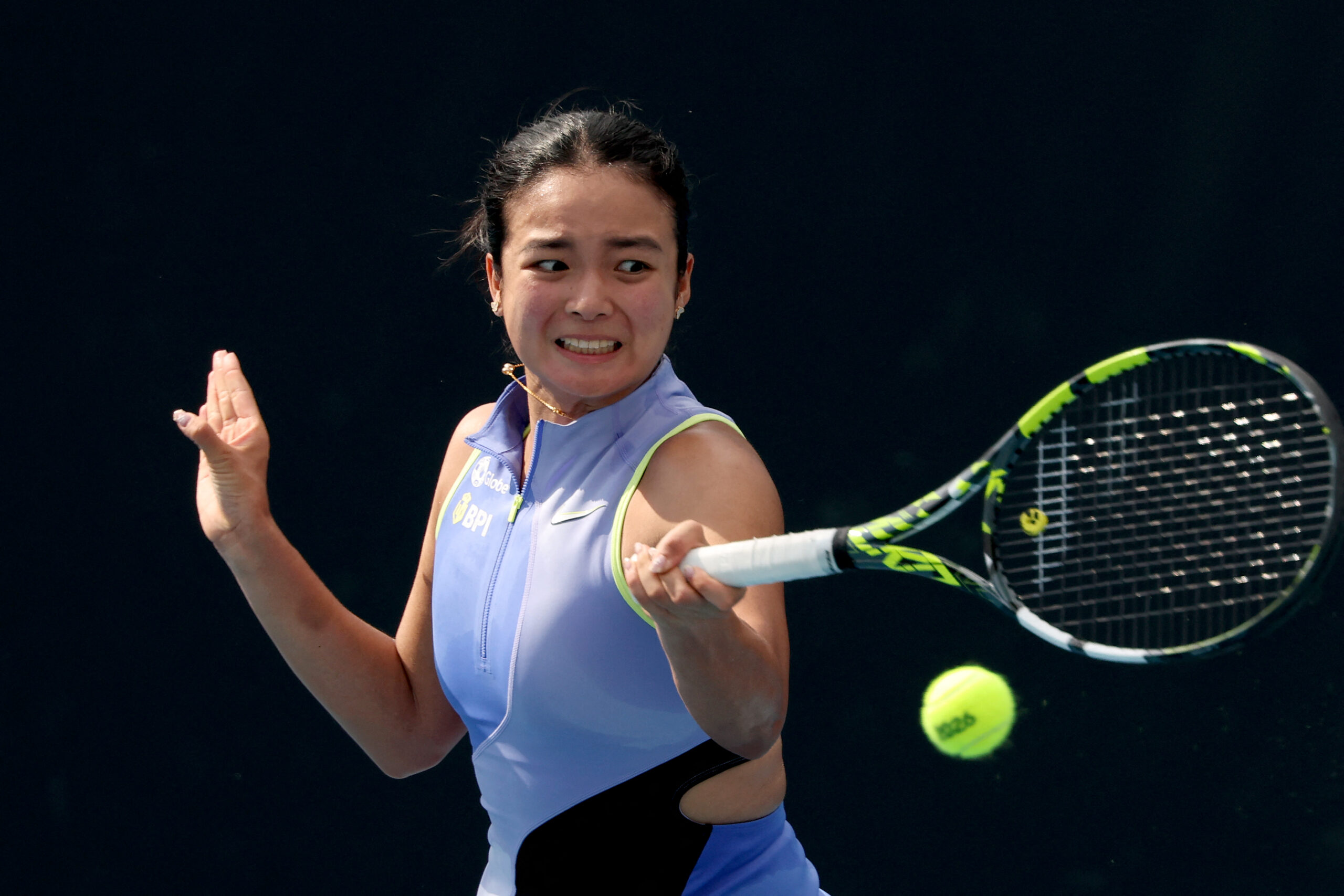
The Philippine Women’s Open, a WTA 125 event, is officially making history. For the first time, a sanctioned WTA Tour stop has landed on Philippine soil, bringing with it not just world-class athletes, but the weight of a nation’s newfound obsession with tennis. At the heart of this storm is a 20-year-old from Quezon City: Alexandra “Alex” Eala.
The “Eala Effect”: From Melbourne’s Shadows to Manila’s Sun
Just days ago, the world watched as Eala navigated a bittersweet debut at the Australian Open. Despite a crushing loss to American Alycia Parks—where a dominant $6-0$ opening set evaporated into a $0-6, 6-3, 6-2$ exit—Eala’s impact was undeniable. The queues at Melbourne’s Court 6 were so massive they prompted a public apology from organizers. Even the GOAT, Novak Djokovic, took notice, calling the surge of Filipino fans a “good problem to have.”
Now, Eala returns home not just as a player, but as a catalyst. Her 2025 season was a fever dream: a semifinal run at the Miami Open (where she stunned World No. 1 Iga Świątek and Jeļena Ostapenko), a Guadalajara Open title, and the first-ever Grand Slam singles win by a Filipino at the US Open. Ranked at a career-high World No. 49, she is no longer a prospect; she is a pioneer.
“It’s been a dream to have a home tournament,” Eala shared upon landing in Manila. “I’m so happy that it’s going to bring a lot of inspiration for the girls back home.”
A Home Court Heavily Guarded
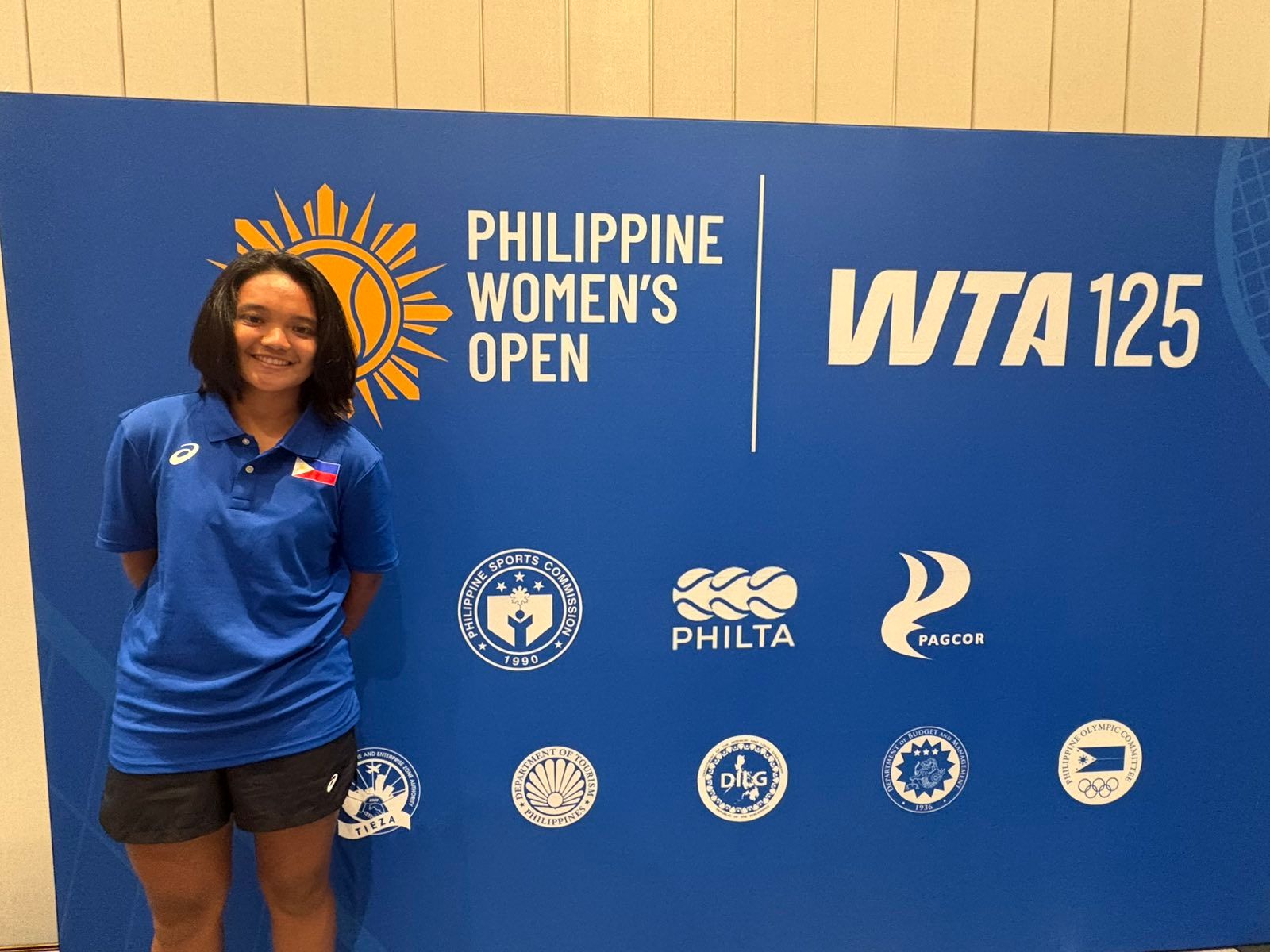
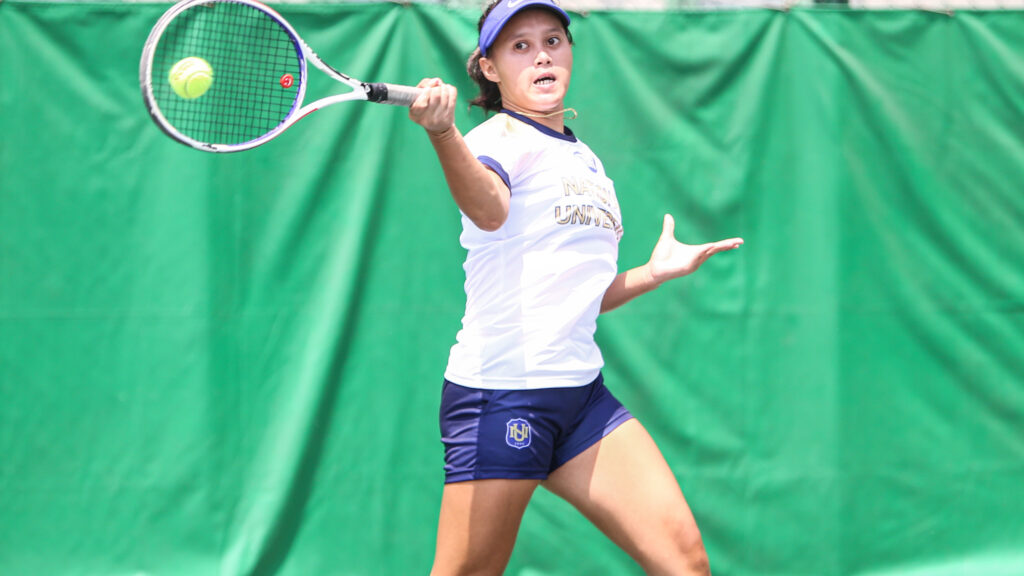
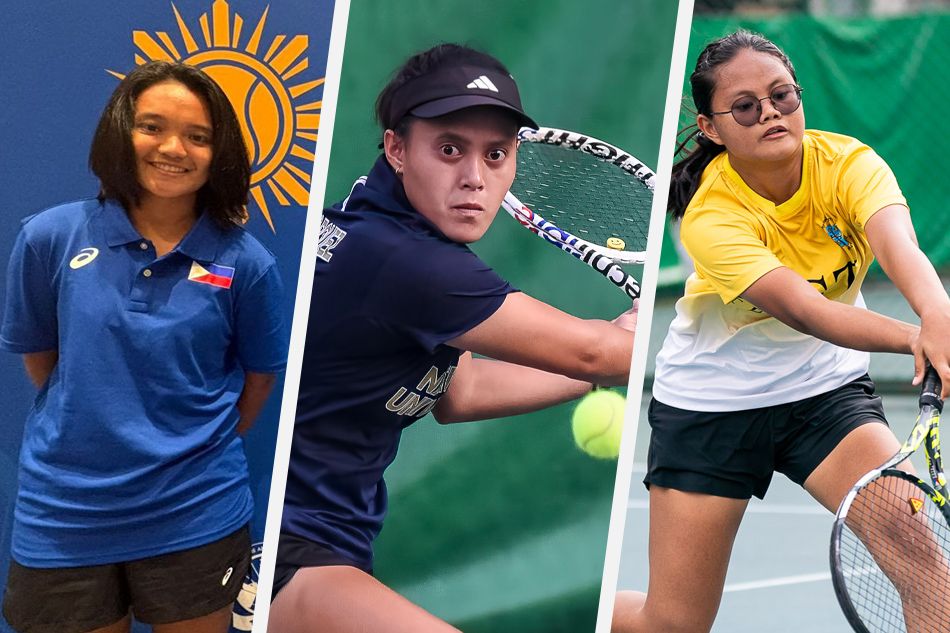
While the spotlight burns brightest on Eala, the Philippine Women’s Open is a collective victory for local tennis. The Philippine Tennis Association (PHILTA) has strategically used its Wild Cards to bolster the domestic presence. Joining Eala in the main draw is Tennielle “Tenny” Madis, a rising star whose grit mirrors Eala’s early years.
In a last-minute tactical shift, executive director Tonette Mendoza announced that Kaye Ann Emana, the UAAP standout, had her Wild Card upgraded from the qualifying rounds to the main draw. Meanwhile, Elizabeth Abarquez, the runner-up in the national playoffs, will battle through the qualifiers. Together, they form a “Fantastic Four” of Filipina talent, aiming to prove that the country’s tennis depth is more than just a one-person show.

The International Gauntlet
The road to a home title, however, is paved with veteran steel. The entry list is a testament to the tournament’s prestige. Headlining the international field is Donna Vekic, the Croatian Olympic silver medalist and former World No. 17.
The Eala-Vekic rivalry is rapidly becoming a must-watch narrative. They recently clashed at the 2026 ASB Classic in Auckland, where Eala pulled off a grueling three-set upset. Vekic, known for her explosive power, will undoubtedly be seeking redemption on the hard courts of Manila.
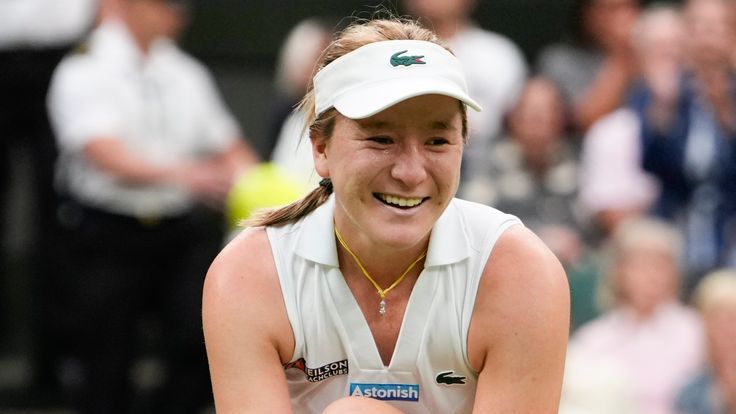
Adding to the complexity is Germany’s Tatjana Maria. At 38, the two-time mother and Wimbledon semifinalist brings a “crafty” veteran game—filled with slices and tactical variation—that serves as the ultimate litmus test for young, aggressive baseliners like Eala. With other Top-100 stars like Lulu Sun and Xinyu Wang (the 2023 French Open doubles champion) confirmed, the “home court advantage” will be earned, not given.
The “Next Pacquiao” Debate
As tennis courts across Metro Manila report a “cháy sân” (fully booked) status, local media has inevitably begun comparing Eala’s stature to that of the legendary Manny Pacquiao. It is a comparison Eala herself handles with a grace beyond her years.
“I am nowhere near that level,” she insists. “When Manny fights, the whole country stops. I’m still learning how to deal with the attention.”
Yet, the parallels are hard to ignore. Just as Pacquiao turned boxing into a national religion, Eala is democratizing tennis. Once viewed as an “elite” sport in the Philippines, tennis is now being embraced by a demographic that sees a 5’9″ girl from Quezon City competing with the world’s best on TV every morning.
Technical Analysis: The Road to the Top 30
For Eala to transition from a national hero to a global Top-30 mainstay, the Philippine Women’s Open serves a vital technical purpose. Analysts point to her aggressive baseline game and her lethal two-handed backhand as world-class weapons. However, the Australian Open loss exposed a lingering vulnerability: serve consistency and stamina during high-pressure transitions.
Her coach, Joan Bosch from the Rafa Nadal Academy, has emphasized the need for “tactical patience.” Winning in Manila isn’t just about hitting the ball harder; it’s about managing the emotional tax of playing in front of a home crowd that may not yet fully understand the “etiquette” of silence during a serve.

Legacy in the Making
Regardless of who lifts the trophy on January 31, the 2026 Philippine Women’s Open has already succeeded. It has validated years of infrastructure upgrades at Rizal Memorial and proved that Southeast Asia is a viable market for the WTA.
For Alex Eala, this week is about more than ranking points. It is about a 20-year-old girl standing in the middle of a court in her own city, hearing her name chanted in her own language, and realizing that she didn’t just find a seat at the table of tennis greats—she built the table herself.
The draw will be finalized in the coming days, but the verdict is already in: Tennis has officially come home to the Philippines.