The sun-drenched courts of the Kooyong Lawn Tennis Club have historically been a sanctuary for the legends of the game, but on January 14, 2026, they became the stage for a changing of the guard. Alex Eala, the 20-year-old pride of the Philippines, didn’t just win a tennis match; she made a definitive statement to the sporting world.
With a commanding 6-3, 6-4 straight-sets victory over Olympic silver medalist Donna Vekić, Eala hoisted the inaugural Evonne Goolagong Cawley Trophy. In doing so, she confirmed what her rivals have been fearing: the young star is currently playing the most dangerous, clinical, and inspired tennis of her life.
A Career-Best Form: “The Best I’ve Ever Played”
Following the match, the atmosphere was electric as Eala addressed the media. There was a new air of gravitas about the Filipina left-hander—a confidence that comes from a breakthrough season that recently saw her shatter the glass ceiling into the WTA Top 50.
“I’m feeling good,” Eala said, her voice steady and bright. “I wanna say that this is the best I’ve ever played.”
It is a bold claim, but the statistics back it up. Against Vekić, a seasoned veteran known for her heavy hitting and grit, Eala was the aggressor. She dictated play with her trademark heavy topspin forehand and showed a vastly improved tactical maturity, moving the World No. 20 across the baseline with surgical precision. This victory at the Kooyong Classic serves as the ultimate springboard for her highly anticipated main draw debut at the 2026 Australian Open.
The “Humbling” Nature of the Grind
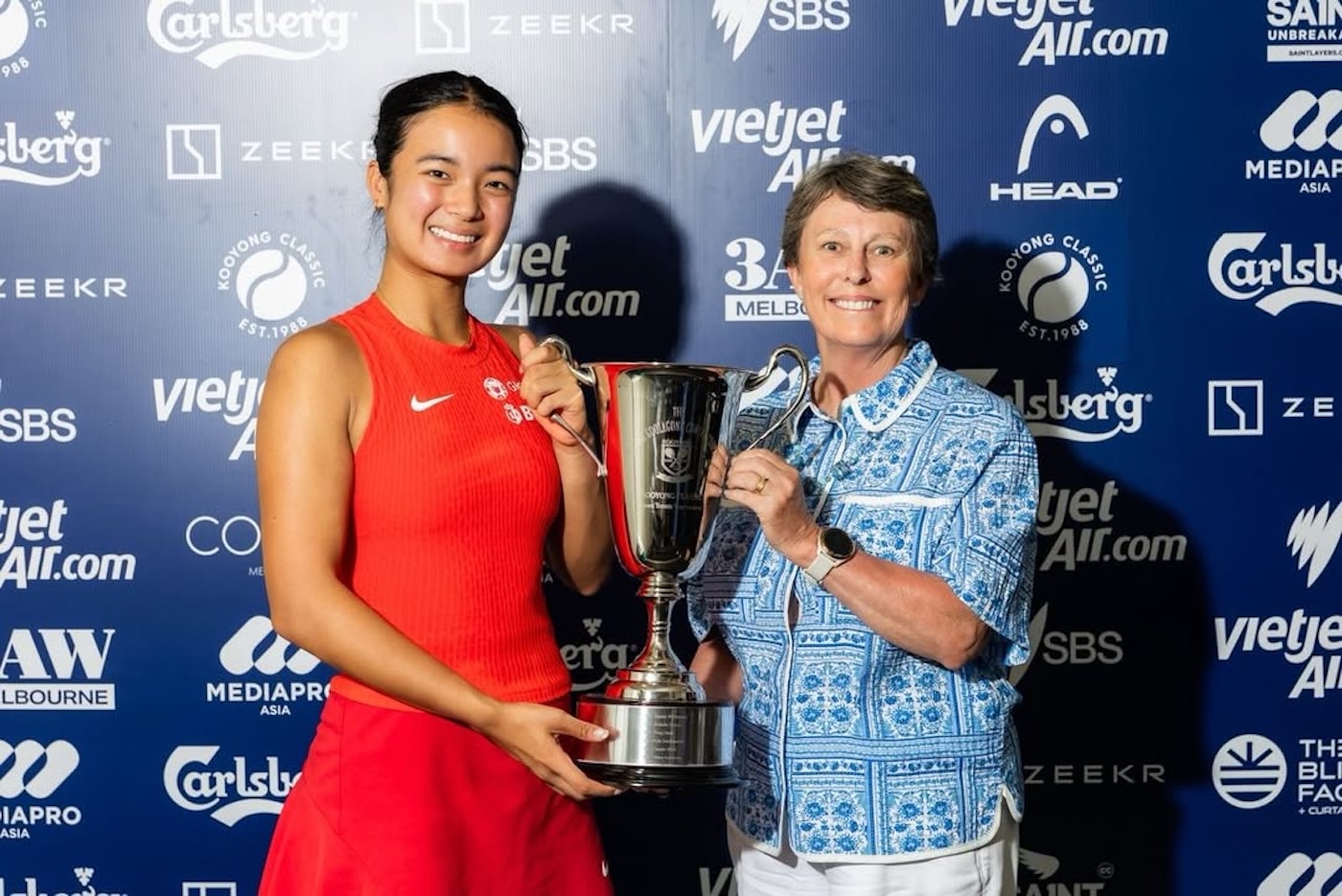
Despite the accolades and the historic trophy—named after the legendary Australian trailblazer Evonne Goolagong Cawley—Eala remains remarkably centered. In an industry often prone to hyperbole, she speaks with the wisdom of someone much older.
“Tennis is a humbling sport,” Eala remarked, reflecting on the rollercoaster journey of a professional athlete. She emphasized that while breaking the Top 50 was a milestone, it was not the destination. “I’ve learned to take my progress inch by inch. Every win is a lesson, and every loss is an even bigger one. It’s about keeping my head down and staying grounded.”
This “inch by inch” philosophy is perhaps the secret to her longevity. Since her days as a junior prodigy at the Rafael Nadal Academy, Eala has been under the microscope of an entire nation. Yet, she has managed to avoid the pitfalls of early burnout by focusing on the process rather than the prestige.
The Battle with a Silver Medalist
Facing Donna Vekić is never a simple task. The Croatian powerhouse is known for her resilience, a trait that earned her an Olympic silver medal. Eala was quick to acknowledge the challenge of the match-up.
“I always have such a tough time playing with her,” Eala admitted with a smile. “She is so experienced and hits a very heavy ball. But I have so much fun out there, especially with the support I got today.”
The second set, in particular, was a gritty affair. Vekić attempted to claw her way back, breaking Eala’s serve early on. In the past, this might have rattled the younger player. However, the “2026 version” of Alex Eala displayed a newfound “ice-in-the-veins” composure, breaking back immediately and closing out the match with an ace that left the crowd in raptures.
A De Facto Home Game: The Power of the Diaspora

If Kooyong felt like a local neighborhood tournament for Eala, it’s because the Melbourne stands were draped in the blue, red, and yellow of the Philippine flag. For the Filipino diaspora in Australia, Eala is more than an athlete; she is a cultural icon, a symbol of the “Pinoy Power” that resonates globally.
“The support here is just incredible,” Eala said, visibly moved by the chanting and the sea of supporters. “I’ve said it before, but playing in Melbourne feels like a de facto home game for me. Everywhere I look, I see familiar faces and hear the cheers in Tagalog. It pushes me to find that extra gear when I’m tired.”
The connection between Eala and her fans is symbiotic. While they provide her with an emotional shield on the court, she provides them with a sense of immense national pride. In the heart of Australia, she has created a “Little Manila” on the grass courts, turning every match into a vibrant celebration of heritage.
The Road Ahead: Melbourne Park Awaits
As Eala clutches the Evonne Goolagong Cawley Trophy, her eyes are already set on the horizon. The 2026 Australian Open beckons, and for the first time, she enters the year’s first Grand Slam as a direct entrant and a serious “dark horse” contender.
The narrative has shifted. Alex Eala is no longer the “promising junior” or the “rising prospect.” She is a Top 50 powerhouse who has just dismantled one of the world’s best on a premier stage.
“I’m ready,” she concluded. “The work is done, the confidence is there, and now it’s just about going out and competing.”
With a nation on her shoulders and the best tennis of her life in her racquet, the 2026 Australian Open may very well be the moment Alex Eala truly conquers the world.