The “Great Living” Debate: Emma Raducanu Under Fire from Alex Eala and the Wider Tour Over Controversial Schedule Stance

The modern professional tennis circuit is a grinding, year-round behemoth, demanding peak physical and mental output from its top athletes. In recent months, complaints regarding the punishing schedule have mounted from high-profile stars, including Carlos Alcaraz, who have voiced concerns over physical burnout and lack of adequate rest. Amidst this serious debate, Emma Raducanu, the 2021 US Open champion, injected a distinctly contrarian viewpoint, urging players to stop “complaining.”
However, her comments quickly ignited a fierce backlash not just from the public, but from within the competitive ranks of the sport, spearheaded notably by the rising Filipino star, Alex Eala, who challenged Raducanu’s perspective as fundamentally disconnected from the financial and physical realities faced by the overwhelming majority of professional players.
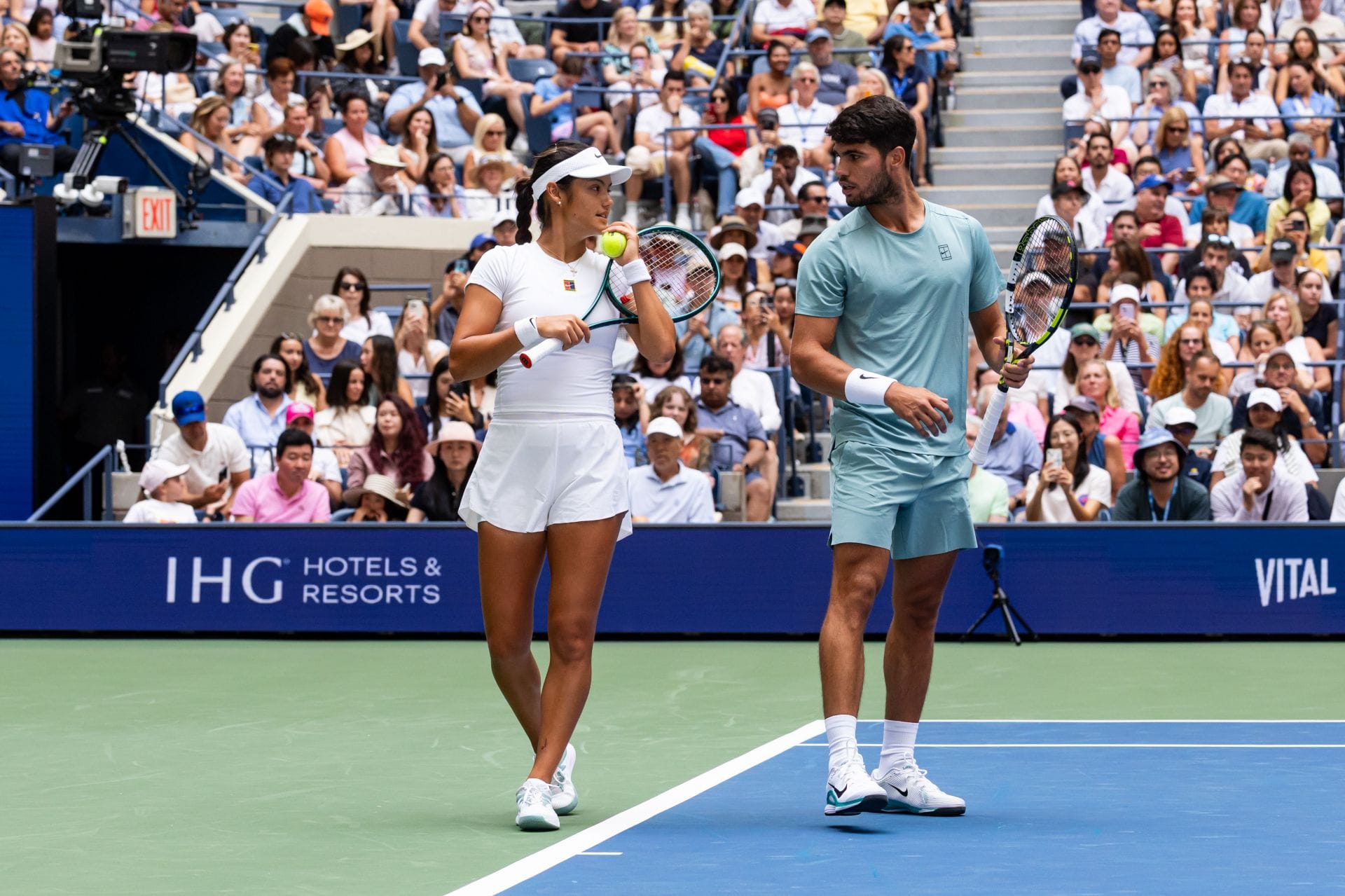
Raducanu’s Stance: Duty and Dignity
Raducanu’s initial remarks, delivered in an interview with The Guardian, centered on the themes of duty and gratitude, positioning the demanding schedule as an inherent part of the job that players should accept gracefully.
“I don’t necessarily think it’s something to complain about because it’s what we are given,” Raducanu stated. Her argument emphasized the financial prosperity afforded to professional tennis players. “And we are making a great living as well. I mean it’s not all glamorous. There are definitely times when it’s very difficult and we are flagging mentally, physically, everything hurts. But at the same time what are we going to do about it? I am sure there are certain people who go to work and their bosses make them do something, but they have to do it, it’s their job.”
Beyond the financial aspect, Raducanu advocated for a sense of public responsibility, suggesting that top athletes should project a stronger image for aspiring players. She argued that perpetual complaints could deter the next generation. “If we put up a front that isn’t complaining, I think that is a better example to the people watching, trying to get into tennis, the younger people. If they see all the top players moaning about the calendar, I don’t think that’s necessarily inspiring to look up to.”
While the intent behind setting a “better example” might be admirable, the tone of the comments immediately drew accusations of being “bad takes” and ignorant of the nuances of the professional grind.
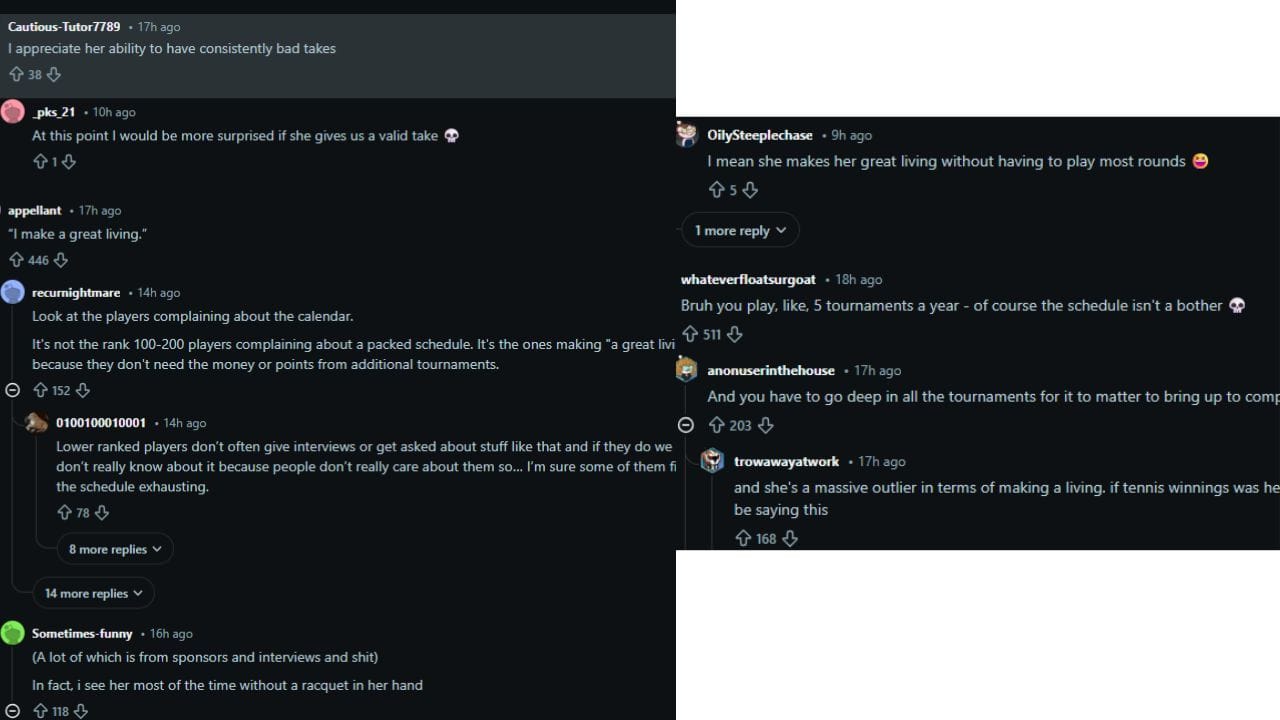
The Voice of the Tour: Alex Eala’s Representative Critique
The fiercest and most pointed critiques revolved around the core issue of Raducanu’s own tournament participation and, crucially, her financial insulation. It is here that the response from players like Alex Eala—a rising talent who is actively climbing the professional ladder—gains significant weight. While the original social media critiques used phrases like, “Bruh you play, like, 5 tournaments a year – of course the schedule isn’t a bother,” Eala’s implied response highlights a stark contrast in professional circumstances.
For Raducanu, a high-profile Grand Slam champion, her financial bedrock rests predominantly on lucrative, multi-million-dollar endorsement deals. Her on-court winnings, though substantial, are secondary to her sponsorship portfolio. The grueling schedule of travel and mandatory tournaments affects her profile, but not her livelihood in the same existential way it does for others.
Alex Eala, along with hundreds of other players ranked outside the top 50, relies heavily on prize money to cover the enormous costs of travel, coaching, and accommodation. Her critique, whether directly quoted or representative of the consensus, underscores the hypocrisy of Raducanu’s position.
The logic of the dissent is devastatingly simple: If one participates sporadically, having been sidelined by injury or choosing fewer tournaments due to financial freedom, the perceived burden of the calendar is minimal. But for a player like Eala, who must play consistently across Challenger and WTA 250 events to earn enough points and money to sustain their career, the mandatory tournament schedule is an exhausting, make-or-break reality.
One common complaint echoed by the dissenters, and implicitly supported by Eala’s situation, is the necessity to “go deep in all the tournaments for it to matter to bring up to complain.” For the majority of the tour, early exits mean financial losses, intensifying the pressure at every subsequent event and making the physical toll feel disproportionately heavy.

The Financial Disconnect
The debate starkly illuminates the vast economic gulf within professional tennis. Raducanu’s comment, “we are making a great living as well,” while technically true for the elite echelon (the top 20 or 30 players), is a massive oversimplification for the thousands of players competing globally.
As one critic noted, Raducanu is a “massive outlier in terms of making a living.” Her income is decoupled from her match performance. If her only income source were tournament winnings, the pressures of the schedule—the need to compete frequently, travel internationally every week, and risk injury—would be far more salient and certainly “something to complain about.”
The reality of the circuit for lower-ranked players is one of constant stress, where every week involves calculating flights, hotel costs, and coaching fees against the slim chance of earning prize money significant enough to turn a profit. When top players like Alcaraz complain, they are speaking for a collective frustration about injury prevention and career longevity. When a player with a limited playing schedule minimizes those complaints, it rings hollow to those fighting week-in, week-out for their professional survival.
Is Setting an Example Worth the Cost?
Raducanu’s second point—that players should maintain a positive public front for the sake of inspiring the next generation—also faces scrutiny. While her commitment to professionalism is clear, the counter-argument posits that transparency is a better form of inspiration.
The younger generation, including players like Eala who grew up watching the sport, are not blind to the physical realities. Seeing top players speak honestly about the need for better mental health support, longer off-seasons, and injury prevention measures is not “moaning”; it is advocating for systemic change and highlighting the human cost of elite performance.
Hiding the pain and exhaustion behind a stoic facade sets an unrealistic, and potentially harmful, example. Authentic engagement with the challenges of the job provides a more meaningful lesson in perseverance and self-care than demanding silence simply to maintain a glamorous image.
In essence, the controversy surrounding Emma Raducanu’s scheduling comments, amplified by the perspective of emerging talent like Alex Eala, reveals that the debate is less about physical fitness and more about fairness, transparency, and the deeply bifurcated economic reality of the professional tennis landscape. For most of the tour, complaining about the schedule is not entitlement; it is a plea for a sustainable career.