WATCH: Chilling Video Shows Just How Close the Artemis II Crew Got to the Moon
Elon Musk shared exterior footage of NASA’s Artemis II spacecraft making its closest approach to the Moon Monday night. The clip will give you chills.
Key Points
- Elon Musk shared stunning exterior footage of NASA’s Artemis II spacecraft passing close to the Moon during Monday’s historic lunar flyby, captioning it simply: “NASA Artemis passing close to the Moon.”
- The Artemis II crew made their closest approach to the Moon at 7:02 p.m. ET Monday, passing within 4,066 miles of the lunar surface — the closest humans have been to the Moon since the Apollo program.
- At 7:05 p.m. ET, the four astronauts broke the all-time record for farthest humans have ever traveled from Earth, surpassing the mark set by the Apollo 13 crew in 1970.
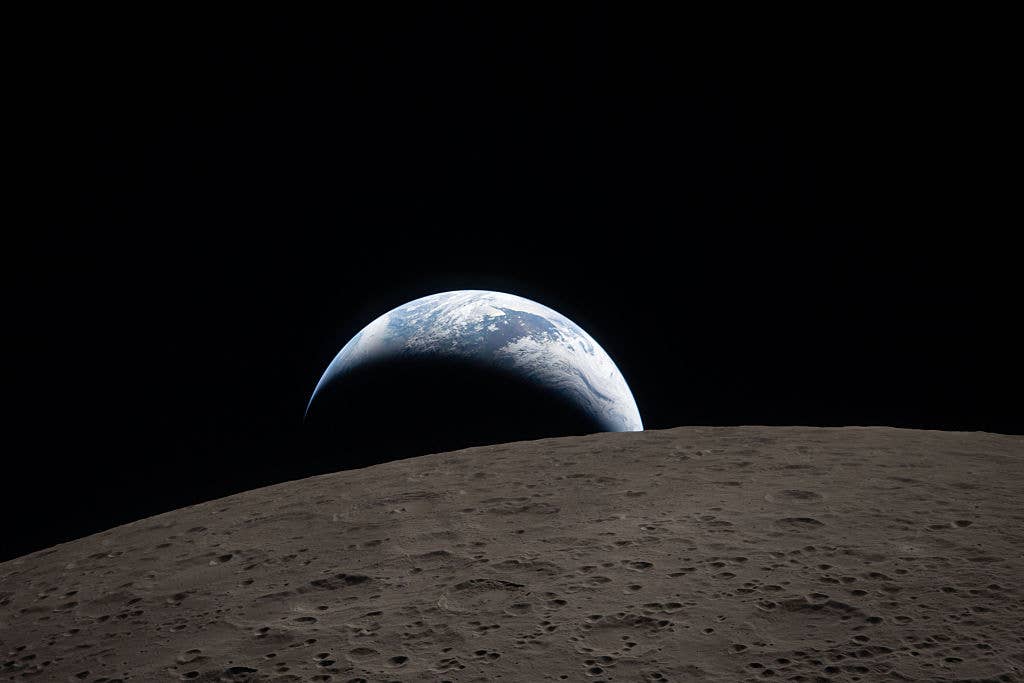
Elon Musk shared exterior video footage Monday night on X of NASA’s Artemis II spacecraft during its closest approach to the lunar surface, captioning the clip “NASA Artemis passing close to the Moon.” The footage, captured by cameras mounted on the outside of the Orion spacecraft, shows the Moon filling the frame in a staggering way.
Update on the Artemis II Crew
The Artemis II crew — commander Reid Wiseman, pilot Victor Glover, mission specialist Christina Koch and Canadian Space Agency astronaut Jeremy Hansen — made their closest approach to the Moon at 7:02 p.m. ET Monday, passing within 4,066 miles of the lunar surface. It is the closest humans have been to the Moon since the final Apollo missions more than 50 years ago.
Three minutes later, at 7:05 p.m. ET, the crew broke the all-time record for farthest humans have ever traveled from Earth, surpassing the mark set by the Apollo 13 crew in 1970 by more than 4,100 miles. Both milestones happened while the crew was completely out of contact with Mission Control, passing behind the Moon with no communication with Earth for roughly 40 minutes.
The crew is now gearing up to head back to Earth.
The clip Musk shared captures something that no human has seen from this vantage point in over half a century. NASA’s Artemis II mission launched April 1 and is scheduled to splashdown off the coast of San Diego at approximately 8:07 p.m. ET on Friday, April 10.