60 Years of Magic: Why A Charlie Brown Christmas Still Holds the Heart of the Season
In 1965, television executives were certain of one thing: this little cartoon was going to fail.
No laugh track.
No flashy animation.
Children who spoke slowly — about loneliness, faith, and meaning.
And jazz music instead of cheerful holiday jingles.
Sixty years later, A Charlie Brown Christmas isn’t just still here — it’s the emotional center of the holiday season.
So how did a half-hour animated special with a sad kid and a scrawny tree become one of the most beloved Christmas traditions of all time?
The Christmas Special That Broke Every Rule
When CBS agreed to air A Charlie Brown Christmas, executives were nervous — and for good reason.
At the time, holiday programming followed a strict formula: bright colors, big laughs, and unmistakable cheer. What Charles M. Schulz and producer Lee Mendelson delivered instead was quiet, introspective, and deeply human.
Charlie Brown wasn’t happy.
He was confused.
Lonely.
Overwhelmed by commercialism.
And that honesty made executives fear audiences would tune out.
They were wrong.
The Jazz Score That Changed How Christmas Sounds

One of the boldest creative risks was the music.
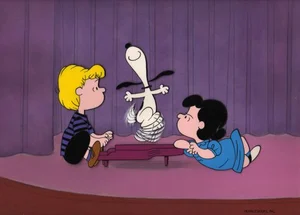
Rather than a traditional orchestra, the special featured a minimalist jazz score by the Vince Guaraldi Trio. Songs like “Linus and Lucy” and “Christmas Time Is Here” didn’t demand attention — they invited reflection.
The result was revolutionary.
Guaraldi’s piano didn’t just accompany the story. It felt like the story — wistful, gentle, and quietly hopeful. To this day, those notes instantly transport listeners back to childhood, snowfall, and the stillness of Christmas night.
Linus, a Spotlight, and a Moment That Nearly Didn’t Air
Perhaps the most famous scene in the entire special almost never made it to television.
When Linus van Pelt steps into the spotlight and calmly recites the Nativity story from the Gospel of Luke, executives were alarmed. Including an overt biblical passage in a prime-time cartoon was unheard of — and risky.
Schulz refused to remove it.
“If we don’t do it,” he reportedly said, “who will?”
That moment — quiet, reverent, and sincere — has since become one of the most powerful scenes in television history. It doesn’t preach. It doesn’t shout.
It simply remembers.
The Little Tree That Said Everything
Charlie Brown’s tree is small. Bare. Mocked by everyone around him.
And that’s exactly why it endures.
In a world obsessed with bigger, shinier, louder — the tree represents vulnerability, humility, and care. When it finally stands tall through love and community, the message is unmistakable:
Meaning doesn’t come from spectacle.
It comes from compassion.
Sixty years later, that message feels more urgent than ever.
Why It Still Matters in 2025
In an age of nonstop noise, endless ads, and curated perfection, A Charlie Brown Christmas offers something rare: permission to feel quietly lost — and hopeful anyway.
It reminds us that Christmas doesn’t have to be loud to be powerful.
That faith doesn’t need polish to matter.
And that even the smallest things can hold eternal meaning.
Charlie Brown found the “true meaning of Christmas” in 1965.
And somehow, against all odds, he’s still helping us find it today.
A Legacy That Refuses to Fade
Sixty years on, the animation may look simple — but the heart behind it is timeless.
The tree is still small.
The music still aches.
And Linus still steps into the light.
Because some stories don’t age.
They wait for us to grow into them.