Why 30 Minutes of Charlie Brown Still Shatters Hollywood’s Holiday Gloss

It has no explosions.
No celebrity cameos.
No glossy montage of perfect families framed by designer lights.
And yet, more than 60 years later, A Charlie Brown Christmas continues to hit harder than most modern holiday blockbusters combined.
In an era obsessed with spectacle and sales, this quiet 30-minute special remains a cultural outlier — and a devastating one.
The Anti-Holiday Movie Hollywood Never Learned From
Hollywood Christmas movies tend to sell a fantasy:
Big houses. Big miracles. Bigger emotions wrapped in noise.
Charlie Brown does the opposite.
It opens with loneliness. Not quirky loneliness — real loneliness. Charlie Brown watches the world skate, laugh, and celebrate while he stands on the sidelines, openly admitting something most holiday films refuse to acknowledge:
He feels empty.
That alone makes the special radical.
Why the Simplicity Still Hurts
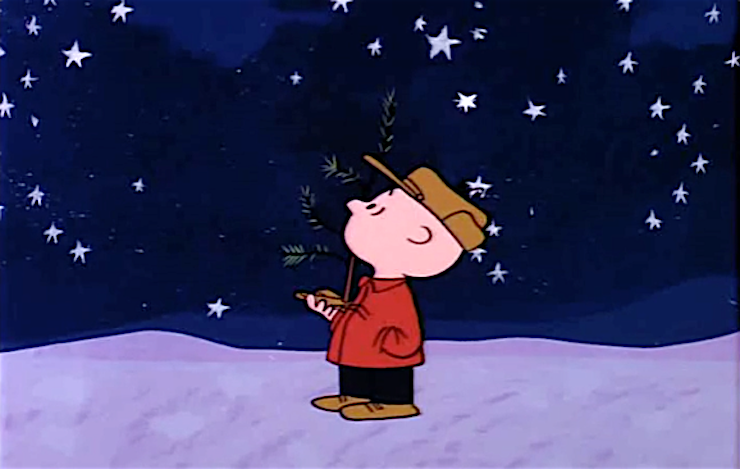
There’s no rush to fix Charlie Brown’s sadness. No inspirational speech set to swelling strings. The story lets discomfort breathe.
The tree is small.
The stage play falls apart.
The characters misunderstand one another.
And the jazz score by Vince Guaraldi doesn’t tell you how to feel — it sits with you.
That restraint is exactly why it endures.
The Scene Modern Films Would Never Dare to Air
Halfway through the special, Charlie Brown asks a question that lands like a quiet bomb:
“Isn’t there anyone who knows what Christmas is all about?”
What follows — Linus calmly stepping forward to recite Scripture — is something no modern studio would greenlight without hesitation.
There’s no irony.
No wink.
No apology.
Just sincerity.
Creator Charles Schulz was warned against including it. He refused. That refusal is now the emotional spine of the entire special.
A Tree That Says Everything

The crooked little tree has become one of the most powerful visual metaphors in pop culture — not because it’s clever, but because it’s honest.
It isn’t rescued by magic.
It doesn’t transform on its own.
It only becomes beautiful when the characters choose to care for it.
That’s the message modern holiday films avoid:
Meaning doesn’t arrive fully formed. It’s built — gently — by imperfect people.
Why It Still Feels Dangerous
Charlie Brown doesn’t sell Christmas as a product.
It questions it.
It admits that joy can coexist with sadness. That faith can be quiet. That hope doesn’t need glitter to survive.
In a culture built on constant emotional escalation, that kind of honesty feels almost subversive.
And that’s why it still shatters the gloss.
The Quiet Power Hollywood Keeps Ignoring
Every year, studios spend millions trying to recreate “holiday magic.”
Meanwhile, a hand-drawn cartoon with child actors, silence, and a struggling pine tree continues to outshine them — because it understands something they don’t:
Christmas isn’t loud.
It isn’t perfect.
And it isn’t always happy.
But it’s human.