A Charlie Brown Christmas Turns 60: How the Holiday Classic Was Born
In December 1965, a quiet little TV special aired on CBS with no laugh track, child voice actors who sounded truly like children, jazz music instead of jingles — and a melancholy cartoon boy questioning the meaning of Christmas.
By all conventional television standards, it should have failed.
Instead, it changed holiday television forever.
Sixty years later, A Charlie Brown Christmas isn’t just a seasonal tradition — it’s a cultural touchstone, replayed every year by millions who may not even realize how revolutionary it once was.
So how did a low-budget cartoon about sadness, faith, and a crooked Christmas tree become one of the most beloved holiday specials of all time?
The story behind it is almost as surprising as the special itself.
A Network Gamble No One Believed In

The idea came together at lightning speed. Advertising executive Lee Mendelson had recently produced a documentary about Charles M. Schulz, the creator of Peanuts. Though the documentary never aired, CBS executives saw potential — and suddenly ordered a Christmas special.
There was just one problem:
They wanted it done in six months.
At the time, animated TV specials typically took over a year to produce. Schulz, Mendelson, and director Bill Melendez agreed anyway — unaware they were about to break nearly every rule of prime-time television.
Everything About It Was “Wrong”
From the start, CBS executives were uneasy.
-
No laugh track (unheard of for animation in the 1960s)
-
Real children voicing the characters, not trained actors
-
Jazz music by Vince Guaraldi, instead of orchestral holiday tunes
-
A storyline focused on loneliness, anxiety, and spiritual meaning
Most shocking of all?
A full, uninterrupted Bible passage spoken aloud on network television.
Executives reportedly told the creators, “You can’t have a child quoting scripture in a cartoon.”
Schulz refused to remove it.
“If we don’t do it,” he said, “who will?”
That Little Tree Almost Didn’t Make It
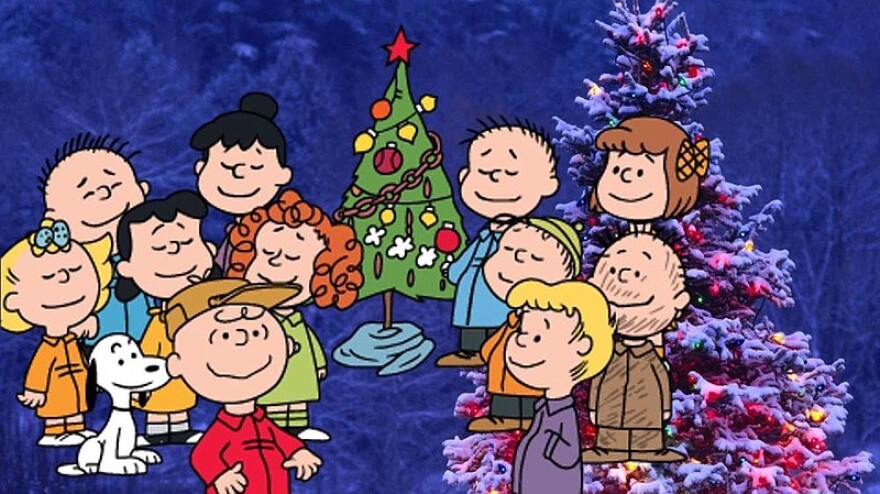
Charlie Brown’s spindly, sad Christmas tree — now iconic — was initially criticized even by the animation team. It was considered too ugly, too depressing, too strange.
Schulz insisted it stay.
The tree symbolized everything the special stood for: vulnerability, sincerity, and hope in the face of commercial excess. In many ways, it mirrored Charlie Brown himself.
That “mistake” became one of the most recognizable images in holiday pop culture.
A Nervous Premiere — And an Unexpected Miracle
When the special aired on December 9, 1965, the creators were convinced it would be a disaster.
CBS executives were reportedly unhappy even after seeing the final cut.
Then the ratings came in.
More than 15 million viewers tuned in — nearly half of all TVs in America at the time. Critics praised it. Parents loved it. Children related to it.
And just like that, a holiday classic was born.
Why It Still Matters 60 Years Later
A Charlie Brown Christmas endures because it doesn’t shout. It doesn’t sparkle. It doesn’t sell.
Instead, it dares to be quiet.
In an increasingly noisy holiday season, its message feels even more relevant: that Christmas isn’t about perfection, popularity, or presents — it’s about connection, compassion, and finding light in small, imperfect things.
For sixty years, it has trusted its audience — children and adults alike — to sit with those ideas.
That trust is why it lasts.
The Legacy That Refuses to Fade
Today, the special continues to air annually, its soundtrack remains a best-selling jazz album, and its influence can be seen in countless animated films and holiday specials that followed.
What began as a rushed experiment became a timeless reminder that sometimes, the simplest stories — told honestly — leave the deepest mark.
And that’s why, 60 years on, Charlie Brown still reminds us what Christmas is all about.