‘We’ve Ruined Charlie Brown’: How a Doomed Christmas Special Became a Timeless Classic
On paper, A Charlie Brown Christmas should have failed spectacularly.
Network executives were uneasy. Sponsors were skeptical. Even the creators feared the worst. At one point, the reaction was so bleak that a now-famous line summed up the mood behind the scenes:
“We’ve ruined Charlie Brown.”
And yet, nearly 60 years later, A Charlie Brown Christmas is not only considered one of the greatest holiday specials ever made — it has become a cultural ritual, replayed year after year with almost sacred devotion.
So how did a project everyone thought was doomed end up redefining Christmas television forever?
Everything About It Was “Wrong”
When the special went into production in 1965, television Christmas programming followed a strict formula: bright colors, big laughs, cheerful songs, and reassuring sentimentality.
Charlie Brown delivered none of that.
The animation was sparse and subdued.
The pacing was slow — almost quiet.
There was no laugh track.
And most shocking of all, children’s voices sounded like… actual children.
To executives, it felt unfinished. Unpolished. Risky.
Even Charles M. Schulz, the creator of Peanuts, worried the special strayed too far from expectations. The melancholy tone, the pauses, the awkward silences — this wasn’t how holiday TV was supposed to feel.
The Jazz That Almost Sank It
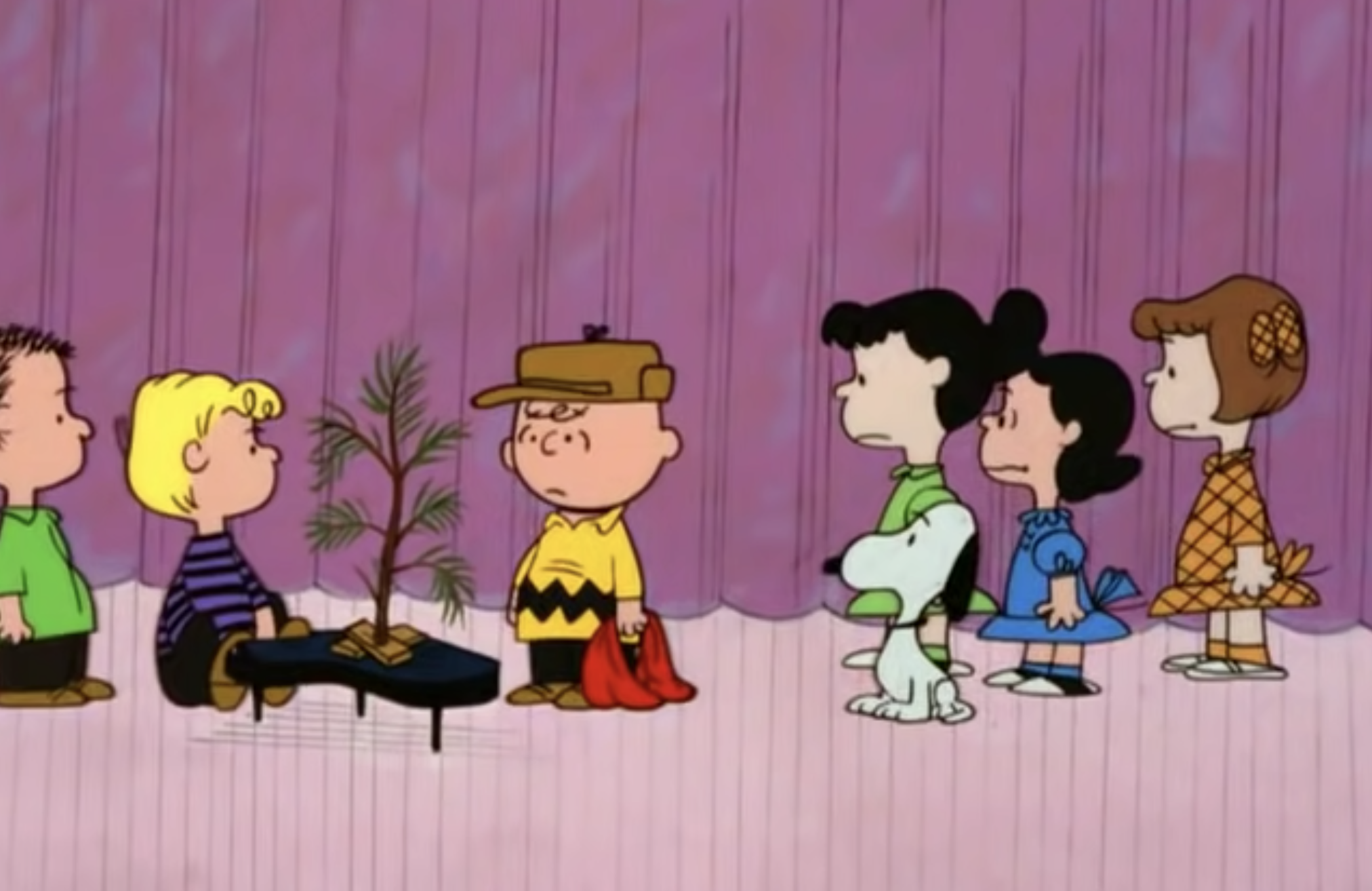
Perhaps the boldest gamble was the music.
Instead of a traditional orchestral score, the producers chose Vince Guaraldi, a San Francisco–based jazz musician whose soft, swinging piano felt completely out of place by network standards.
Jazz… in a children’s Christmas cartoon?
Executives were baffled. But Guaraldi’s score — especially Linus and Lucy and Christmas Time Is Here — added emotional depth no one anticipated. It didn’t shout joy. It ached for it.
That subtle melancholy became the soul of the special.
Linus Changed Everything
Then came the moment no one expected to make it to air.
In the middle of the program, Linus steps onto the stage and recites the Nativity story directly from the Bible. No jokes. No irony. Just silence and sincerity.
Network executives were reportedly nervous about airing such an overt religious moment during prime time. But Schulz refused to cut it.
“If we don’t do it,” he said, “who will?”
That quiet speech — delivered by a child’s voice in an animated cartoon — became one of the most unforgettable moments in television history.
The Night It Aired… and the Shock That Followed
When A Charlie Brown Christmas finally aired, expectations were low. The fear was palpable.
And then something unexpected happened.
Viewers didn’t turn away. They leaned in.
Families recognized themselves in Charlie Brown’s loneliness. Adults heard something honest in the music. Children understood the feeling of being overwhelmed by a holiday that promised happiness but didn’t always deliver it.
Ratings soared. Word spread. The special was replayed the following year — and the year after that.
What was once considered a failure-in-the-making quietly became a tradition.
Why It Still Works Today
The reason A Charlie Brown Christmas endures isn’t nostalgia alone. It’s because it refuses to lie.
It admits that the holidays can be lonely.
That joy can feel forced.
That meaning isn’t always loud.
In a world of constant noise, the special’s stillness feels radical even now.
What executives once saw as flaws — the quiet pacing, the sadness, the simplicity — became its greatest strengths.
From “Ruined” to Revered
The irony is impossible to ignore. The very choices that sparked fear and doubt are the reason the special survived.
A Charlie Brown Christmas didn’t follow the rules — and in doing so, it changed them.
What began as a doomed experiment became a reminder that sometimes, the most powerful stories are the ones brave enough to be gentle.
And that’s why, every December, people keep coming back — not just to watch Charlie Brown find his tree, but to remember that it’s okay if the season feels complicated.
Because that honesty?
That’s what made it a classic.