Anne Hathaway: A Star Shaped by Talent, Scrutiny, and Reinvention
Anne Hathaway is an actress whose talent has been proven across two decades of cinematic work. On screen, she captivates audiences with her delicate beauty and charm—ranging from Princess Mia in The Princess Diaries (2001), to Selina/Catwoman in The Dark Knight Rises (2012), and Fantine in Les Misérables (2012). Yet beyond the spotlight, Hathaway has also found herself at the center of backstage tensions and public controversy.
She became the subject of high-profile media pieces like Do We Really Hate Anne Hathaway? by The New York Times and Why Do Women Hate Anne Hathaway? in The Cut, as well as countless debates across social media.
Turning Down a Lead Role in an Oscar-Winning Film
One of those behind-the-scenes clashes led her to reject the lead role in Silver Linings Playbook, a widely acclaimed film, before she ultimately accepted a supporting role in Les Misérables—a performance that won her the Academy Award for Best Supporting Actress.
According to Showbiz CheatSheet, the role famously portrayed by Jennifer Lawrence in Silver Linings Playbook was originally offered to Anne Hathaway. However, due to creative differences with director David O. Russell, she stepped away from the project.
In an interview with Howard Stern on SiriusXM, producer Harvey Weinstein—who was closely involved in the project—revealed that the initial leads were Anne Hathaway and Mark Wahlberg. Hathaway was Weinstein’s top choice for the role.
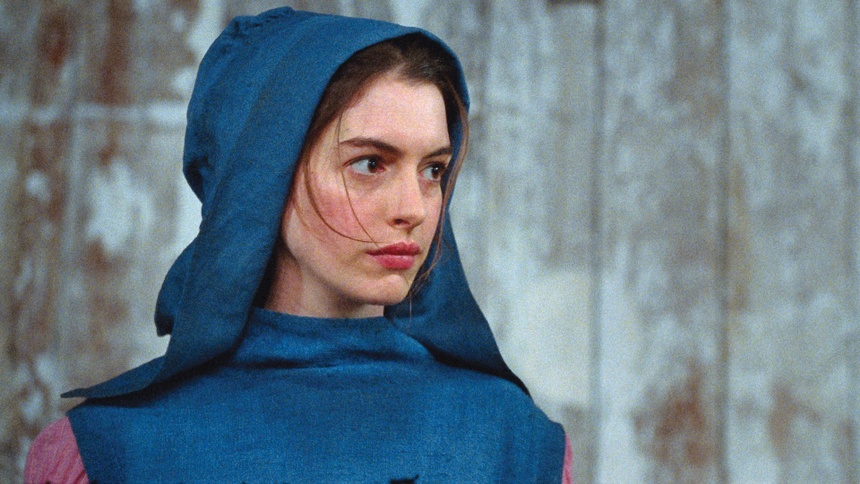
Unfortunately, things unraveled when Hathaway and Russell failed to see eye to eye. As a result, the role went to Jennifer Lawrence, while Hathaway took on the role of Fantine in Les Misérables.
Both films premiered in 2012 and achieved critical and commercial success. According to IMDb, Silver Linings Playbook grossed $132 million in North America, while Les Misérables pulled in $148 million.
For Hathaway, joining Les Misérables turned out to be the right choice. Her role as Fantine—a beautiful woman with a tragic life who is abandoned by her lover, forced to raise her child alone, and eventually sells her hair and teeth to survive—earned her a $10 million paycheck and an Oscar.
Her Academy Award was not only a professional milestone but also deeply personal. According to The Hollywood Reporter, Hathaway’s mother once played Fantine in the first U.S. production of Les Misérables.
A Wave of Public Backlash
Despite her triumph at the 2013 Oscars, Anne Hathaway became the focus of an unexpected wave of public rejection. The backlash was so intense that The New York Times published a cultural analysis titled Do We Really Hate Anne Hathaway? in April 2013.
The article chronicled numerous anti-Hathaway sentiments online and tried to unpack the root causes of this oddly widespread negativity.
A poll hosted by The San Francisco Chronicle even crowned Hathaway the “Most Hated Celebrity of 2013.”
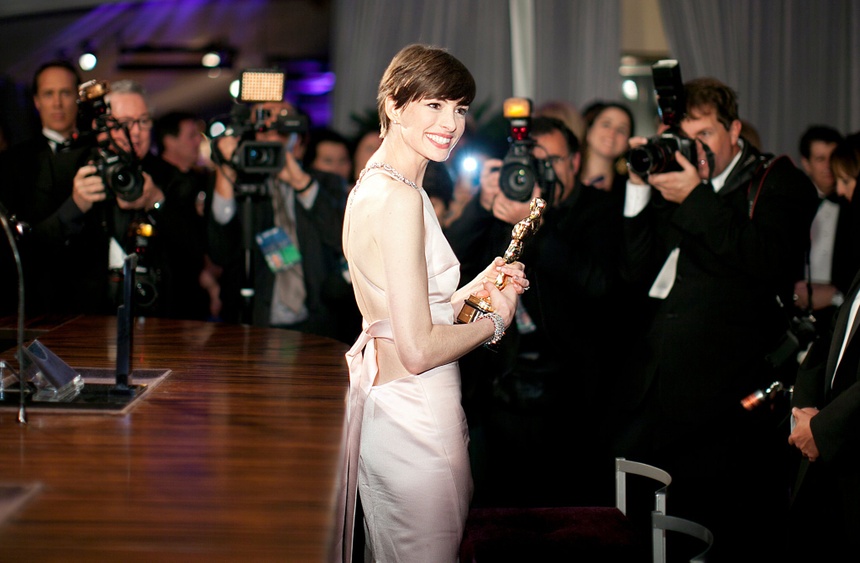
Actor James Franco and radio host Howard Stern discussed this phenomenon on the show Mr. Stern, referring to the community of online critics by the dramatic nickname “Hathahaters.”
In 2011, Hathaway co-hosted the Oscars with James Franco, a performance widely criticized for their lack of chemistry. Rumors suggested that the two disliked each other, contributing to what many considered an awkward and disastrous show.
The New York Times article cited a variety of public comments and media expert analyses about Hathaway’s career trajectory and her complicated relationship with the audience.
One online commenter said, “There’s something about her that just doesn’t feel right… like she’s not real.” This echoed a common perception among viewers: she was too perfect.
“I don’t really hate Anne Hathaway. I hate the surreal image of her—like a high school princess who eats raisins for lunch and doesn’t care about boys,” said journalist Sarah Nicole Prickett of Vice and The New Inquiry.
Writer Alex Williams of The New York Times concluded that Anne Hathaway in 2013 was a victim of “Tall Poppy Syndrome”—the idea that the tallest flowers are the first to be cut down.
Her First Villain Role
But public backlash never stopped Anne Hathaway. She has continued to shine, remaining one of Hollywood’s most talented and beautiful leading ladies.
In 2018, Hathaway responded to years of criticism, particularly about her Oscar-night dress, with a candid Instagram post:
“I had laryngitis and still had to sing, but the media was more focused on the negative comments about my dress? But you know what? I’m still the best at what I do.”
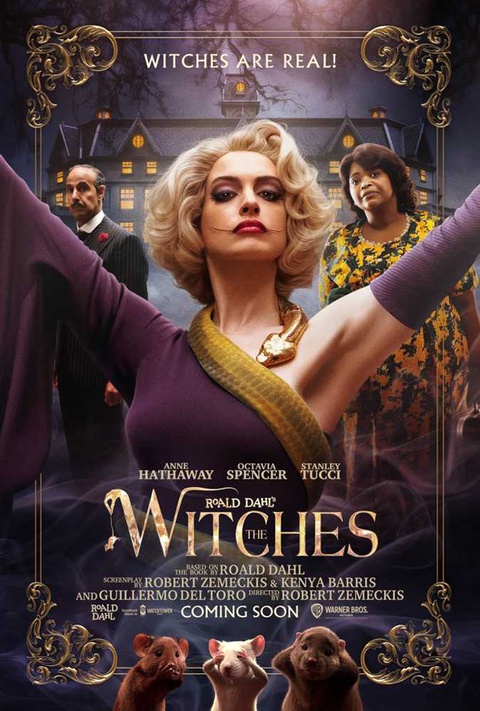
Coming up, Hathaway will star as the Grand High Witch, Evangeline Ernst, in the film adaptation of Roald Dahl’s The Witches. Her character has a screeching voice and a grin that stretches to her ears—whose sinister plot is to turn all the children in the world into mice.
This marks an unusual departure from Hathaway’s previous roles and her first time playing a villain on screen. In an interview with Empire on October 1, director Robert Zemeckis said, “If it weren’t for Hathaway, no one else could have taken this role.”