“I s**ked… I was really bad”: Serena Williams lays bare her insecurities and rivalry with sister Venus in candid career confession

Serena Williams, one of the most decorated athletes of all time, has admitted that at the start of her career she never imagined she would become a champion — and in fact once believed she “s**ked” compared to her elder sister Venus.
In a strikingly candid reflection on her early days in tennis, the 23-time Grand Slam champion revealed the doubts, insecurities and rebellious moments that shaped her path from an awkward teen with a lob-heavy game to the woman widely regarded as the greatest to ever play the sport.
“I s**ked. I was bad.”
Speaking openly about her childhood training and first years as a professional, Serena confessed:
“I s**ked. I was bad. I didn’t have it. I only hit lobs. Remember, I only hit lobs. I was terrible. Even when I first turned pro, I was really bad. I thought I wasn’t that good.”
She explained that at the time, she saw herself as smaller and less powerful than her peers, and relied on simply trying to outlast opponents:
“I thought I could outlast people because I was small at the time. I thought I could just stay out there and maybe they’d tire out.”
It is a startling admission from a woman whose ferocity, power and dominance would later redefine the women’s game.
A rivalry shaped by Richard Williams
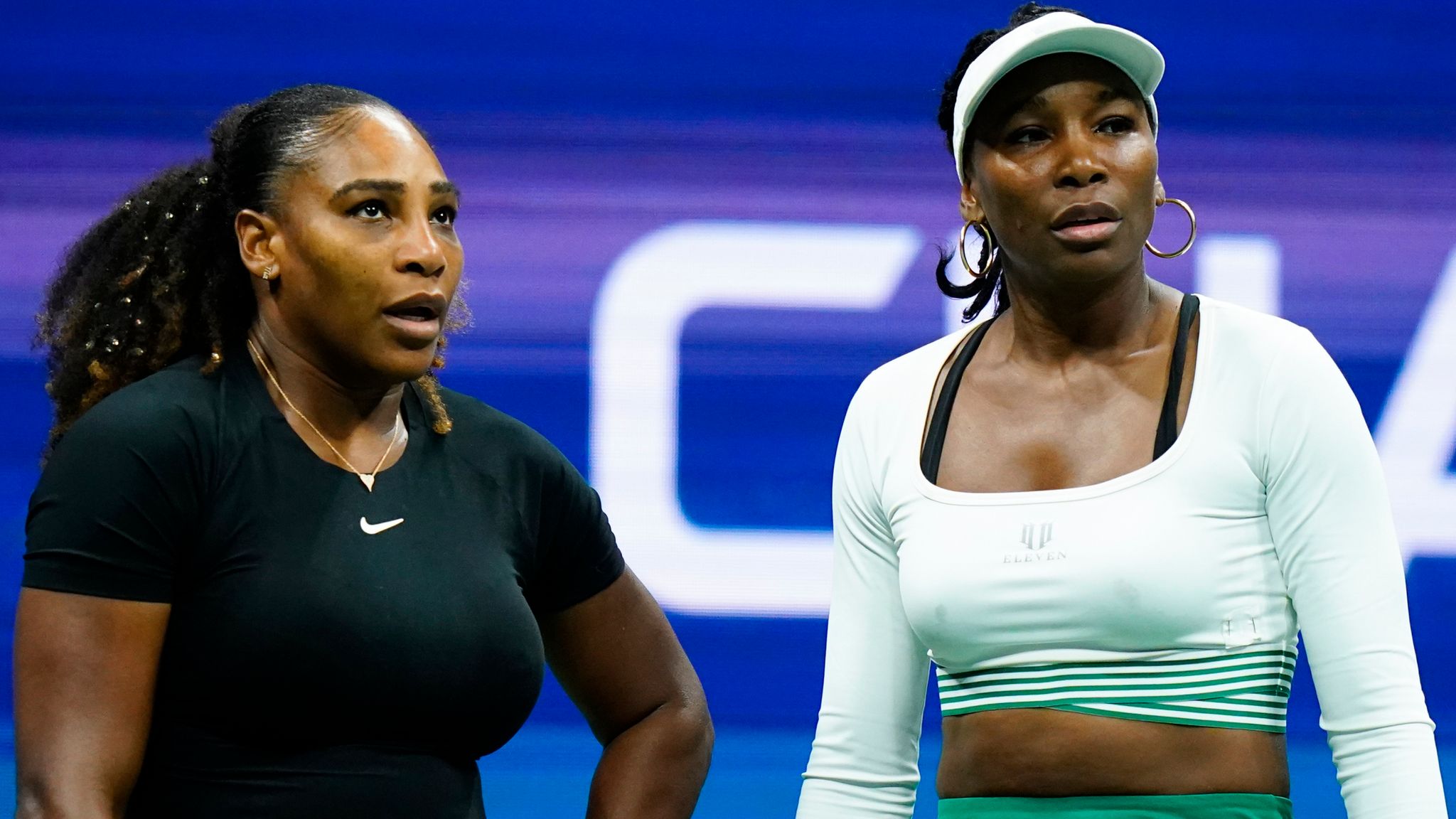
Serena went on to describe how her father, Richard Williams, gave both sisters a unique motivational challenge: he asked them to pick a Grand Slam to win, so that they could focus on visualising success.
“Venus picked Wimbledon,” Serena recalled. “Then Dad told me I had to pick something different. So I chose the US Open — but honestly, I didn’t believe I’d ever make it.”
In hindsight, the choice was prophetic. Venus would indeed win Wimbledon five times, while Serena captured the US Open an astonishing six times — the tournament that launched her Grand Slam tally in 1999.
Childhood rebellion: cutting racket strings

Serena also revealed an extraordinary story about her early resistance to the grueling training that Richard demanded.
“I used to cut the racket strings because I didn’t want to train,” she admitted.
“I remember once we were driving to Anaheim, and I wasn’t feeling well. I secretly cut the strings on my racket. When we got there, Dad opened the bags and saw every racket was broken. His face looked so sad. I felt guilty and I never did it again.”
The moment proved to be a turning point.
“In hindsight, we needed every second of training,” she reflected. “To be the best, you have to put in the time and be willing to work harder than anyone else. That lesson motivated me later on.”
From underdog to icon
Despite her doubts, Serena’s breakthrough came quickly. By the age of 17, she stunned the tennis world by winning the 1999 US Open, defeating world No.1 Martina Hingis in the final. That victory silenced any questions about her potential and marked the start of a career that would transform women’s tennis.
Still, Serena has never forgotten the rocky road to the top. She admitted that being in Venus’s shadow during their formative years was both a blessing and a source of pressure.
“Venus was always the one people thought would be the great champion,” Serena said in a previous interview. “I was just the little sister tagging along.”
But those early doubts only sharpened her drive. “I wanted to prove I belonged,” she said.
Sisterly bond beyond rivalry

Despite the fierce rivalry that developed on court — with the sisters meeting nine times in Grand Slam finals — Serena insists that Venus was never her enemy.
“Venus was my toughest opponent, but she was also my biggest supporter,” Serena explained. “She lifted me up when I doubted myself. Without her, I don’t think I’d be here.”
Their father Richard has often been credited with shaping their discipline and belief, but Serena’s anecdotes underline the emotional weight behind his tough-love methods.
Legacy of resilience
Looking back now, Serena views those moments of insecurity as vital to her eventual dominance.
“It’s funny because people see the 23 Grand Slams and think I was always confident. But the truth is, I had to build that belief step by step,” she said.
Her honesty offers a rare glimpse behind the curtain of greatness — revealing that even the most iconic champions began with uncertainty, rebellion and moments of weakness.
A lasting reminder for the next generation
For today’s rising stars, Serena’s story is a reminder that greatness does not always come wrapped in early perfection. What mattered most, she insists, was the resilience to push through self-doubt and to learn from mistakes.
“Even when I felt I wasn’t good enough, I kept showing up,” she said. “That’s the key — you keep showing up, and eventually, you surprise yourself.”
As for her sister Venus, Serena remains grateful that their journeys have been intertwined. “She was the reason I picked up a racket in the first place. She made me believe it was possible,” she said.
From “I sucked” to GOAT

It is almost impossible to reconcile Serena’s candid words — “I sucked. I was bad” — with the towering figure she became in tennis. But perhaps it is precisely that self-awareness and vulnerability that explains her resilience, her fire, and her relentless pursuit of improvement.
Her story is not just one of talent, but of transformation: from a young girl secretly cutting strings to avoid practice, to a global icon whose name is synonymous with greatness.
And if the early insecurities of Serena Williams shaped the greatest champion in tennis history, one can only wonder: how many more untold stories from her rise are still waiting to be revealed?