Batteries are considered one of the greatest inventions, used in countless technological devices today—including smartphones. But few people know that, if it weren’t for inspiration from a creature with a frightening appearance, we wouldn’t have smartphones with batteries powerful enough to last all day.
Volta’s Battery
As global demand for mobile energy surged, many inventors sought to replace existing battery technologies with something better.
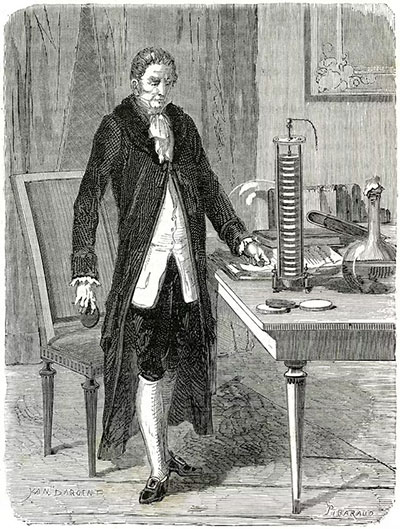
Italian physicist Alessandro Volta tapped into the basic principles of electrochemistry when he invented the first battery in 1800. Simply put, the physical combination of two different materials—often metals—can trigger a chemical reaction that results in a flow of electrons from one material to the other. That flow of electrons represents mobile energy that can be harnessed to generate electricity.
The first materials used to make batteries were copper and zinc. Today’s best batteries—which produce the highest power output in the smallest possible size—combine lithium with one of various metal compounds.
While there have been steady improvements over the centuries, modern batteries still rely on Volta’s original principle: pairing materials that can trigger an electrochemical reaction and capturing the electrons produced.
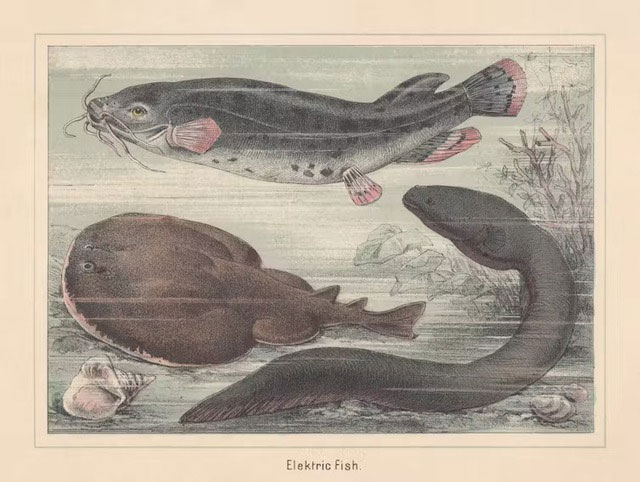
But before manmade batteries began generating electric current, electric fish—like the electric ray in the Mediterranean and especially the freshwater electric eels of South America—were already famous for their incredible electric power.
In fact, these electric fish inspired Volta’s early research, which eventually led to the invention of the battery. And today’s battery scientists still look to these electric creatures for ideas.
Inspired by the Electric Eel
Before Volta’s battery was invented, the only way humans could produce electricity was by rubbing different materials together—such as silk on glass—to generate static electricity. This was neither an easy nor practical method for producing usable electric energy.
Volta knew that electric fish had a specialized internal organ for generating electricity. He reasoned that by mimicking this mechanism, a new way to create electricity could be discovered.
The electric organ of these fish consists of stacks of elongated cells that closely resemble a roll of coins. Inspired by this, Volta cut coin-like discs from separate sheets of material and began stacking them in various sequences to see which combinations might produce electricity.
These stacking experiments yielded no success until he tried combining copper discs with zinc discs, separated by cardboard discs soaked in saltwater.
This copper-zinc-paper stack accidentally produced electricity, and the output increased with the height of the stack. Volta believed he had discovered the secret behind how electric eels generated electricity and had created an artificial version of their organ. So initially, he called his invention the “artificial electric organ.” However, this assumption turned out to be scientifically inaccurate.
What Really Makes Electric Eels Electric?
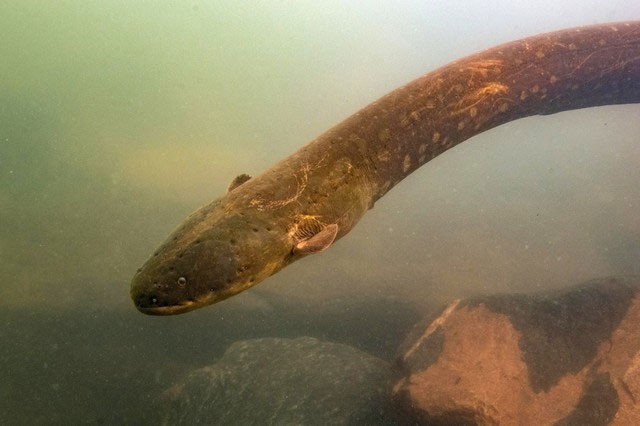
Modern scientists now understand that the electrochemical reaction between different materials discovered by Volta has nothing to do with how electric eels generate electricity. Instead, the eel uses a method similar to how our nerve cells create electrical signals—but on a much larger scale.
Specialized cells in the eel’s electric organ pump ions across a semipermeable membrane to create an electrical charge difference between the inside and outside of the membrane.
When microscopic gates in the membrane open, the rapid movement of ions from one side to the other creates an electric current. The eel can open all of its membrane gates simultaneously at will, producing a massive electrical discharge, which it directs intentionally at its prey.
Electric eels don’t shock their prey to death; they merely stun the target with electricity before striking. An eel can generate hundreds of volts, but the voltage doesn’t push enough current for a long enough duration to kill. Each electrical pulse lasts just a few thousandths of a second and delivers less than 1 amp—about 5% of the current used in a typical household.
This is similar to how electric fences work, delivering very short, high-voltage pulses with very low current. As a result, they are enough to shock but not kill bears or other intruding animals attempting to climb over.
It’s also similar to modern stun weapons, which operate by delivering ultra-high voltage pulses (around 50,000 volts) with very low current (just a few milliamps).
The Effort to Imitate Eels
Just like Volta, some modern electrical scientists are attempting to transform battery technology with inspiration from electric eels.
A group of researchers from the United States and Switzerland is currently studying a new type of battery inspired by eels.
They envision that this soft, flexible battery could one day be useful for powering internal medical implants and soft robots. However, the team acknowledges that there’s still a long way to go.
“Electric organs in eels are incredibly sophisticated; they generate power much more effectively than we do,” lamented Michael Mayer, a member of the group from the University of Fribourg. So, research on eels continues.
In 2019, the Nobel Prize in Chemistry was awarded to three scientists for developing lithium-ion batteries. When presenting the award, the Royal Swedish Academy of Sciences declared that their work had “laid the foundation for a wireless, fossil fuel–free society.”
The “wireless” part is certainly accurate, as lithium-ion batteries now power nearly all handheld wireless devices—and smartphones are one of them.
Later that year, scientists from the Smithsonian Institution announced the discovery of a new species of electric eel in South America—remarkably, the most powerful bioelectric generator known on Earth.
Researchers recorded a discharge from one eel at 860 volts, far surpassing the previous record-holding species, which could generate only 650 volts.
Just as humans celebrate creating the latest portable energy source, electric eels continue to outpace us with their abundant natural power.