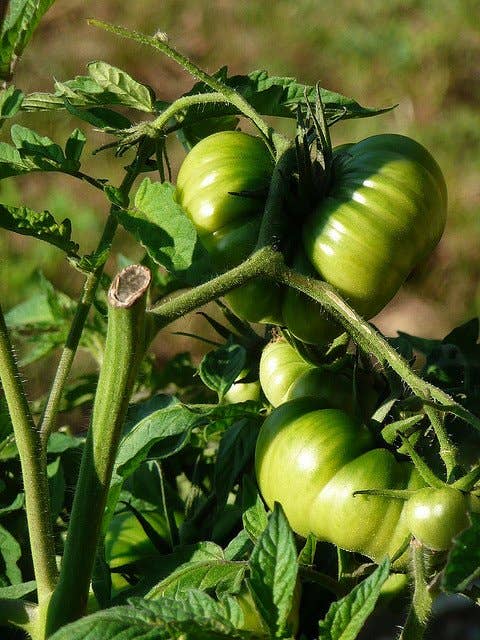
Tomatoes are one of the most popular, if not the most popular, crops in our vegetable gardens, although, as you probably know, they’re technically a fruit. Juicy, fragrant, and just so satisfying to grow, tomatoes are so ubiquitous that we sometimes forget that they’re tropical plants that don’t always like the climates we grow them in. Tomatoes grown in temperate climates are prone to all sorts of pests and diseases.
Fortunately, smart companion planting can reduce these problems, even if it won’t eliminate them. Besides, pest and disease control isn’t the only reason to seek out companion planting for tomatoes. As Craig LeHoullier, gardener and author of Epic Tomatoes, explains, “one type of plant could provide structural support for another. A particular flower could attract pollinators to nearby vegetable plants, thus improving yield.”
One thing to remember with companion planting is that it’s not an exact science. Most of it is based on gardeners’ experiences, a practice that “emerged through the many years of growing crops as forms of handed down or shared techniques”, says LeHoullier. So, if you’ve heard from a fellow gardener that a specific plant works as a companion plant for tomatoes, try it! And if it works, keep planting it. Here are some suggestions to get you started.
1. Marigolds
Marigolds have been believed to repel pests from tomatoes for generations. As it turns out, this age-old practice is backed by scientific fact. Researchers from Newcastle University have confirmed that marigolds, a.k.a. Calendula, do repel whiteflies because they emit limonene, which the insects hate.
Marigolds are overall a very beneficial plant in your garden; the flowers can also be used to make anti-inflammatory ointments and are safe around pets.
2. Nasturtiums
In the same vein, planting nasturtiums next to your tomatoes “can remedy the issue of aphids attacking the foliage of your tomato plants”, according to LeHoullier. Nasturtiums also double up as pollinator-friendly plants, which will help attract pollinators to your tomatoes, too.
Moreover, nasturtium flowers are edible and make a lovely summer garnish for your salads.
3. Beans
Tomatoes are heavy feeders, and if yours are growing directly in the ground, they will sap it of nutrients, especially nitrogen, pretty fast. Fertilizing your tomatoes regularly during the growing season is one way to remedy this problem, but did you know that beans naturally fix nitrogen levels in soil? They do this via a special bacteria living in their root nodules; the bacteria convert inert nitrogen into usable nitrogen for the plant. A small amount of that nitrogen is leaked back into the soil and becomes available to neighboring plants.
Scientists aren’t entirely sure why or how this happens, and some beans are better at doing this than others. If in doubt, plant brad beans, as they have been shown to transfer nitrogen to other plants in a study.
Top tip: Always plant your beans in a position where they won’t be shaded by your tomatoes. Also, if growing pole beans, make sure they’re far away enough from the tomatoes to prevent the vines getting all tangled up.
4. Radishes
Radishes make a great “sacrifice” companion plant for tomatoes. Both tomatoes and radishes are preferred food sources for the flea beetle; if these critters are devouring your tomato crops, plant radishes next to them. They prefer the radishes and eat them first; meanwhile, your tomato plants will have time to mature and become less vulnerable to an infestation.
5. Basil
Basil and tomatoes is a marriage made in heaven. Not only does the herb provide the perfect flavor accompaniment to tomato-based dishes, but the two plants are thought to enhance each others’ flavors when grown together. Le Houllier names the basil-tomato combination as one of his “favorite examples of companion planting”, even if the flavor-enhancing process “has not been absolutely proven”. Why not try it and decide for yourself?
6. Thyme
Generally, almost any herb will make an excellent companion plant for tomatoes, but thyme has the edge because interplanting it with tomatoes has been shown to reduce egg-laying by adult armyworms.
The other benefit of thyme is that as a natural groundcover plant, it acts as mulch, preventing moisture loss from the soil.
7. Datura
Planting datura next to your tomatoes comes recommended by Lehoullier who explains that the flowers “attract the moth responsible for the pesty tomato hornworm.” Planting datura is a much less labor-intensive way of battling the dreaded hornworms that can completely destroy your tomatoes. You’re giving the moths another option instead of endlessly picking off caterpillars (which can be very difficult to spot on your tomatoes because of their green camouflage).
The adult moths are very drawn to the blooming daturas, which, like tomatoes, are in the nightshade family. They will lay their eggs under the daturas, and the emerging caterpillars will then munch on them instead of your tomatoes. Just bear in mind that the datura is very toxic if ingested: curious pets and young children must be kept away from it.
8. Borage
If you’re a bit wary of the toxic datura (say, you have a puppy, so it’s a no-go), you can try planting borage with your tomatoes. Borage is an edible plant with a cucumber-like taste that is known for its anti-inflammatory and sedative properties. When planted with tomatoes, it is said to repel hornworms. If nothing else, it’s a great plant for pollinators, beloved by bees.
9. Alyssum
Alyssum, like thyme, is a groundcover plant that will create a mulch-like effect around your tomatoes. Also, its flowers are irresistible to parasitic wasps that feed on aphids. If aphids on your tomatoes are becoming a problem, alyssum is the companion plant to try.
10. Lettuce
Finally, not all companion plants need to have pest-repelling qualities to be worth trying out. LeHoullier points out that “Tomato plants grow quite large and take up valuable garden space. They also provide shaded areas in between. Planting crops such as lettuce near the bottom of tomato plants will make good use of good quality garden soil.”