It is truly unfair that horror films have held such a humble position throughout the 85-year history of the Oscars. That is why the huge success of The Silence of the Lambs is even more remarkable…

The journey of a bestseller to the screen
In 1981, author Thomas Harris published Red Dragon, with a central character, Dr. Hannibal Lecter — a psychiatrist who was also a serial killer. In 1986, Red Dragon was adapted into the film Manhunter, but it was a major box office failure.
In 1988, Thomas Harris released The Silence of the Lambs — the continuation of the story of the cannibalistic doctor Hannibal Lecter from Red Dragon. The novel initially did not attract many readers until it was released in paperback form, after which it became a record-breaking paperback bestseller.
Producer Dino De Laurentiis, who had failed with Manhunter, lost interest in this subject. He transferred the film rights for The Silence of the Lambs to Orion Pictures. The studio’s president at the time, actor Gene Hackman, agreed to front $250,000 for the project and planned to both direct and star in the film himself.
Gene Hackman was fond of Ted Tally’s script for White Palace and invited him to write the screenplay for The Silence of the Lambs. Halfway through writing, Ted Tally gave Hackman a draft to read, but Hackman completely disliked it and abandoned the project, saying the subject matter was too violent and horrifying.
Luckily, the executives at Orion read the script and were very excited by it. Orion reimbursed Hackman for the advance and encouraged Ted Tally to keep writing, promising to find another director once the script was finished.
At the time, Orion’s executive vice president Mike Medavoy created quite a stir when he invited director Jonathan Demme — who was previously best known for light romantic comedies — to take on the project. Medavoy felt that Demme had a slightly offbeat directing style and believed he could create a uniquely terrifying film.
Initially, Demme also turned down the script, citing the same reasons as Hackman. But after Ted Tally’s enthusiastic persuasion, he reread the script and agreed. Demme realized that the film carried a powerful moral message about bringing peace to families. In addition, he was fascinated by the female lead character. Demme affirmed: It was Clarice Starling who captivated me!
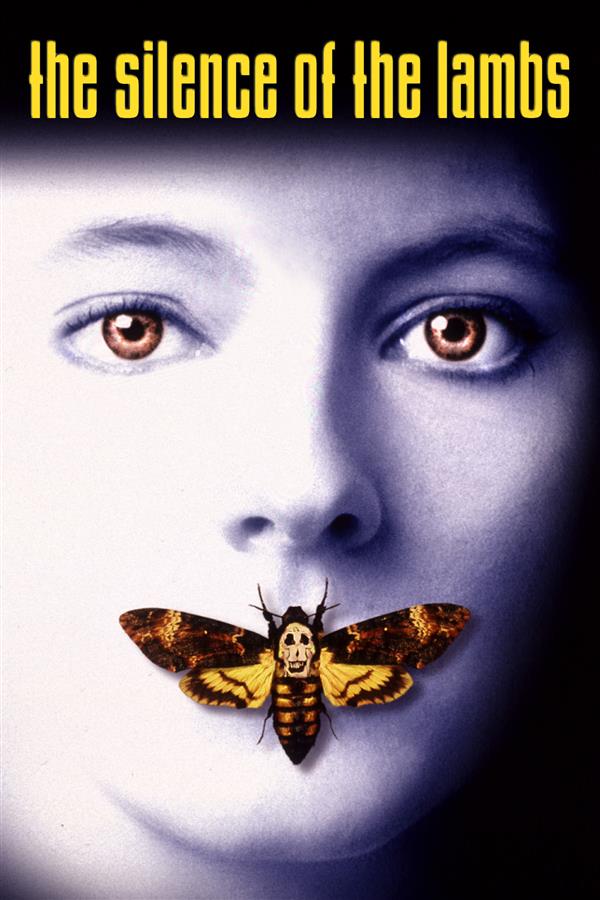
What does the title mean?
Many viewers found it hard to see the connection between the film’s title and its plot. Dr. Lecter is an extremely intelligent psychiatrist, capable of analyzing and predicting the behavior of psychopathic killers. Rookie FBI agent Clarice Starling is sent to interview Lecter to gain leads on a dangerous psychopath named Jame Gumb, nicknamed Buffalo Bill, who kidnaps and murders women in gruesome ways.
Lecter agrees to help Clarice on the condition that she tells him about one of the deepest traumas from her past.
Clarice tells him that she was orphaned at age 10 and sent to live on a horse and sheep ranch in Montana. One night, she woke to terrifying screams and discovered the ranchers were slaughtering the spring lambs. The little girl grabbed a lamb and hid to save it. The next morning, she was found and sent to an orphanage.
By helping Clarice catch Buffalo Bill and save the victim, Lecter also helped free her from the haunting cries of the lambs in her childhood memory.
Clarice Starling — A new type of heroine
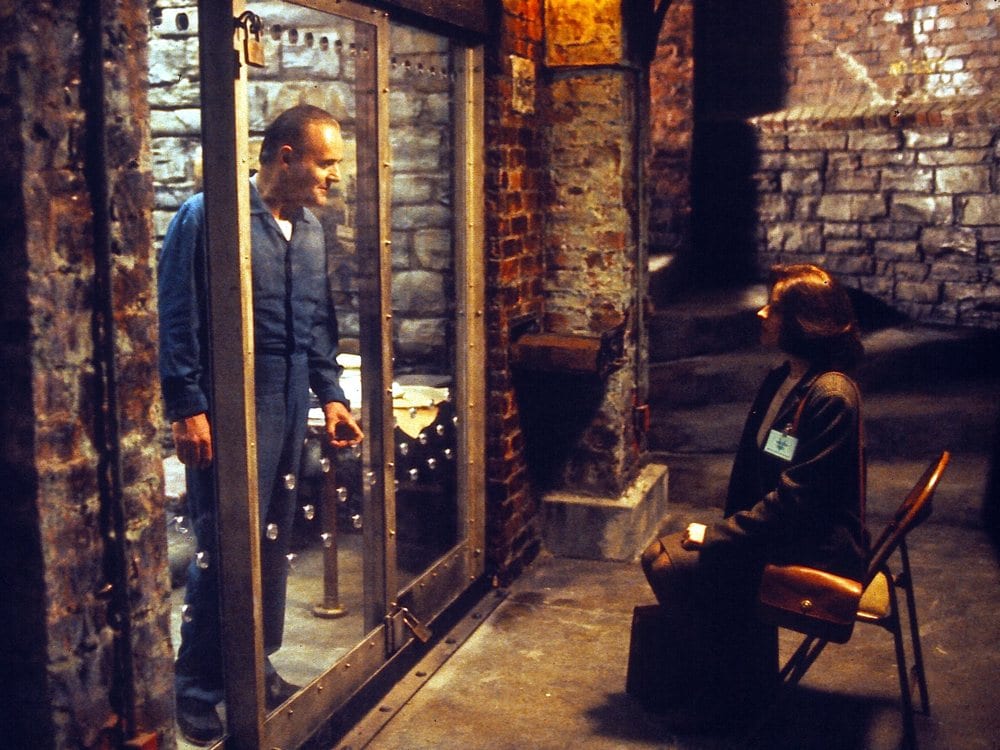
At the time, Jodie Foster was already a famous actress, having won an Oscar in 1988 for The Accused. She had read The Silence of the Lambs and was so drawn to the rookie FBI agent Clarice Starling that she immediately reached out to acquire the film rights — but Gene Hackman had already gotten there first.
While Ted Tally was writing the script, he suggested Jodie Foster for the role of Clarice Starling. Foster had actively lobbied for the part from the beginning, but when Jonathan Demme was brought on as director, he preferred Michelle Pfeiffer. Foster was very disappointed but still left a message: If there’s any change, please remember me.
However, Pfeiffer turned down the role because she found the film’s subject matter too horrifying. Meg Ryan and Melanie Griffith were also approached but declined for the same reason. Eventually, Demme agreed to meet Foster and was convinced immediately on their first meeting: When I saw her walking toward me with such determination, I knew that was Clarice Starling. She radiated strength and resolve — exactly what the role needed.
Jodie Foster was allowed to join a three-day training course to prepare for playing a trainee FBI agent. While preparing for the role, Foster spent time talking to special agent Mary Ann Krause. After this performance, the decisive and heroic qualities of Clarice Starling became a positive influence, inspiring more women to join the FBI.
A legendary villain
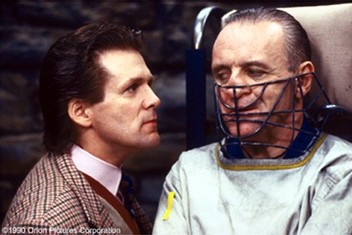
Many top stars were considered for the role of the insane doctor Hannibal Lecter. But the director felt that casting a major star would distract audiences from the story. He decided on Anthony Hopkins — a veteran British stage actor relatively unknown to moviegoers — after seeing his performance as Dr. Frederick Treves in The Elephant Man (1980).
Anthony Hopkins was surprised and asked the director why he had been chosen to play such an evil, deranged villain when his previous role was that of the kind, gentle Dr. Treves. Demme replied: Well, Dr. Lecter is also a good man… but trapped inside the body of a madman!
To prepare for this fearsome role, Anthony Hopkins drafted a 120-page character-building notebook, sketching many different portraits of the character — his clothing, appearance, speech, movements, and more. He defined his character as cold, an executioner, a passionate obsessive, extremely intelligent, highly cultured, and never backing down.
Anyone who has seen the film is haunted by Dr. Lecter’s mad, piercing eyes and chilling voice. There seemed to be something so mysterious in his gaze that viewers could hardly bear to look straight at it. Anthony Hopkins created that cold, commanding voice by blending impressions of the late President Harry S. Truman, gangster Al Capone, and actress Katharine Hepburn.
From bestseller to Best Picture
Originally, the film was planned for a fall 1990 release. But because the distributor Orion Pictures was focusing on the Oscar campaign for Dances with Wolves (1990), the release of The Silence of the Lambs was pushed to Valentine’s Day, February 14, 1991.
The fact that The Silence of the Lambs was nominated for 7 Oscars in 1991 was a remarkable event, since films released early or mid-year often get forgotten by the year-end Oscar season. Before The Silence of the Lambs, only two other horror films had been nominated for Best Picture — The Exorcist (1973) and Jaws (1975). To this day, The Silence of the Lambs (1991) remains the only horror film to ever win that prestigious category.
Notably, The Silence of the Lambs won a sweep of the five most important Oscars: Best Picture, Best Director, Best Actor, Best Actress, and Best Adapted Screenplay!